Federal Judge Orders Release of Wisconsin Mosque Leader as Immigration and Free Speech Clash in Court
A federal court ruling this week has reignited a national debate over immigration enforcement, First Amendment protections, and America’s approach to national security in a time of global unrest.
In a significant decision, U.S. District Judge James Patrick Hanlon ordered federal immigration authorities to release the Palestinian-born president of Wisconsin’s largest mosque, finding that the detainee had presented a “substantial” claim that his arrest may have been retaliation for constitutionally protected speech.
The case has quickly drawn attention from both immigration hawks and civil liberties advocates, highlighting the tension between America’s commitment to free speech and the federal government’s responsibility to safeguard national security.
The Arrest and the Government’s Position
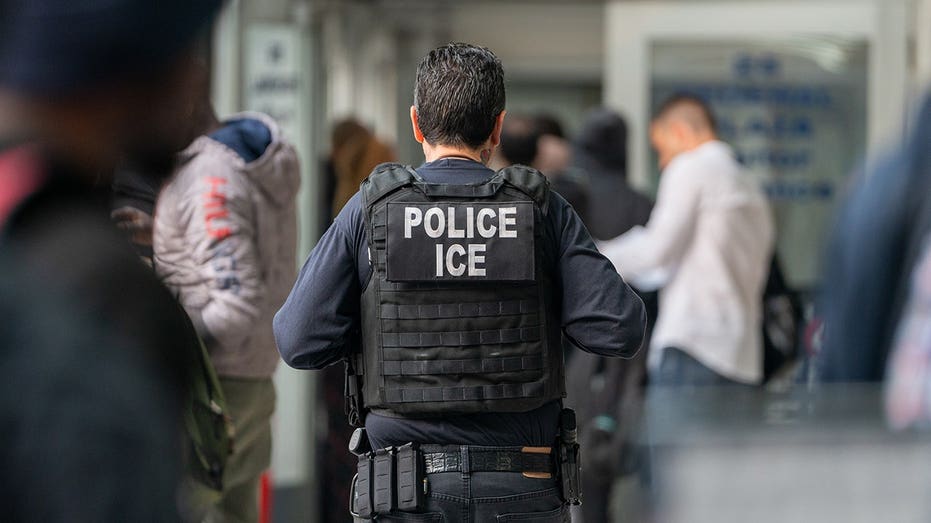
The man at the center of the dispute, a longtime legal permanent resident of the United States, was taken into custody on March 30 by agents with U.S. Immigration and Customs Enforcement (ICE), an agency within the Department of Homeland Security (DHS).
Federal officials characterized him as a foreign policy concern and described him as having a past tied to violent incidents overseas. According to DHS, the man had been convicted decades ago in an Israeli military court for offenses involving Molotov cocktails and weapons-related charges.
Specifically, the agency pointed to convictions handed down by an Israeli military court in 1989 for allegedly throwing a Molotov cocktail and stones during unrest, and again in 1995 for attempts to possess weapons and ammunition. He has denied those allegations.
Although he has no criminal record in the United States, DHS described him as a “terrorist” and denied that immigration enforcement officers targeted him based on his political speech.
The case landed in the U.S. District Court for the Southern District of Indiana, where Judge Hanlon, a nominee of President Donald Trump, was asked to determine whether the detention violated constitutional principles.
A First Amendment Showdown
At the heart of the dispute is the First Amendment to the United States Constitution, which protects freedom of speech for those within America’s borders.
Attorneys for the detainee argued that ICE’s actions were motivated not by public safety concerns, but by his vocal criticism of Israel and his outspoken advocacy for Palestinian rights. They claimed the government’s sudden move—after decades of lawful residence—suggested retaliation for speech that some in Washington may find controversial or politically inconvenient.
Judge Hanlon’s ruling emphasized a critical point: merely citing “foreign relations concerns” does not automatically override constitutional protections.
“The mere invocation of foreign relations concerns does not automatically trump First Amendment rights,” the judge wrote in his decision.
That statement underscores a longstanding principle in American jurisprudence: even in sensitive areas involving diplomacy and immigration, constitutional limits still apply to the government’s actions.
Do Permanent Residents Have the Same Rights?
DHS attorneys argued that lawful permanent residents—often referred to as green card holders—do not enjoy identical First Amendment protections as U.S. citizens. Judge Hanlon rejected that interpretation.
In his ruling, he stated that individuals lawfully admitted into the country are generally afforded the same constitutional protections as anyone else residing in the United States.
This position aligns with prior Supreme Court precedent indicating that constitutional rights extend to “persons” within U.S. jurisdiction, not just citizens. However, immigration law also gives Congress and the executive branch broad authority over the admission and removal of non-citizens.
The tension between these two principles—constitutional liberty and federal immigration power—sits at the core of the current controversy.
Why Now? The Timing Question
One of the judge’s most notable observations was the timing of the arrest.
According to the ruling, federal authorities had known about the Israeli convictions for approximately 25 years. The charges had been considered multiple times during prior evaluations of his immigration status, including reviews tied to naturalization eligibility.
Despite this awareness, immigration officials did not detain him until this year.
The court questioned why, after more than three decades of residence in the United States—including years of religious and community leadership—the federal government suddenly deemed him a threat severe enough to justify civil detention.
This timing weighed heavily in the court’s analysis of whether retaliation for speech was a credible claim.
Health Concerns and Human Factors
The detainee’s legal team also raised serious concerns about his health while in custody.
He suffers from Type 2 diabetes, a chronic condition that requires monitoring and management. According to the Centers for Disease Control and Prevention (CDC), unmanaged diabetes can significantly increase the risk of organ failure and other life-threatening complications.
Attorneys stated that he lost more than 30 pounds during approximately 80 days in detention and alleged that his blood sugar was checked only once per month.
The judge factored these health considerations into his decision to order release, along with the detainee’s extensive family ties in the Milwaukee area.
He was being held in an Indiana county jail before his release and has since returned home to Milwaukee, Wisconsin.
Family and Community Ties
The released mosque leader is married and has six children and nine grandchildren, all of whom are U.S. citizens.
His family described the detention as a nightmare, emphasizing his longstanding role in their lives and in their religious community. After his release, he expressed relief at reuniting with loved ones and stated that he would continue to speak out on issues important to him.
Supporters argue that his decades of residence, leadership within Wisconsin’s largest mosque, and deep community roots make the idea of him being a sudden national security threat difficult to reconcile.
Critics, however, maintain that past foreign convictions—especially those involving violence—must be taken seriously, even if they occurred decades ago.
The Controversy Over Israeli Military Courts
The underlying convictions referenced by DHS originated in Israeli military tribunals operating in contested territories.
Israeli military courts have faced criticism from some human rights organizations over due process standards and conviction rates. At the same time, Israel maintains that its military justice system functions within legal frameworks appropriate for conflict zones.
Background information about these courts and their structure can be found in historical overviews such as Britannica’s entry on military courts, which provides general context on how such tribunals operate internationally.
The debate over the reliability and fairness of such courts is not new. What makes this case unique is how those decades-old convictions now intersect with modern U.S. immigration enforcement.
Immigration Authority vs. Constitutional Limits
Under U.S. law, immigration enforcement proceedings are civil—not criminal—matters. That distinction gives federal authorities significant discretion in detaining non-citizens pending removal proceedings.
However, courts have consistently ruled that civil immigration detention cannot be used in a way that violates constitutional protections.
Judge Hanlon’s ruling did not permanently block removal proceedings. Instead, it ordered the man’s release while his immigration case continues. The underlying deportation process remains active.
This distinction is critical. The federal government retains the authority to pursue removal if it can demonstrate lawful grounds. But it must do so within constitutional boundaries.
National Security Considerations
From a homeland security perspective, DHS is tasked with preventing threats before they materialize. In a world shaped by global conflict, rising extremism, and complex foreign alliances, federal authorities often err on the side of caution.
Supporters of rigorous enforcement argue that even long-past foreign convictions tied to violence should not be dismissed lightly, particularly when national security and foreign relations are involved.
At the same time, critics of broad enforcement powers caution that labeling political dissent as a “foreign policy threat” could set a dangerous precedent—especially in a nation founded on free expression.
This case places both concerns squarely in the spotlight.
Broader Implications for Free Speech in America
The ruling could carry implications beyond a single individual.
If courts increasingly scrutinize immigration detention decisions for potential retaliation tied to speech, federal agencies may face greater evidentiary burdens when justifying enforcement actions involving politically active non-citizens.
Conversely, if the government ultimately prevails in later proceedings, it could reinforce the executive branch’s authority to act decisively on foreign policy concerns linked to immigration status.
Either outcome will likely contribute to evolving case law at the intersection of immigration authority and the First Amendment.
An America-First Balancing Act
For many Americans, this case reflects a deeper philosophical question: How does a strong, sovereign nation protect itself while honoring the very freedoms that define it?
- America has a duty to defend its borders and its people.
- America also has a constitutional obligation to uphold free speech—even when that speech is controversial.
- The courts serve as a check when questions arise about whether the government has overstepped.
The judge’s release order does not settle the broader immigration case. It simply signals that constitutional protections cannot be brushed aside without sufficient justification.
That principle—equal justice under law—is one of the pillars of the American system.
What Happens Next?
The detainee will remain free as his immigration proceedings move forward. Federal officials may continue to argue that his prior convictions justify removal under immigration statutes.
If the case advances through appeals, it could eventually help clarify how courts weigh:
- Old foreign convictions
- Political speech critical of allied governments
- National security claims raised without recent criminal conduct
- Constitutional protections for lawful permanent residents
Until then, the ruling stands as a reminder that in the United States, even in contentious geopolitical matters, the rule of law governs.
For supporters, it represents a victory for constitutional safeguards. For critics, it raises fresh concerns about how immigration enforcement is constrained in sensitive international cases.
What remains undeniable is that this dispute captures a defining American principle: a nation strong enough to defend its interests—and confident enough to protect freedom, even in the face of fierce political disagreement.
As the legal battle continues, Americans across the political spectrum will be watching closely to see how the courts reconcile the twin imperatives of liberty and security in an increasingly complex world.
Wake Up America News — Your Source for Patriotic News.