Mystery in the Bahamas: Questions Mount After American Woman Vanishes at Sea
An American retirement dream in the crystal-blue waters of the Bahamas has turned into a troubling international mystery that refuses to fade from the headlines. Lynette Hooker, a Michigan woman living full-time aboard a sailboat with her husband, disappeared on April 4 after reportedly falling overboard during rough conditions near Hope Town in the Bahamas.
What began as a tragic maritime accident has since evolved into a complex case involving the Royal Bahamas Police Force, the U.S. Coast Guard, and the Coast Guard Investigative Service (CGIS). New revelations have raised serious questions about the timeline of events—and about the actions taken in the crucial hours following her disappearance.
The Night Lynette Hooker Disappeared
According to authorities, Brian Hooker told investigators that he and his wife were returning to their sailboat after leaving shore at Hope Town around 7:30 p.m. on April 4. The couple had reportedly been traveling by dinghy back to their primary vessel, which served as their floating retirement home.
Brian told investigators that rough waters caused Lynette to fall overboard during the return trip. Instead of immediately reuniting, he says he paddled alone to shore and arrived in Marsh Harbour around 4 a.m. the following morning.
The waters surrounding the Abaco Islands can be unpredictable at night, even for experienced sailors. Strong currents, shallow reefs, and shifting winds create a challenging environment after dark. But friends of the couple say both were seasoned mariners who frequently sailed throughout the United States and the Caribbean.
That experience is one reason why this case has generated so many lingering questions.
A 24-Hour Period Under Scrutiny
One of the most troubling details to emerge from the investigation comes from a close friend of Brian Hooker, Blaine Stevenson. Stevenson stated that after approximately three to four hours assisting search and rescue crews on April 5, Brian returned to his sailboat and remained there for nearly 24 hours.
According to Stevenson:
- The incident reportedly occurred around 7:30 p.m. on April 4.
- Brian came ashore at approximately 4 a.m. on April 5.
- He joined search-and-rescue operations for several hours.
- He then returned to his sailboat and stayed aboard for roughly 24 hours.
- He remained there until officials returned his dinghy.
Stevenson has publicly questioned why more effort did not appear to be made in those early hours—often considered critical in maritime survival scenarios. Experts in sea rescues frequently emphasize that the "golden hours" immediately following a fall overboard are vital for recovery, particularly before currents can carry someone far from the incident location.
Stevenson also raised concerns that Brian did not expand upon his initial account beyond claiming he was in shock.
"Even if he accepts the fact that his wife is gone—does he not want closure?" Stevenson reportedly asked. "Does he not want redemption?"
At this stage, no formal charges have been filed. Still, public scrutiny remains intense.
Arrest, Release, and Legal Representation
On April 8, Bahamian authorities arrested Brian Hooker as part of the ongoing investigation. He remained in custody until April 13, when he was released without charges.
The Bahamas operates under a legal system influenced by British common law. Pre-charge detentions may occur as part of investigative procedures, especially when cases involve uncertain circumstances at sea. Following his release, Hooker’s Michigan-based attorney, Crystal Marie Hauser, urged Americans not to rush to judgment.
She asked the public to grant her client the same fairness and presumption of innocence they would expect for themselves. In any criminal justice matter—whether in the United States or abroad—the principle of due process remains foundational.
It’s worth noting that being detained during an investigation does not equate to guilt. However, unanswered questions often fuel speculation, especially in emotionally charged missing persons cases involving American citizens overseas.
The Seizure of the Sailboat “Soulmate”
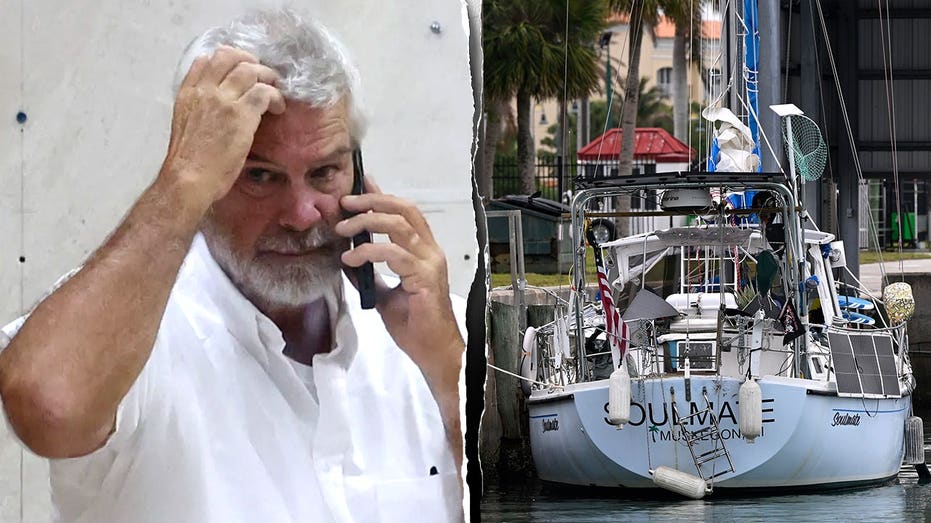
In a significant development, the couple’s sailboat—aptly named Soulmate—was seized sometime between May 8 and May 10. The vessel was interdicted approximately 40 nautical miles off the coast of Melbourne, Florida.
The U.S. Coast Guard described the operation as part of a “complex surveillance and interdiction” effort. The vessel was transported to Coast Guard Station Fort Pierce for processing.
Officials later confirmed that Soulmate is now in the custody of the Coast Guard Investigative Service as part of an active criminal investigation.
The seizure of a U.S.-flagged vessel inside American waters suggests that federal authorities believe evidence relevant to a potential crime could be on board. Maritime investigations often involve forensic examinations such as:
- Structural analysis of deck areas and lifelines
- DNA testing of interior surfaces
- Electronic navigation records
- Engine and fuel logs
- Satellite communication data
The fact that federal investigators have taken custody of the vessel signals that this is no routine missing-person case.
The Geography and the Risks
The Abaco Islands region of the Bahamas, including Hope Town and Marsh Harbour, is popular among American sailors. In fact, thousands of U.S. retirees travel or live seasonally in Caribbean waters each year.
However, night travel in small dinghies can be hazardous. Strong tidal currents, limited visibility, coral reefs, and shifting winds present legitimate risks. Even experienced sailors must exercise caution when navigating between shore and anchored vessels.
Still, maritime safety experts often ask critical questions in overboard cases:
- Was the individual wearing a life jacket?
- Were emergency flotation devices deployed?
- Was a distress call issued immediately?
- Are there independent witnesses?
Thus far, authorities have not publicly released detailed answers to many of these questions.
American Citizens Abroad: A Broader Context
This case underscores a broader issue: the vulnerability of American citizens traveling or living abroad. While the Bahamas remains a popular and generally safe Caribbean destination, incidents involving U.S. nationals frequently involve multiple jurisdictions.
When Americans go missing overseas, coordination may include:
- Local law enforcement (in this case, the Royal Bahamas Police Force)
- U.S. diplomatic officials via the U.S. Department of State
- Federal investigative agencies
- Maritime authorities
These layered investigations can take time, particularly when the possible incident occurred in international or foreign territorial waters.
For American families watching from home, that waiting period can be agonizing.
The Silence and the Suspicion
Cases like this often turn on timelines. The nearly 24-hour period Brian Hooker allegedly spent aboard his sailboat after initial search efforts has become a point of intense focus in both public discourse and investigative circles.
Was he in shock, as he reportedly indicated? Or was something else at play?
Human responses to trauma vary widely. Psychological shock can indeed mute emotional responses, slow decision-making, and create confusion. Defense attorneys frequently cite this reality in cases involving sudden tragedy. At the same time, investigators are trained to carefully analyze behavior following an incident, particularly when inconsistencies appear.
Until forensic analysis and digital records are fully examined, speculation remains just that—speculation.
The Role of Federal Law Enforcement
The involvement of the Coast Guard’s investigative branch suggests potential federal jurisdiction. The CGIS typically investigates crimes connected to maritime environments, including suspicious deaths, vessel-related incidents, and crimes involving U.S.-flagged vessels.
If evidence suggests foul play, the case could potentially fall under U.S. federal criminal statutes. Federal prosecutors would then determine whether charges are warranted.
For now, officials have not announced specific allegations. The sailboat remains under review.
A Family and a Nation Watching
Back in Michigan, friends and family continue to seek clarity. In cases where no body has been recovered, closure becomes a nearly impossible concept. Loved ones are left suspended between hope and reality.
The American spirit believes in both compassion and accountability. We stand for the presumption of innocence—but we also demand answers when an American citizen vanishes under unclear circumstances.
This case embodies that tension.
What Happens Next?
The next phase will likely depend on forensic findings and investigative analysis. Authorities may examine:
- Navigation data showing vessel movement
- Time-stamped digital communications
- Physical evidence aboard Soulmate
- Search-and-rescue procedural reports
If no evidence of foul play is uncovered, the case may ultimately be ruled a tragic maritime accident. If investigators find inconsistencies or material evidence pointing elsewhere, it could transform into a formal criminal prosecution.
Until then, American citizens can only follow developments and trust that law enforcement—both Bahamian and American—will pursue the truth with professionalism and fairness.
A Sobering Reminder for Sailors
Beyond the headlines, this disappearance serves as a reminder for Americans who dream of life at sea. Freedom on the open water carries profound rewards—but also inherent risks.
Maritime safety experts strongly recommend:
- Always wearing personal flotation devices during night transfers
- Installing emergency signaling tools
- Keeping communication devices waterproof and accessible
- Avoiding dinghy travel in poor weather conditions
The sea is beautiful—but it is indifferent.
Truth Still Elusive
The disappearance of Lynette Hooker remains unresolved. No charges have been filed. No definitive public conclusions have been announced. But the seizure of the sailboat and continued investigative attention make clear that authorities are not treating this lightly.
America watches because she was one of ours—a citizen living out a hard-earned retirement dream. And when an American vanishes, whether at home or abroad, we expect transparency, diligence, and accountability.
As this case unfolds, Wake Up America News will continue following every credible development. Truth matters. Justice matters. And every American life matters.
Your Source for Patriotic News.