Justice Delivered in the Death of Belmont Student as Parents Demand Accountability
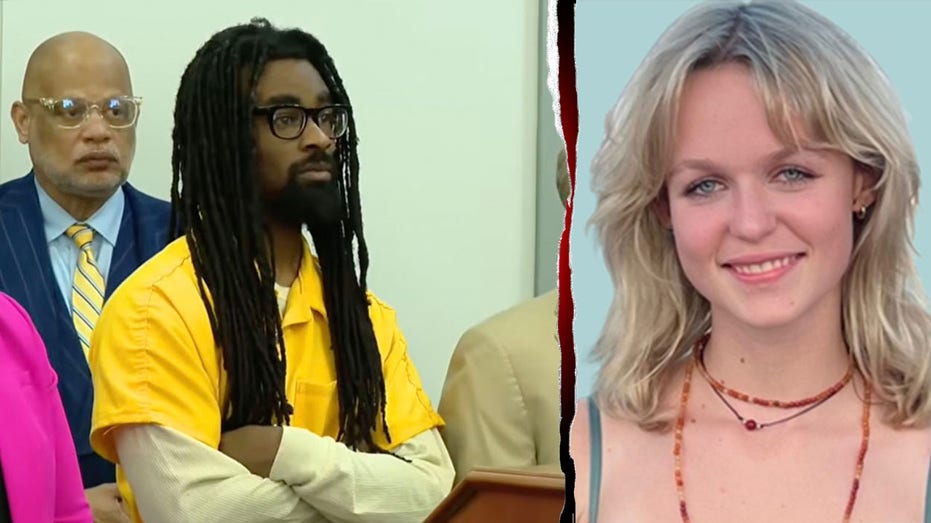
The tragic killing of 18-year-old Belmont University freshman Jillian Ludwig shook Nashville and stunned families across the nation. On Nov. 7, 2023, what should have been an ordinary afternoon jog near her campus ended in senseless violence. This week, the man responsible admitted his guilt in a Tennessee courtroom, bringing a measure of justice—but not closure—to her grieving parents.
Shaquille Taylor, who investigators have identified as a self-admitted gang member, pleaded guilty to second-degree murder and aggravated assault. Under a negotiated agreement, he will serve 35 years for the murder without the possibility of parole, plus an additional three years for aggravated assault with a deadly weapon.
For Jillian’s parents, Jessica and Matthew Ludwig, the legal outcome represents both accountability and a painful reminder of what they believe went wrong long before their daughter was killed.
A Promising Young Life Cut Short
Jillian Ludwig was in her first semester at Belmont University, a private Christian institution in Nashville known for its music business and liberal arts programs. According to her family, she had quickly adapted to college life and was embracing the independence and opportunity that come with adulthood.
On the day of the shooting, Jillian was jogging in a park near her dormitory—an activity many college students routinely enjoy as part of a healthy lifestyle. At the same time, Taylor allegedly opened fire at what authorities say were rival gang members inside a passing vehicle. He missed his intended targets.
Instead, a stray bullet struck Jillian in the head.
She was rushed to the hospital and placed on life support. Despite the efforts of medical professionals, she died the following day.
The Metro Nashville Police Department investigated the shooting and later arrested Taylor. What began as another instance of gang-related gunfire had taken the life of a completely innocent young woman—someone who had nothing to do with the violence unfolding around her.
Parents Confront Their Daughter’s Killer
Inside the courtroom this week, emotion filled the air as Jillian’s parents delivered powerful victim impact statements. Jessica Ludwig placed a large framed photograph of her daughter facing Taylor as she addressed the court.
She described Jillian as “extraordinary,” a young woman who left a lasting impression on everyone she met. To her mother, she was more than an only child—she was a best friend.
Then, Jessica turned her focus to the man who ended her daughter’s life.
“A man with a list of crimes so long it is shocking,” she said. “A man who hurts families and shows no compassion or remorse.”
She referenced Taylor’s gang nickname, “the reaper,” telling the court that such a moniker speaks volumes about his worldview. She described feeling chills simply looking at him.
Her remarks reflected not only personal grief but also a broader frustration shared by many Americans: how does someone with a history of violent behavior remain free to commit another violent crime?
A Father’s Grief—and a Call for Consequences
Matthew Ludwig’s statement was equally heartbreaking. He recalled reading his 18-year-old daughter’s autopsy report—no drugs, no alcohol, in perfect physical health. The only cause of death: a single gunshot wound to the head.
“There is no worse pain than a father who loses his only daughter to murder,” he said.
While he expressed limited sympathy for Taylor’s difficult upbringing, he emphasized a clear point: personal hardship does not excuse violent crime. Society, he argued, must protect innocent citizens first and foremost.
“He needs to be in jail,” Matthew said. “For us today, 38 years will have to do.”
Under Tennessee law, second-degree murder is defined as a “knowing killing of another,” according to the Tennessee General Assembly. Taylor’s 35-year sentence without parole reflects the seriousness of that offense.
A Troubling Criminal History
What makes this case particularly troubling is Taylor’s lengthy criminal record prior to Jillian’s death.
According to court records and reporting, his history includes:
- A conviction for assault dating back to 2015
- A 2021 incident in which he was charged with three counts of aggravated assault with a firearm after allegedly firing into a vehicle occupied by a woman and her two young children
- A 2023 auto theft charge
The 2021 aggravated assault case was ultimately dismissed after Taylor was deemed mentally incompetent to stand trial. Questions of mental competency in criminal cases are addressed through specific legal procedures, as outlined by the Tennessee Administrative Office of the Courts.
Critically, at the time of Jillian’s murder, Taylor reportedly had an active arrest warrant.
For the Ludwig family, and for many observers across Tennessee, this record raises serious concerns about systemic failures. Why was someone with such a documented history of violent conduct able to remain on the streets?
Gang Violence and Innocent Victims
According to the FBI’s Uniform Crime Reporting Program, gang-related activity remains a persistent problem in many American cities. While gang members target rivals, the fallout often harms innocent bystanders.
Stray-bullet tragedies are especially devastating because they are entirely random. Victims are not participants in criminal activity; they are simply in the wrong place at the wrong time.
In Jillian’s case, she was participating in a routine, healthy activity near her college campus—exactly the kind of normal daily freedom Americans expect in safe communities.
The Ludwig family believed Nashville was a place where their daughter could thrive. Instead, they say the city failed her.
“Nashville Failed Her”
Matthew Ludwig did not mince words when addressing what he views as broader institutional shortcomings.
“In 2023, I trusted Nashville, Tennessee, to keep my daughter safe for four years as she ventured off into the world,” he said. “But in only 83 days, Nashville failed her and us so miserably.”
His comments have fueled a wider conversation in Tennessee about criminal justice policies, repeat offenders, and how cases involving mental competency are handled.
Critics argue that individuals deemed incompetent to stand trial should not simply cycle back into society without mandatory monitoring, structured treatment, or confinement when they pose a danger to others.
The tension between mental health considerations and public safety is not unique to Tennessee. Across the country, cities are grappling with how to balance constitutional protections with the need to prevent predictable violence.
From Tragedy to Reform: “Jillian’s Law”
Determined that their daughter’s death would not be in vain, the Ludwigs became advocates for legislative change. Their efforts contributed to the passage of “Jillian’s Law” in 2024.
The new measure prevents criminal suspects who are deemed mentally incompetent to stand trial from being released back into the community without supervision or treatment. While specific implementation details fall under state jurisdiction, the law aims to close gaps that critics say previously allowed potentially dangerous individuals to slip through the cracks.
Legislation in Tennessee can be reviewed through the Tennessee General Assembly’s legislative portal, where bills and enacted laws are publicly available.
For many families, “Jillian’s Law” represents a step toward restoring accountability and reinforcing the foundational principle that public safety comes first.
The Broader Debate: Public Safety vs. Leniency
Jillian Ludwig’s death has become part of a larger national discussion. Across America, voters are increasingly weighing how local and state policies address:
- Repeat violent offenders
- Bail practices
- Mental competency rulings
- Enforcement of outstanding warrants
Law enforcement agencies often warn that when violent offenders remain on the streets, the risk to innocent civilians rises dramatically. Supporters of stricter enforcement measures argue that justice systems must prioritize the safety of law-abiding citizens over leniency for chronic criminals.
At the same time, legal advocates stress the importance of constitutional rights and appropriate mental health treatment. The challenge lies in ensuring that compassion does not translate into negligence.
A Community Forever Changed
Belmont University and the Nashville community mourned Jillian’s loss deeply. Students, faculty, and residents gathered for vigils and memorials, reflecting the profound impact her death had on those around her.
College campuses are meant to be places of growth, intellectual exploration, and personal development. Parents across the nation entrust universities—and the cities that host them—to provide a reasonably safe environment for their sons and daughters.
The Ludwig family’s experience has resonated with parents nationwide who now ask themselves difficult questions about safety, crime policy, and trust in local institutions.
Justice, But No Closure
With Taylor sentenced to decades behind bars and no possibility of parole for the murder count, the judicial chapter of this tragedy is effectively closed. Yet justice in a courtroom cannot restore a lost child.
The Ludwigs have emphasized that while the sentence brings some measure of accountability, it does not replace birthdays, holidays, or future milestones.
Jillian Ludwig was 18 years old. She had just begun her adult life. Her parents will now mark the passage of time not by her achievements, but by anniversaries of the day they lost her.
A Sobering Reminder for America
This case stands as a stark reminder that policies are never abstract. Decisions made by courts, prosecutors, lawmakers, and city leaders have real-world consequences.
When violent offenders repeatedly cycle through the system, communities pay the price. And sometimes, as in the case of Jillian Ludwig, the cost is measured in irreplaceable young lives.
For patriotic Americans committed to law, order, and the protection of innocent citizens, the lesson is clear: public safety must remain a top priority. Accountability matters. Enforcement matters. And the voices of victims’ families deserve to be heard.
Jessica and Matthew Ludwig turned their grief into action, ensuring that their daughter’s name will live on not only in memory, but in law. In doing so, they have sent a powerful message—one that echoes far beyond a single courtroom in Nashville.
Justice may have been delivered. But the call to prevent the next tragedy continues.