Stolen Industrial Drones Raise Serious Homeland Security Questions
Federal authorities have successfully recovered 15 high-capacity industrial spray drones stolen in New Jersey earlier this spring. But while law enforcement officials may have reclaimed the equipment, a far more serious question lingers: what was the ultimate purpose behind the theft?
According to former Department of Homeland Security personnel, the incident represents far more than a cargo theft case. It highlights a growing vulnerability in America’s expanding drone ecosystem — one that, if exploited, could threaten public safety in ways few Americans fully appreciate.
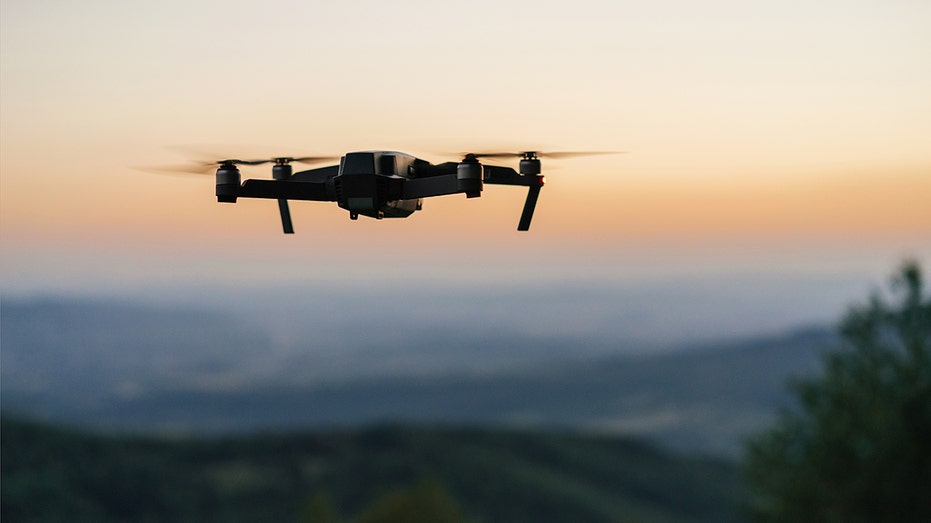
At the center of the case are 15 Ceres Air C31 agricultural spray drones, sophisticated aerial systems capable of dispersing large quantities of liquid. Though designed for lawful agricultural use, the same technology could be manipulated for dangerous purposes in the wrong hands.
The Theft: What Happened in New Jersey?
The drones were stolen on March 24 from CAC International, a logistics and shipping company located in Harrison, New Jersey. The city of Harrison, situated in Hudson County, serves as a major industrial and transportation hub just across from Newark.
According to reporting, an individual posing as a legitimate delivery driver presented fraudulent documentation and obtained the shipment. The use of a falsified bill of lading reportedly convinced company representatives that the transfer was legitimate.
Over a month later, on April 27, the stolen systems were recovered in Dover, New Jersey, at a warehouse operated by Prudent Corporation. The New Jersey State Police Cargo Theft Unit led the recovery effort.
State police officials confirmed that multiple federal agencies are assisting in the investigation, including:
Authorities have described the situation as an “active and ongoing investigation,” with limited additional details released to the public.
What Makes These Drones So Concerning?
The systems involved in this case are Ceres Air C31 industrial spray drones. Designed primarily for agricultural applications such as crop dusting, these unmanned aerial vehicles are capable of carrying and dispersing liquid substances over large areas.
Each drone reportedly costs approximately $58,000. With 15 units taken, the total value of the stolen equipment approached $870,000.
But the dollar value is not what concerns national security professionals.
Vincent Martinez, a former tactical terrorism response team member with the Department of Homeland Security and currently affiliated with security technology firm ZeroEyes, raised alarm about the broader implications.
“Where were these intended to land? Who is the ultimate end user? Were they meant simply as a quick buck — or to facilitate action against the homeland?” Martinez questioned.
His warning reflects a central concern in modern security planning: dual-use technology. Many innovations developed for civilian industries can be easily repurposed for harm.
The Dual-Use Dilemma: From Agriculture to Weaponization
Agricultural drones serve a legitimate and increasingly vital role in American farming. Across the country, farmers use unmanned aerial systems to spray fertilizers, herbicides, and pesticides more efficiently and precisely than traditional methods allow.
The Federal Aviation Administration’s Unmanned Aircraft Systems (UAS) program governs how drones operate within U.S. airspace. Registered agricultural drones are legally permitted to conduct crop dusting under specific FAA rules.
The challenge is that the same spray dispersal systems used for productive farming can theoretically distribute other liquid substances.
Security experts have long recognized that drone technology dramatically lowers barriers to entry for aerial delivery systems. Unlike large aircraft, drones:
- Require fewer personnel
- Cost significantly less
- Can operate at low altitudes
- Are easier to transport and conceal
- Can be remotely piloted over populated areas
Martinez emphasized that modifying drone hardware or firmware is not beyond the capability of technically skilled actors.
“It doesn’t take a rocket scientist,” he said. “With open-source knowledge and technical savvy, platforms can be manipulated.”
While the FAA enforces regulations to restrict unauthorized drone use, rules alone cannot deter those intentionally seeking to evade the law.
Ceres Air Responds: Built-In Safeguards
In response to public concern, Ceres Air released a statement asserting that the stolen drones could not have been operated without proper authorization.
The company says its systems incorporate:
- Secure activation protocols
- Remote lockout functionality
- Separation of battery logistics from hardware
- Serial-number traceability
Ceres emphasized that its equipment is built domestically in the United States, with tracking systems and accountability measures that enabled authorities to resolve the situation quickly.
“When systems are built and supported domestically, there is accountability,” the company noted.
That statement indirectly underscores another critical issue: supply chain security.
The Bigger Picture: Drone Proliferation and National Security
Drone technology has exploded across both civilian and military domains over the past decade. According to the FAA’s UAS by the Numbers data, there are hundreds of thousands of registered drones operating within U.S. airspace.
Meanwhile, drone warfare has transformed modern battlefields abroad. Americans have watched advancements in unmanned aerial technology shape conflicts overseas, proving that relatively inexpensive systems can produce outsized strategic effects.
That reality has shifted how U.S. security professionals think about domestic vulnerabilities.
The Department of Homeland Security, through entities such as DHS Science and Technology Directorate, continues to study the risks posed by unmanned systems, including counter-drone technologies and detection methods.
Yet as commercial drone capabilities improve, so do the risks associated with misuse. Industrial drones capable of carrying heavy liquid payloads represent a higher level of concern than small hobbyist quadcopters.
Cargo Theft: A Gateway Crime?
At first glance, the theft appears to resemble a classic cargo fraud scheme. Criminal networks frequently target high-value goods in transit using falsified shipping documents.
Cargo theft costs American businesses billions annually. Logistics hubs in states like New Jersey — a critical gateway for imports and interstate commerce — are frequent targets.
However, what distinguishes this case is not merely the financial value but the potential capability embedded within the stolen goods.
Security analysts typically consider several escalating possibilities:
- Resale on black markets for profit
- Export to foreign actors
- Use in organized criminal activity
- Acquisition for politically or ideologically motivated attacks
Martinez highlighted that authorities must examine every stage of escalation, including funding sources and end users.
America’s Regulatory Framework — Strong but Not Bulletproof
The United States maintains one of the world’s most developed aviation safety frameworks. The Federal Aviation Regulations provide guidance on drone operations, airspace restrictions, and commercial licensing requirements.
Additionally, agencies such as the Federal Bureau of Investigation monitor potential domestic threats involving emerging technologies.
Still, enforcement becomes more complicated once equipment enters unauthorized channels. Unlike regulated businesses, criminal actors do not follow licensing procedures or safety measures.
This reality reinforces a longstanding national security truth: protecting the homeland requires layered defenses — from supply chain scrutiny to intelligence gathering and rapid interagency cooperation.
Interagency Response: A Positive Sign
One encouraging development in this case is the speed and scope of the recovery effort.
The involvement of the New Jersey State Police, Homeland Security Investigations, and Customs and Border Protection suggests authorities quickly recognized the seriousness of the situation.
Interagency collaboration is central to post-9/11 homeland security doctrine. The creation of the U.S. Department of Homeland Security in 2002 aimed precisely to prevent gaps between federal, state, and local law enforcement.
This case demonstrates that coordination protocols appear to function as intended. Equipment valued at nearly $1 million — and potentially capable of far more serious consequences — was located and seized within weeks.
Domestic Manufacturing and Accountability
The incident also reignites debate over domestic versus foreign-built drone systems.
Over the past several years, lawmakers and defense officials have raised concerns about reliance on externally manufactured unmanned systems, particularly in sensitive sectors.
Ceres Air’s emphasis that its systems are “built in the United States” reflects a broader policy conversation about maintaining control over critical technologies.
Domestic manufacturing enhances traceability, legal jurisdiction, and accountability — all crucial factors when investigating misuse.
Remaining Questions the Investigation Must Answer
While authorities have recovered the physical devices, several pressing questions remain:
- Who orchestrated the theft?
- Was the fraudulent pickup part of a larger organized network?
- Were the drones intended for resale domestically or internationally?
- Did any foreign entities express interest in acquiring such systems?
- Were there financial backers behind the operation?
Until those questions are resolved, the broader threat landscape cannot be fully assessed.
Why Americans Should Pay Attention
This case serves as a reminder that technological advancement, while beneficial, carries inherent responsibility.
Agricultural drones are helping American farmers increase efficiency and competitiveness. Logistics companies move billions of dollars in goods daily. Innovation remains one of America’s greatest strengths.
Yet security professionals must constantly evaluate how new capabilities could be misused by bad actors.
Protecting the homeland requires vigilance not just at international borders, but within domestic supply chains and infrastructure networks.
The quick recovery of the 15 stolen drones represents a success story for law enforcement cooperation. However, it also exposes a developing reality: as unmanned technology becomes more powerful and accessible, safeguarding it becomes a national priority.
A Wake-Up Call on Emerging Threats
America has always adapted to evolving threats — from aviation security reforms after 9/11 to cybersecurity initiatives in the digital age. Drone security now joins that list of modern challenges demanding attention.
Industrial spray drones are not weapons by default. They are tools — tools that help American agriculture thrive.
But tools can be misused.
The swift interagency response in New Jersey prevented potential escalation. Whether the theft was financially motivated or something more sinister, authorities treated it with the seriousness it deserved.
That approach — strong law enforcement, domestic accountability, and interagency coordination — remains the best defense against those who would seek to exploit American innovation for destructive ends.
As the investigation continues, the American people deserve transparency and assurance that every angle is being examined. In a world of rapidly advancing technology, preparedness is patriotism — and safeguarding our homeland must always come first.