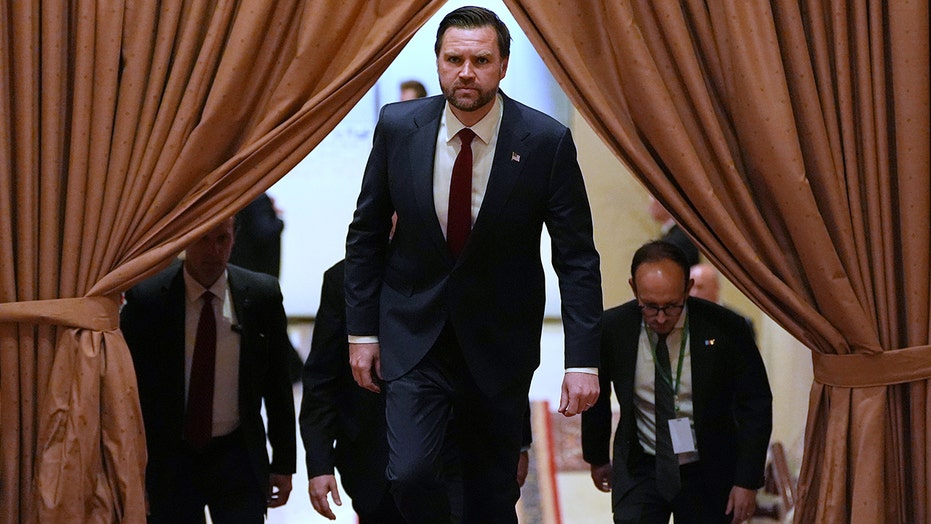
Vance Puts the Pressure on Tehran as Global Tensions Test American Resolve
As diplomatic efforts intensify and global flashpoints threaten stability abroad, leading American voices are making clear that the United States will not negotiate from a position of weakness. Vice President JD Vance signaled this week that after stalled peace conversations involving Iran and Pakistan, responsibility for progress now rests squarely with Tehran.
Meanwhile, fresh talks between American and Iranian officials may take place before an expiring ceasefire deadline, potentially reshaping the security landscape in the Middle East. At home, political resignations, growing scrutiny of federal law enforcement, and rising concerns over public order add to a week of headline-grabbing developments.
Here is a deeper look at the stories shaping the national conversation—and what they mean for the future of American leadership.
Vance: “The Ball Is in Iran’s Court”
Vice President JD Vance made it unmistakably clear that Washington has done its part to open the door to diplomacy. Now, he argues, the Islamic Republic must choose whether it wants a more stable relationship with the United States—or deeper isolation.
Iran's government, led by Supreme Leader Ayatollah Ali Khamenei, has long walked a tightrope between negotiation and confrontation. The regime’s support for proxy groups across the Middle East—including Hezbollah in Lebanon—has fueled instability for decades.
Vance’s statement follows stalled talks tied in part to regional diplomacy involving Pakistan. The government of Pakistan has at times served as a conduit for backchannel communications in broader Eurasian affairs. But as discussions lose momentum, American officials maintain that Tehran must demonstrate sincerity if it seeks sanctions relief or broader normalization.
The vice president’s posture reflects a growing consensus in conservative circles: diplomacy must be backed by strength. The United States, still the world’s preeminent military power, cannot afford drawn-out negotiations while Iran continues expanding its nuclear capabilities.
Ceasefire Clock Ticking: Fresh Iran–U.S. Talks?
Reports indicate that new face-to-face discussions between American and Iranian representatives could occur before a looming ceasefire expiration. While official details remain closely guarded, any such meeting would occur against the backdrop of rising regional tension.
The potential collapse of a fragile ceasefire could impact key chokepoints—including the Strait of Hormuz, one of the world’s most important oil transit routes. According to the U.S. Energy Information Administration, roughly one-fifth of global petroleum liquids consumption flows through that narrow waterway.
When tensions escalate in the Persian Gulf, American families feel it at the pump. Rising oil prices ripple through the economy—impacting transportation, food costs, and manufacturing. This is why the administration’s diplomatic calculus carries consequences far beyond foreign ministries.
For conservatives, the stakes are clear:
- Prevent Iran from acquiring nuclear capabilities.
- Protect global shipping lanes and energy security.
- Safeguard Israel and regional allies.
- Shield American households from economic fallout.
Negotiations are not merely about handshakes and headlines—they are about ensuring that U.S. deterrence remains credible.
Congressional Shake-Up: High-Profile Resignations
On Capitol Hill, political shockwaves followed announcements that Rep. Eric Swalwell of California and Rep. Tony Gonzales of Texas plan to step down from Congress.
While the underlying allegations and personal circumstances differ, the timing is significant. With already thin margins in the U.S. House of Representatives, even a single vacancy can shift legislative dynamics.
For Speaker Mike Johnson, maintaining unity within the Republican conference has been both a challenge and a strategic imperative. Each resignation opens the door to special elections that could temporarily alter the balance of power.
In an era defined by narrow votes on spending, border security, and foreign aid packages, personnel changes are far from symbolic—they shape America’s legislative trajectory.
Allegations of Weaponization: The FACE Act Under Scrutiny
A new independent analysis raises explosive questions about how the Biden-era Department of Justice applied the Freedom of Access to Clinic Entrances (FACE) Act. The law, passed in 1994 and codified by the U.S. Department of Justice, prohibits the use of force or obstruction at reproductive health facilities.
Critics argue that enforcement disproportionately targeted pro-life activists while ignoring acts of vandalism and intimidation directed at churches and pregnancy resource centers. An 882-page report claims federal prosecutors aggressively pursued charges in ways that chilled First Amendment expression.
The broader issue touches a deeply sensitive American nerve: equal justice under law. If federal statutes are enforced selectively based on ideology, it erodes trust in institutions sworn to serve all citizens.
With the Supreme Court’s Dobbs v. Jackson Women’s Health Organization decision returning abortion policy to the states, enforcement discretion has become an even more politically charged question.
Violence in the Streets: Reporter Assaulted in Minneapolis
In Minneapolis, chaos erupted during protests tied to immigration enforcement debates. Independent journalist Savanah Hernandez was reportedly shoved to the ground by agitators while covering the event.
The incident underscores ongoing tensions over Immigration and Customs Enforcement policies administered under the Department of Homeland Security. Demonstrations surrounding deportations and sanctuary policies have intensified in recent months.
Freedom of the press remains a constitutional pillar. Assaulting journalists—whether from the right or left—undermines civil discourse and accountability.
Urban Disorder: Waterfront Takeovers Raise Alarm
Video circulating online shows large groups of youths overwhelming public spaces near the Navy Yard in Washington, D.C. Despite juvenile curfew zones, authorities struggled to immediately regain control.
Public safety challenges in major cities have become recurring flashpoints. According to data collected by the FBI’s Uniform Crime Reporting Program, trends in youth-related offenses and group disturbances have fluctuated in recent years.
For many Americans, scenes of disorder reinforce concerns that local leaders have deprioritized law enforcement in favor of politically fashionable reforms. Communities thrive when safety and accountability go hand in hand.
Security Fears After Attack on Tech Executive’s Home
A Molotov cocktail reportedly thrown at a property associated with tech executive Sam Altman has triggered law enforcement scrutiny and fears of copycat attacks.
Whether driven by political activism or anti-corporate sentiment, escalating hostility toward public figures poses serious risks. The United States has seen periodic waves of politically motivated violence—from the 2020 unrest to threats directed at judges and lawmakers.
Federal agencies including the Federal Bureau of Investigation typically coordinate multi-jurisdictional probes when threats cross state lines or involve incendiary devices.
Political disagreement is a hallmark of democracy. Violence is not.
Foreign Policy Debate Expands Beyond Washington
As American negotiators press Tehran, overseas leaders face their own scrutiny. French President Emmanuel Macron has drawn criticism for his handling of Iran-related policy and Hezbollah’s regional posture.
At the same time, diplomatic engagement between Israel and Lebanon—historically hostile neighbors—has received renewed attention. The United States remains Israel’s closest ally, working closely with the U.S. Department of State to coordinate security efforts.
Middle East diplomacy is notoriously complex. Alliances shift. Ceasefires expire. Political survival often shapes public rhetoric as much as long-term strategy.
Still, American leadership remains indispensable. From brokering the Abraham Accords to deterring Iranian expansion, Washington’s resolve affects the entire regional chessboard.
Oil, Inflation, and American Households
Energy markets react swiftly to uncertainty. When news breaks of military maneuvers or diplomatic breakdowns in the Gulf, crude futures spike within hours.
The downstream consequences include:
- Higher gasoline prices.
- Increased airline and shipping costs.
- Rising food prices due to transportation expenses.
- Volatility in retirement portfolios.
The American worker ultimately absorbs these shocks. That is why steady foreign policy is inseparable from domestic economic strength.
The Bigger Picture: Strength, Accountability, and Stability
This week’s headlines—from Iran negotiations to congressional resignations and urban unrest—may seem disconnected. In reality, they are linked by a common thread: the question of leadership.
Strong nations project clarity abroad and lawfulness at home. Diplomacy with adversaries requires firmness. Accountability in Congress demands transparency. Public order relies on respect for law enforcement and constitutional rights alike.
When America stands confident and united, adversaries hesitate and allies trust our word.
Vice President Vance’s message that “the ball is in Iran’s court” goes beyond a single negotiation. It signals that the United States will not indefinitely wait on regimes that gamble with instability.
Meanwhile, voters are watching developments at home closely. Faith in justice, safety in communities, and affordability at the grocery store have become kitchen-table issues that transcend party labels.
What Comes Next?
Much hinges on the days ahead. If renewed talks yield measurable progress—limits on uranium enrichment, verification mechanisms, or prisoner exchanges—tensions could cool. If negotiations fail, further sanctions or military deterrence measures may follow.
Domestically, special elections to replace departing lawmakers will test the electorate’s mood. Investigations into selective enforcement claims could shape public confidence in federal institutions.
Global volatility often exposes weaknesses. But it can also reaffirm national resolve.
As Americans assess the week’s events, one principle remains constant: peace is best preserved through strength, transparency, and unwavering commitment to constitutional values.
At Wake Up America News—Your Source for Patriotic News—we will continue tracking these developments, separating rhetoric from reality, and keeping the focus exactly where it belongs: on the security, prosperity, and sovereignty of the United States of America.