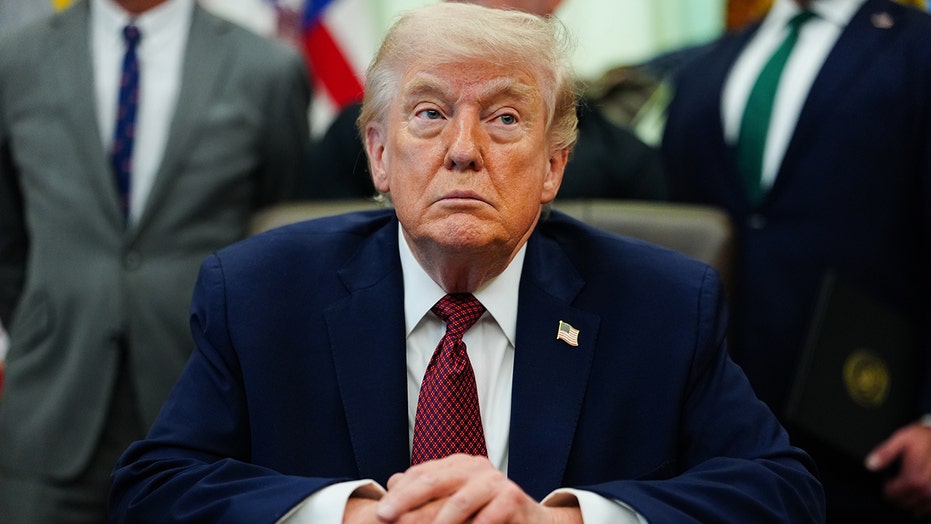
Iran Escalates Rhetoric Against President Trump as Global and Domestic Tensions Simmer
Fresh tensions between the United States and Iran are once again making headlines after an Iranian official issued a pointed warning directed at President Donald J. Trump, signaling that Tehran is prepared to reveal what it called “new cards” in the ongoing geopolitical standoff.
The sharp language comes amid already fragile negotiations over sanctions, nuclear restrictions, and regional security. It also arrives at a moment when domestic political struggles—from redistricting battles in Virginia to high-stakes Senate confirmation hearings—are reshaping the American political landscape.
Below is a deeper look at the major developments dominating the headlines and what they mean for the future of American strength and security.
Iran’s Warning: “New Cards” on the Table
An Iranian regime official recently directed stark rhetoric toward President Trump, warning that Tehran is prepared to unveil “new cards” if pressure from Washington continues. The phrasing suggests Iran believes it has additional leverage—whether military, economic, or diplomatic—that has not yet been deployed.
The confrontation unfolds against the long shadow of U.S. withdrawal from the Joint Comprehensive Plan of Action (JCPOA), commonly known as the Iran nuclear deal. The Trump administration has long argued that the Obama-era agreement failed to permanently halt Tehran’s nuclear ambitions and allowed billions of dollars to flow into regime coffers.
Iranian state officials have responded in recent months with a familiar pattern:
- Threats to expand uranium enrichment.
- Warnings about limiting international inspections.
- Rhetoric about disrupting energy transport routes in the Middle East.
One strategic flashpoint remains the Strait of Hormuz, a narrow waterway through which nearly 20% of global petroleum liquids consumption flows. According to the U.S. Energy Information Administration, disruption in this region could trigger significant global economic instability.
President Trump has consistently emphasized a doctrine of “peace through strength,” reinforcing American military presence in the region and maintaining strict sanctions to deter nuclear advancement and regional aggression. Supporters argue that only firm, unwavering resolve can prevent Tehran from gaining nuclear capability.
The broader picture reflects internal turbulence inside Iran itself. Analysts, including former military leaders, have pointed to potential fractures among the elite leadership and the Islamic Revolutionary Guard Corps. With economic hardship worsening for everyday Iranians, regime officials may be attempting strong external messaging to preserve internal control.
As tensions mount, the message from Washington remains clear: American interests and allies in the region will be protected.
Redistricting Fight in Virginia Sparks “Power Grab” Accusations
Meanwhile, back on American soil, political tensions are heating up in the Commonwealth of Virginia. Republican lawmakers are sounding alarms over what they describe as a Democratic “power grab” tied to proposed redistricting changes.
At issue is how legislative districts are drawn following population changes reflected in the U.S. Census Bureau data. Redistricting plays a decisive role in shaping control of state legislatures and, by extension, Congressional representation.
Republicans argue that proposed changes tilt district lines in ways that could dilute conservative voter influence in key regions. Democrats counter that adjustments are necessary to correct perceived imbalances.
Redistricting battles are nothing new in American politics, but the stakes remain exceptionally high in Virginia, a state long considered politically competitive. Control of legislative chambers influences:
- Tax policy.
- Second Amendment protections.
- Education standards.
- Energy development initiatives.
Critics warn that partisan redistricting undermines faith in election integrity. Supporters of reform claim it ensures “fair maps.” Ultimately, the issue underscores a broader national struggle over how elections are structured and whether voters choose politicians—or politicians choose their voters.
Forensic Lab Linked to Notorious Serial Killer Case Appears in New Probe
In the world of law enforcement, advances in forensic science continue to reshape cold case investigations. The forensic laboratory that helped identify and prosecute the suspect in the notorious FBI-assisted Gilgo Beach serial killer investigation is now believed to be involved in a separate probe into the disappearance of Nancy Guthrie.
The Gilgo Beach case, which spanned more than a decade, relied heavily on cutting-edge DNA analysis and genealogical tracking methods. These techniques have proven transformative, helping authorities close long-unsolved murders by cross-referencing public ancestry databases and advanced forensic profiling.
The potential connection to the Nancy Guthrie investigation suggests law enforcement agencies are increasingly leveraging sophisticated lab techniques to crack difficult cases. For victims’ families, such technological tools provide long-awaited hope for justice.
Security Breach at JFK: Chinese National Arrested
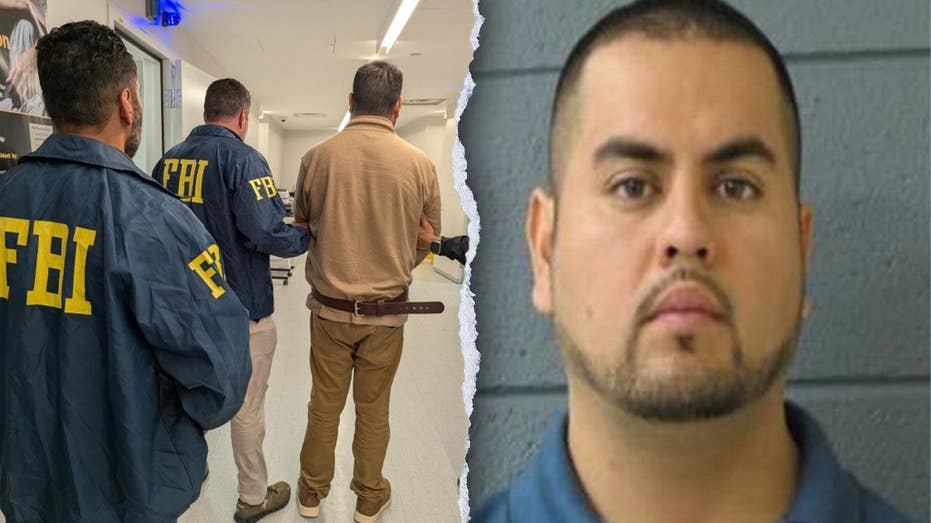
National security also took center stage after a Chinese student was arrested at John F. Kennedy International Airport in New York. Authorities allege the individual photographed a sensitive U.S. military aircraft often referred to as the “doomsday plane,” designed to function as an airborne command center in times of crisis.
The aircraft is part of a highly classified component of U.S. readiness operations. Military assets like these are coordinated under the authority of the U.S. Department of Defense.
Federal prosecutors have not publicly disclosed full details, but the incident raises renewed concerns about foreign intelligence gathering activities inside the United States. Law enforcement agencies remain vigilant regarding surveillance attempts tied to foreign governments, particularly amid heightened global competition with the Chinese Communist Party.
Tragic Triple Homicide Shocks Community
A brutal triple homicide—claiming the lives of a mother, a pregnant teenager, and a young boy—has left an American community in shock. Authorities confirm the victims were discovered bound inside a private residence, and investigators believe multiple suspects may have coordinated the attack.
Local law enforcement agencies are working with state authorities to track down leads. Such cases tragically underscore the persistent threat of organized violent crime in some regions of the country.
The incident has reignited debate over:
- Gang-related criminal networks.
- Human trafficking links.
- The role of cross-border crime pipelines.
Families across America continue to demand stronger law enforcement resources and tougher sentencing standards to prevent repeat offenders from returning to communities.
NASA Joins Investigation Into Missing Scientists
In another troubling case, NASA confirmed coordination with relevant agencies in investigating the mysterious deaths or disappearances of 11 scientists. Officials are examining potential patterns in the cases, though no conclusions have yet been announced.
The involvement of NASA suggests that at least some of the individuals were associated with federal research, space science, or advanced engineering projects.
Federal authorities have not indicated whether foul play is suspected in all instances. Nonetheless, the concentrated nature of the cases has raised eyebrows in the scientific community.
Gun Violence at Tourist Landmark
A shooting at a historic tourist site left one person dead and several others injured, disrupting what should have been an ordinary day of sightseeing.
Authorities have not yet released a clear motive, though local police are reviewing surveillance footage and interviewing witnesses. Attacks at public attractions often carry broader implications, impacting tourism and perceptions of safety.
Violence at iconic sites also highlights ongoing national conversations around security infrastructure and crime prevention strategies in public spaces.
Leadership Transition at Apple Signals Tech Industry Shift
In the business world, longtime Apple executive John Ternus is set to assume the role of CEO, succeeding Tim Cook at Apple Inc.. The move marks a generational shift at one of America’s most influential companies.
Apple’s leadership changes have meaningful implications for:
- Domestic manufacturing strategies.
- Supply chain diversification away from China.
- Artificial intelligence development.
- Data privacy initiatives.
As global competition intensifies in the tech sector, American corporate leadership decisions carry strategic importance far beyond Silicon Valley.
Senate Confirmation Hearing Puts Fed Nominee Under Spotlight
On Capitol Hill, a high-profile confirmation hearing is underway for a nominee to lead what is widely considered the world’s most powerful central bank: the Federal Reserve.
The Federal Reserve sets interest rates that influence everything from mortgage payments to small business loans. In a climate of inflation concerns and economic uncertainty, leadership at the central bank is especially consequential.
Lawmakers are pressing the nominee on:
- Inflation control strategies.
- Banking regulations.
- Digital currency plans.
- Long-term debt management.
For everyday Americans, these decisions translate directly into the cost of living and long-term economic stability.
Capitol Funding Standoff Reflects Broader Divisions
In another display of Washington gridlock, Senate Republicans are preparing a party-line funding bill, despite internal disagreements and tensions with House leadership.
Budget battles frequently expose divides between fiscal conservatives pressing for spending cuts and lawmakers prioritizing defense, infrastructure, or social programs.
As debates intensify, some lawmakers warn that failing to reach bipartisan agreements risks temporary government shutdowns that can ripple across federal agencies and military operations.
Cultural Flashpoints and Media Controversies
Beyond politics and policy, cultural debates continue to animate national discourse.
A nonprofit network is under scrutiny for receiving federal funding while promoting progressive social ideologies. Critics argue taxpayer dollars should not advance politicized agendas, reigniting debates over grant oversight and conditions on federal funds.
Elsewhere, public figures—including journalists and television hosts—have ignited controversy with pointed comments aimed at political opponents, illustrating how America’s cultural divide often plays out on-air and online.
Health, Science, and Lifestyle Headlines
Health researchers are exploring data suggesting environmental toxins may play a role in lung cancer cases among non-smokers. Studies increasingly examine pesticide exposure and air quality factors as possible contributors.
Meanwhile, nutrition experts caution against overdependence on dietary supplements, emphasizing whole foods and balanced nutrition over quick-fix solutions.
Even archaeology offered a surprise: researchers uncovered an ancient Roman mosaic depicting a woman battling a leopard—potentially the earliest known visual of a female combatant in an arena. The discovery adds to historical understanding of women’s roles in ancient societies.
The Bigger Picture: Strength Abroad and Stability at Home
From Tehran’s saber-rattling to redistricting disputes in Virginia, the headlines of the day reflect a nation navigating both external threats and internal divisions.
Whether confronting nuclear ambitions in the Middle East, safeguarding sensitive military assets, reforming electoral maps, or ensuring fair economic policy, the consistent thread is the importance of American resolve.
Peace, prosperity, and liberty require vigilance. They demand accountability in government, strength in foreign policy, and transparency in institutions.
As President Trump faces mounting pressure overseas and lawmakers clash in Washington, one principle remains clear: America’s security and constitutional order must remain non-negotiable priorities.
In a world of rising instability, steady leadership and informed citizens are the ultimate safeguards of the Republic.