Florida Sheriff Draws a Line in the Sand Over “Teen Takeovers” and Parental Responsibility
As viral “teen takeover” gatherings sweep communities across America, one Florida lawman is making it clear that enough is enough. Polk County Sheriff’s Office leader Sheriff Grady Judd is sending a direct warning to both teenagers causing chaos and the parents who fail to rein them in: accountability is coming.
In a recent public message, Judd addressed a rising trend fueled by social media platforms like TikTok, where large groups of teens coordinate rapid meetups that often spiral into vandalism, reckless driving, and clashes with law enforcement. His message was straightforward—Polk County will not tolerate disorder masquerading as internet entertainment.
And perhaps most notably, he made it clear that if parents refuse to step up, authorities may step in.
What Are “Teen Takeovers”?
The so-called “teen takeover” trend involves large, loosely organized gatherings—frequently arranged through social media—where teens converge on shopping centers, restaurants, parks, or downtown districts. While some events begin as meetups, many escalate into criminal activity.
Communities across the country have reported:
- Property damage to retail stores and restaurants
- Fights and assaults
- Reckless driving and dangerous street stunts
- Illegal weapons possession
- Drug and alcohol violations
Videos from these events are often posted online to generate views and social media attention. The pursuit of internet fame, critics say, is replacing common sense—and sometimes replacing parental oversight.
For Sheriff Judd, this is not harmless teenage mischief. It poses risks to business owners, families, and the teens themselves.
“We’re Going to Hold You Accountable Too”
In his remarks, Judd did not confine his warning to the teens participating in disruptive behavior. He addressed their parents directly.
“Mama and Daddy, if you don’t hold them accountable, personally, make sure they are home when they need to be, then we’re gonna come lock you up too, or charge you civilly.”
His warning references real legal mechanisms available in Florida. Parents can face civil liability in cases where minors cause property damage. Additionally, allowing juveniles to violate curfew laws can carry consequences.
Polk County enforces a juvenile curfew that applies to those under 17 from 11 p.m. to 6 a.m. Sunday through Thursday and midnight to 6 a.m. on weekends. For 17-year-olds, the curfew runs from midnight to 6 a.m. daily. These laws are designed to reduce crime, protect youth from harm, and give law enforcement a tool to prevent late-night disturbances.
Judd’s broader message is rooted in a traditional belief: parents—not police—are ultimately responsible for raising disciplined, law-abiding citizens.
Not Just a Florida Problem
Polk County is not alone in confronting teen-related disturbances. Nearby Hillsborough County Sheriff’s Office and the Tampa Police Department have also dealt with recent large-scale incidents.
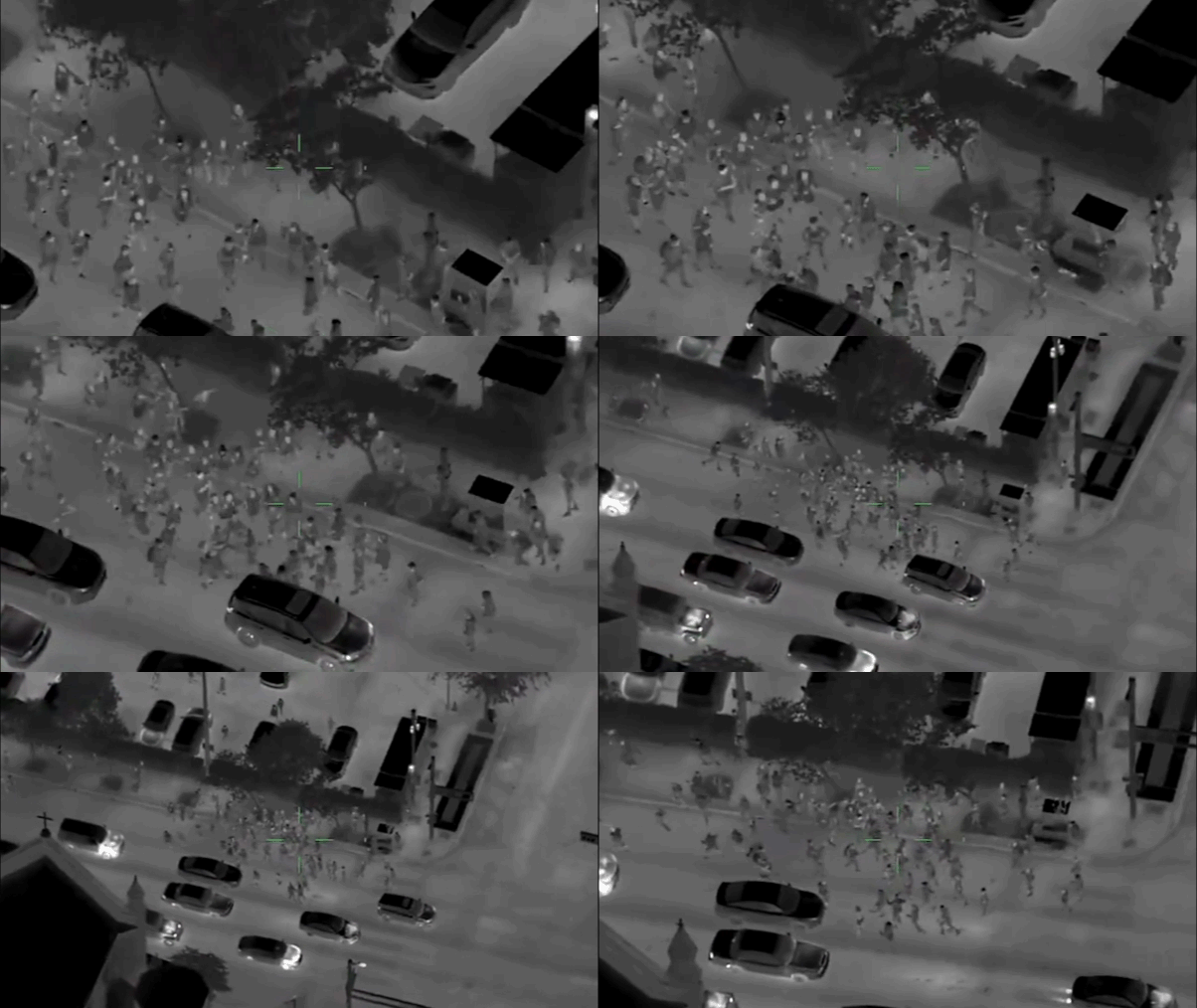
On May 8, authorities in Hillsborough County arrested 22 individuals between the ages of 12 and 21 following a chaotic gathering that escalated into criminal conduct. According to law enforcement, patrol officers, bike units, and air support were deployed to restore order and safeguard nearby residents and businesses.
Charges in that incident included:
- Affray (fighting in public)
- Possession of narcotics
- Resisting an officer without violence
- Unlawful possession of a weapon
Two firearms and a vehicle were seized during the operation.
Tampa Police Chief Lee Bercaw underscored the seriousness of the situation, emphasizing that reckless and criminal behavior will not be tolerated. He also echoed Judd’s appeal to parents, stressing the long-term consequences that criminal records can have on young lives.
The Legal Debate: Accountability vs. Leniency
The surge in youth-related disturbances comes amid a broader national conversation about juvenile justice. In some jurisdictions, policymakers have pushed reforms designed to reduce detention and emphasize rehabilitation for minors.
But others argue that excessive leniency sends the wrong message.
In Washington, D.C., the U.S. Attorney’s Office for the District of Columbia has highlighted concerns about rising youth crime and has called for stronger enforcement measures. Advocates of tougher policies argue that meaningful consequences deter repeat offenses and restore public confidence in the rule of law.
Supporters of Sheriff Judd’s tough stance believe that accountability at both the juvenile and parental levels may be essential to reversing troubling trends.
The Social Media Factor
The rise of teen takeovers would not be possible without the instant organizing power of social media platforms. Apps can broadcast meetup locations to hundreds—or even thousands—of users in seconds.
Law enforcement agencies nationwide have acknowledged the challenge this creates. Unlike traditional organized events, these gatherings often materialize with little advance warning.
The viral nature of the content fuels repetition. Teens see videos of disorder going viral, attracting attention and online validation, and may seek to replicate the spectacle in their own communities.
This dynamic places law enforcement in a reactive posture. Agencies like the Polk County Sheriff’s Office must be prepared to respond rapidly to prevent escalation and injuries.
The Impact on Local Businesses and Families
For small business owners, teen takeovers are more than headlines—they are direct economic threats.
Restaurants and retail stores can suffer broken windows, stolen merchandise, and property damage that drive up insurance costs. In some cases, owners are forced to temporarily close, losing revenue and payroll stability for employees.
Families living near affected areas often report fear and frustration. Parents with younger children may feel unsafe visiting previously family-friendly spaces.
Communities pride themselves on being places where families can gather without fear of violence or vandalism. When large groups disrupt public spaces, that sense of safety erodes.
Curfews and Community Responsibility
Curfews have long been tools used by municipalities to limit late-night juvenile activity. According to the Office of Juvenile Justice and Delinquency Prevention, many American communities implement curfews as part of broader youth crime prevention strategies.
Critics argue curfews alone cannot solve deeper cultural issues. Supporters counter that they provide a lawful means to intervene before situations become dangerous.
Sheriff Judd’s position appears to integrate both enforcement and parental involvement. He is not calling for a police-only solution; rather, he is urging families to reclaim authority within the home.
- Know where your children are
- Know who they are with
- Set and enforce household rules
- Communicate clear consequences
His message reflects a belief deeply rooted in American conservatism: strong families build strong communities.
The Role of Parents in Preventing Escalation
Parents play a critical role in shaping behavior long before it reaches law enforcement’s radar. Experts in adolescent development consistently emphasize consistent structure, clear boundaries, and active monitoring.
When teenagers gather at unsupervised late-night events, especially after curfew, risk factors multiply. The presence of weapons or substances, combined with the emotional intensity of crowds, can quickly lead to tragedy.
Law enforcement leaders argue that parental vigilance is not merely a suggestion—it is a civic responsibility.
Under Florida law, parents may face financial liability for property damage caused by their minor children. While criminal charges against parents are rare and dependent on circumstances, civil repercussions are very real.
A Broader Cultural Moment
The teen takeover phenomenon taps into a broader debate about discipline, digital influence, and shifting cultural norms.
Many Americans are asking hard questions:
- Has the digital age weakened traditional parental oversight?
- Are institutions too reluctant to enforce discipline?
- What message does society send when bad behavior goes viral and unpunished?
In communities like Polk County, law enforcement leaders are making clear that passive responses are no longer acceptable.
Judd’s tone—direct, unapologetic, firm—reflects frustration shared by many citizens who believe public order is foundational to freedom. Without safety in public spaces, the everyday liberties Americans cherish become compromised.
Balancing Firmness and Fairness
While some critics may view tough rhetoric as heavy-handed, supporters argue that clarity prevents confusion. Teenagers who understand there will be immediate consequences may think twice before joining a viral disturbance.
Importantly, officials are not criminalizing lawful assembly or peaceful gatherings. The line, as described by Florida authorities, is drawn at criminal conduct—vandalism, violence, weapons violations, and defiance of lawful orders.
The rule of law applies regardless of age.
A Message Before Summer Begins
As summer approaches—a season when school is out and unsupervised time increases—law enforcement agencies are preparing for potential spikes in juvenile activity.
Sheriff Judd concluded his warning with a clear directive: parents should act now, before law enforcement has to intervene.
“Hold your children accountable, so we don't have to,” he urged.
The underlying message resonates beyond Florida. In communities nationwide, families, business owners, and local officials are grappling with how to maintain safety in an era of viral mobilization.
Whether through curfews, increased patrols, or parental engagement, one principle remains central: chaos is not entertainment.
For many Americans, the debate ultimately returns to core values—responsibility, order, and respect for community. Sheriff Judd’s warning reflects a belief that law enforcement should support those values, not apologize for defending them.
As the nation watches how cities respond to youth-driven disturbances, one thing is certain: in Polk County, Florida, authorities have drawn a firm line.
Parents are on notice. Teenagers are on notice. And the message from Sheriff Grady Judd is unmistakable—personal responsibility still matters in America.
Wake Up America News – Your Source for Patriotic News.