Trump Declares Iran “No Longer a Threat” as He Unveils Next Phase of America’s War Strategy
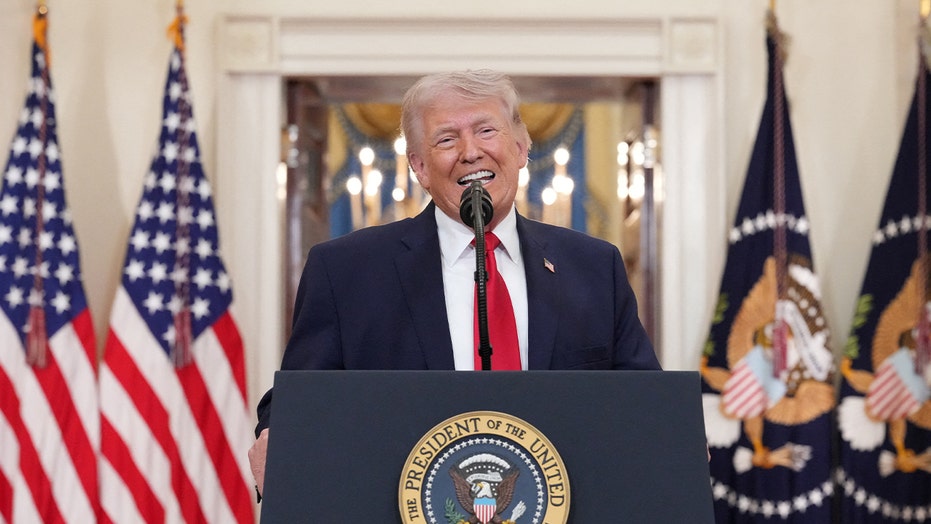
In a nationally televised address that many are already calling a historic moment in modern U.S. foreign policy, President Donald J. Trump declared that, after 32 days of sustained military operations, Iran’s capacity to directly threaten the United States has been decisively crippled.
Standing before the American people, Trump described the past month as a “defining moment” for national security and outlined what he called the “next phase” of U.S. operations—one focused on deterrence, enforcement, and long-term strategic pressure.
“Iran is no longer the threat it was 32 days ago,” the president said, emphasizing that American forces would continue to strike swiftly and decisively if provoked. “If they test us, we will respond very hard.”
The remarks signaled a shift from rapid offensive operations to strategic containment—while making clear that American strength, not diplomacy alone, forced Tehran to the table.
A 32-Day Campaign That Reshaped the Battlefield
According to official briefings from the U.S. Department of Defense, the campaign targeted key Iranian military installations, missile facilities, cyber infrastructure, and networks tied to regional proxy groups. While operational specifics remain classified, Pentagon officials have confirmed that Iran’s long-range strike and drone capabilities were significantly degraded.
For decades, Iran’s regime has leveraged asymmetric warfare—arming proxy militias across the Middle East, conducting cyberattacks, and threatening critical maritime routes like the Strait of Hormuz. The administration framed this conflict not as an isolated incident, but as the culmination of years of aggression.
The president specifically referenced threats to U.S. personnel stationed in the region and attacks tied to Iranian-backed groups. The message was clear: American deterrence has been restored through force.
“Peace through strength is not a slogan,” Trump stated. “It’s how you protect American lives.”
Revisiting the Obama-Era Nuclear Deal
A central theme of Trump’s address was his longstanding opposition to the 2015 Iran nuclear agreement, formally known as the Joint Comprehensive Plan of Action (JCPOA). Negotiated during the Obama administration, the deal lifted sanctions in exchange for limits on Iran’s nuclear program.
In 2018, Trump withdrew the United States from the agreement, arguing it failed to prevent long-term nuclear ambitions and ignored Iran’s ballistic missile development and regional destabilization efforts.
“Terminating that deal was one of the most important steps we took to protect America,” Trump reiterated in his address. “It was a disaster.”
Supporters of the withdrawal argue that financial relief from sanctions empowered Tehran to fund militant proxies and expand influence in Syria, Iraq, Lebanon, and Yemen. Critics counter that the JCPOA constrained nuclear enrichment, but the president’s comments made clear he views abandoning the agreement as foundational to the current strategy.
The Next Phase: Sustained Pressure and Readiness
President Trump did not declare an end to operations. Instead, he previewed what he called a “controlled but relentless” next phase.
That strategy includes:
- Maintaining forward-deployed U.S. assets in the region
- Strengthening intelligence-sharing with allies, including Israel
- Expanding maritime security operations to protect global shipping lanes
- Keeping economic sanctions firmly in place
- Rapid retaliation authority for renewed aggression
The continued economic component will likely involve enforcement measures coordinated through the U.S. Department of the Treasury, which oversees sanctions regimes targeting Iran’s energy exports and banking sector.
The administration’s argument is straightforward: military dominance disrupted Iran’s capabilities, and sustained economic pressure will ensure it cannot rebuild them.
Impact at Home: Energy Markets and Gas Prices
The conflict’s ripple effects have been felt domestically, particularly at the gas pump. As oil markets responded to uncertainty in the Persian Gulf, crude prices climbed in the immediate aftermath of U.S. strikes.
The U.S. Energy Information Administration (EIA) has been closely monitoring volatility, noting that Middle East tensions can quickly influence global supply chains.
Trump addressed these concerns directly, arguing that America’s expanding domestic production capacity has cushioned the blow compared to prior decades.
“We are energy dominant,” he said, highlighting growth in U.S. oil and natural gas production over the past several years.
While some states have reported price increases, analysts note that the broader energy market remains more resilient than during previous Middle East crises. The administration maintains that American energy independence reduces the leverage hostile regimes once held over U.S. consumers.
Capitol Hill: DHS Funding Showdown and GOP Strategy
At the same time the administration navigates international conflict, it is also managing a prolonged funding battle over the Department of Homeland Security (DHS).
Congressional Republicans have largely supported Trump’s strategy to prevent a lapse in funding through executive maneuvering, even as intraparty tensions surfaced over spending priorities.
The DHS impasse has exposed deeper divides over border enforcement, immigration policy, and budget control. The department plays a critical role in:
- Border security through U.S. Customs and Border Protection
- Immigration enforcement via ICE
- Disaster response coordination under FEMA
- Cybersecurity protections for critical infrastructure
To ease pressure on federal employees affected by funding uncertainty, the administration introduced temporary tax relief measures for impacted DHS workers. Officials described the move as a bridge solution while lawmakers negotiate a permanent agreement.
Crime and Public Safety: Disturbing Incidents Raise Questions
Beyond geopolitics and Washington gridlock, several domestic crime stories captured national attention.
In one alarming case, a man with a prior arrest was caught on video attempting—twice—to shove a stranger onto active subway tracks. Authorities are investigating the attack, which has heightened concerns about urban safety and repeat offenders slipping through the cracks.
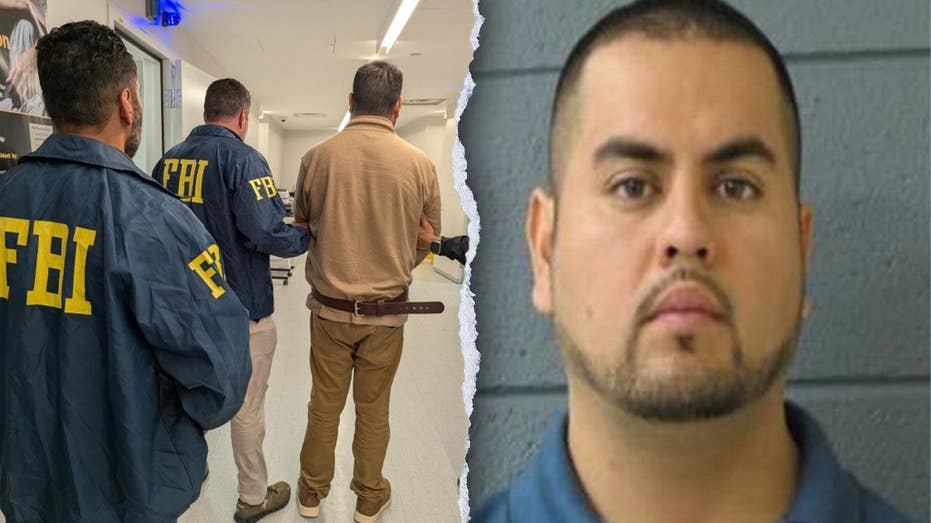
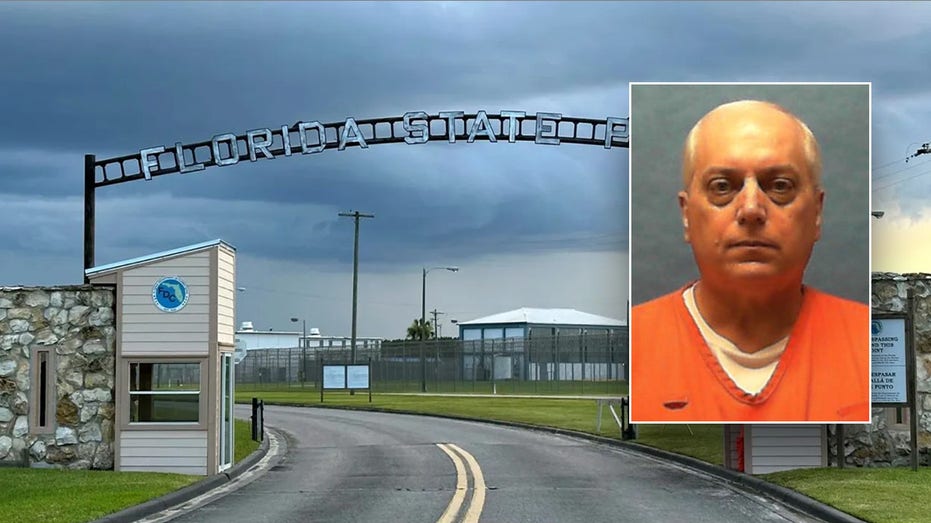
In another disturbing development, multiple firefighters honored within their community were arrested and charged in connection with an alleged child sexual abuse case involving the same juvenile victim. Law enforcement officials have stressed that the charges are serious and the investigation remains ongoing.
These incidents underscore a broader debate playing out nationwide about criminal justice policies, accountability, and public safety reforms.
Culture, Sports, and the Gender Policy Debate
The national conversation over fairness in women’s athletics resurfaced after a Minnesota college softball player publicly criticized taxpayer dollars being directed toward a lawsuit involving a transgender athlete.
The fight over state policies and Title IX interpretations has divided lawmakers and courts across the country. The U.S. Department of Education continues to face pressure from advocacy groups on both sides of the issue.
For many Americans, the debate centers on questions of competitive fairness, women’s scholarships, and biological differences in sport. The controversy shows no sign of slowing, particularly as election season approaches.
A Giant Leap: Artemis II and America’s Space Ambitions
While headlines were dominated by conflict and politics, America also witnessed a moment of inspiration: the launch of Artemis II.
The mission, led by NASA, marks the first crewed deep-space flight around the Moon since the Apollo era. Artemis II is part of a broader effort to establish sustained lunar exploration and eventually pave the way for missions to Mars.
The new lunar initiative signals that the United States intends to maintain its dominance not only militarily but technologically. As rivals like China expand their own space programs, the stakes are higher than ever.
Proponents argue that investment in space exploration strengthens national security, innovation, and economic growth. From satellite deployment to defense applications, space increasingly intersects with strategic competition.
Media Moments and Political Realignments
Several prominent media personalities made waves this week with candid political commentary.
Sports commentator Stephen A. Smith publicly expressed regret over his previous vote for Vice President Kamala Harris, saying he has lost confidence in Democratic leadership.
Meanwhile, radio host Charlamagne Tha God raised eyebrows after describing federal immigration officers at airports as unexpectedly efficient and courteous—remarks that sparked debate across social media.
Longtime Democratic strategist James Carville also made pointed comments suggesting future political battles targeting the president’s family, reinforcing how sharply polarized the national climate remains.
Foreign Dangers: Reporter Kidnapped in Baghdad
Internationally, concern is mounting over an American reporter abducted in Baghdad, Iraq. Known for pursuing difficult assignments with limited resources, the journalist reportedly focused on underreported local stories.
Kidnappings in conflict-prone regions remain a risk despite improved global coordination. The U.S. Department of State routinely advises American citizens about travel dangers in areas experiencing instability.
The administration has not disclosed operational details but confirmed it is working to secure the reporter’s safe return.
Health and Science: Marijuana Study Sparks Alarm
A new study suggesting a potential link between heavy marijuana dependency and increased lung cancer risk has reignited debate about cannabis legalization.
While marijuana laws vary by state, federal agencies such as the Centers for Disease Control and Prevention continue to research respiratory and behavioral health impacts.
The findings complicate the narrative that marijuana is entirely risk-free and could influence future public health policy discussions.
America at a Crossroads
From the battlefields of the Middle East to the corridors of Congress, from the Moon’s orbit to the gas pump back home, the week’s headlines reflect a nation navigating high stakes at home and abroad.
President Trump’s address framed the Iran campaign as proof that decisive American action can rapidly neutralize threats. Whether history ultimately agrees will depend on what happens next.
The administration insists the message has been delivered: aggression against the United States carries swift and overwhelming consequences.
As markets stabilize, lawmakers wrangle over funding, and allies watch closely, one thing is certain—America’s role in shaping global security remains unmistakable. In the words of the president, this is not the end of the mission, but the next chapter in defending the nation.
For now, the White House projects confidence that American strength has once again reshaped the geopolitical landscape—and that adversaries around the world are taking notice.
Wake Up America News — Your Source for Patriotic News.