Arizona Cold Case Closed After 30 Years: Missing Teen Found Alive, Investigators Reveal She Left by Choice
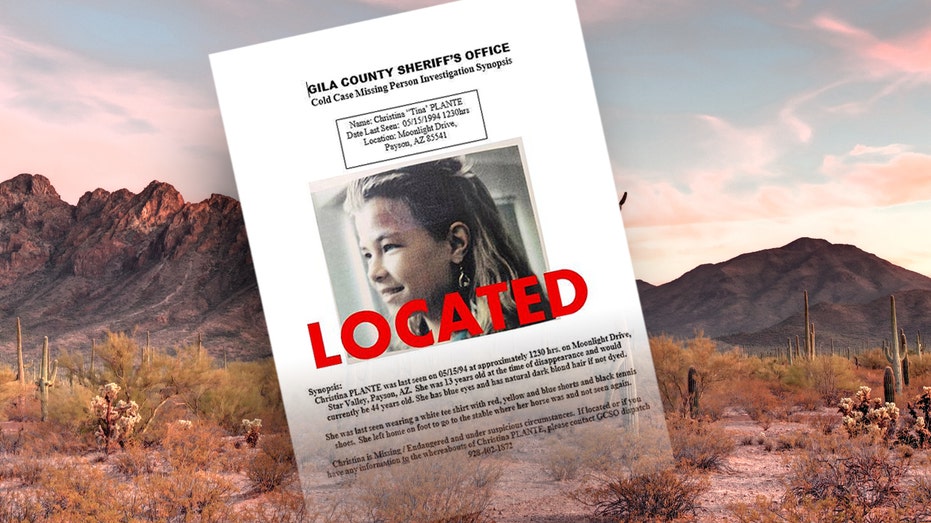
For more than three decades, the disappearance of 13-year-old Christina “Tina” Marie Plante haunted a small Arizona community and lingered in the files of law enforcement as a suspected abduction. This week, the Gila County Sheriff’s Office confirmed that Plante, now 44, is alive — and that her 1994 disappearance was not a kidnapping, but a voluntary departure.
The revelation stunned even the seasoned investigator who ultimately located her. What had long been treated as a potential criminal case involving an endangered child turned out to be something far different — a teenage runaway who built an entirely new life.
The news brings closure to one of rural Arizona’s enduring mysteries and offers insight into how missing-person cases evolve over time, sometimes in unexpected ways.
A Disappearance That Sparked Alarm
On May 15, 1994, Tina Plante was last seen leaving her home in Star Valley, Arizona, a small town nestled in Gila County. According to early reports, she told others she was heading toward a nearby horse stable. She never returned.
At the time, she was described as having blue eyes and dark blonde hair. She was reportedly wearing a white T-shirt, multicolored shorts, and black tennis shoes.
When she failed to come home, alarm bells sounded immediately. Law enforcement launched search efforts across the rural terrain, canvassing the area and pursuing any potential lead. Given her age and the suddenness of her disappearance, investigators classified the case as “missing/endangered” under suspicious circumstances.
In the mid-1990s, investigative tools were relatively limited compared to today’s advanced forensic and digital tracking capabilities. Officers relied heavily on community tips, physical searches, and traditional interviews. Despite those efforts, no solid leads materialized.
Over time, the case went cold — but it never closed.
For Years, Suspicions of Abduction Lingered
Because Tina was only 13 years old at the time, authorities operated under the serious possibility that she had been abducted. In cases involving minors, law enforcement must assume the worst until proven otherwise.
The case remained open within the sheriff’s office files, periodically reviewed as part of long-standing efforts to resolve unresolved disappearances. Agencies across the country, including the Federal Bureau of Investigation (FBI), have expanded resources over the years dedicated to assisting with violent crime and missing persons investigations.
While there has been no indication that federal authorities directly handled this case, national databases such as NamUs (National Missing and Unidentified Persons System) — operated by the U.S. Department of Justice — have become crucial resources in helping investigators revisit and cross-reference cases that once seemed unsolvable.
For decades, many assumed Tina Plante had fallen victim to foul play. That belief shaped the direction of investigative work.
A Break in the Case
The turning point came when a cold case investigator with the Gila County Sheriff’s Office began reexamining the file. Cold case investigations often rely on methodical reviews of paperwork, updated database searches, and modern digital tools that didn’t exist when the case began.
According to reports, the investigator identified an adult woman believed to potentially be Christina Plante and reached out directly. After making contact, the woman confirmed her identity.
What the investigator learned next was, by their own account, surprising.
Rather than being abducted, Tina Plante had reportedly run away. She allegedly told investigators that she was unhappy with her living situation at the time and made a decision to leave. Reports indicate she had assistance from relatives she had been in contact with.
The longtime assumption of criminal wrongdoing was effectively erased by one simple but shocking truth: there had been no kidnapping.
Building a New Life
According to statements shared publicly, Plante expressed that her disappearance occurred during what she considers “an old life.” She is now in her 40s, with a family of her own, and has moved forward.
Authorities have declined to disclose her current location, citing privacy concerns. That decision aligns with long-standing principles in missing adult cases: when a competent adult is located and no crime is determined to have occurred, law enforcement must respect that individual’s right to privacy.
In the United States, adults have the constitutional freedom to relocate and sever ties if they choose, provided no laws have been broken. Once Tina reached adulthood, she was under no legal obligation to return or contact her previous community.
It’s a reality that can be difficult for families and communities to process — but it underscores the fundamental American principle of personal liberty.
How Cold Cases Are Reexamined
The successful resolution of this decades-old case highlights the importance of persistent investigative work. Law enforcement agencies across the country are increasingly dedicating manpower to cold cases.
Organizations such as the International Association of Chiefs of Police (IACP) advocate for structured cold case review processes, including:
- Re-interviewing witnesses using updated questioning techniques
- Re-running names through modern criminal and civil databases
- Utilizing advancements in DNA and forensic science
- Leveraging digital tools and public records databases unavailable in the 1990s
- Coordinating with state and federal systems for cross-state record checks
In some instances, breakthroughs come from forensic advances. In others — like this case — resolution comes through meticulous digital tracking and confirmation of identity.
Arizona’s law enforcement agencies, including the Arizona Department of Public Safety, regularly collaborate to share information and ensure older cases are not forgotten.
Why Runaway Cases Can Be Misclassified
When minors disappear, especially under sudden or unclear circumstances, authorities are obligated to treat the case as potentially criminal.
Statistics from child safety organizations show that many juvenile disappearances involve runaway situations rather than abductions by strangers. According to national data compiled through Justice Department resources, the majority of missing children reports involve family conflict, custodial disputes, or voluntary departures rather than stranger kidnappings.
However, at the outset, law enforcement cannot make that assumption. Every missing child case carries enormous risk, and investigators err on the side of caution.
In Tina’s case, her youth and the incomplete understanding of her whereabouts understandably sparked fear of kidnapping. Without eyewitnesses or direct evidence of a voluntary departure, suspicion filled the gaps.
The Emotional Toll on Communities
Small towns like Star Valley are tight-knit. When a young resident vanishes, the emotional aftershock can ripple across decades. Posters fade, rumors circulate, and families are left searching for answers.
Although authorities have indicated there may no longer be immediate family members actively searching for Plante in the area, unresolved cases often remain part of a community’s collective memory.
In many rural parts of America, missing children stories become cautionary tales — reminders of vulnerability and the importance of vigilance.
The ultimate resolution of this case provides closure, even if the outcome surprised those who assumed foul play.
Balancing Transparency and Privacy
One important aspect of this case is law enforcement’s limited release of details. Once it was confirmed that no crime occurred and that Plante is alive and well, authorities shifted their priority to protecting her privacy.
This can sometimes lead to public frustration. After all, communities want full explanations when a mystery lasts 30 years.
But the law is clear: adults have the right to live free from public exposure. If no criminal act has taken place, the government’s role ends with confirming safety.
That balance between transparency and individual rights reflects core American values — limited government power and the protection of civil liberties.
Lessons from a 30-Year Mystery
This case highlights several important lessons:
- Never assume facts not in evidence. Initial classifications can change with new information.
- Cold cases are worth revisiting. Technology and persistence matter.
- Freedom includes the right to start over. Adults may choose new paths, even if painful for those left behind.
- Law enforcement diligence pays off. Revisiting decades-old files can finally bring clarity.
It also reminds Americans of the complexity behind missing-person cases. Not every disappearance is a crime, and not every long-unsolved file ends in tragedy.
A Testament to Persistence
While the narrative surrounding Tina Plante’s disappearance has shifted dramatically, one fact remains constant: law enforcement did not give up.
Across the nation, thousands of unresolved cases remain open. Many are cataloged through systems such as NamUs, ensuring they are preserved and searchable over time.
The resolution in Gila County demonstrates how even smaller sheriff’s offices — often operating with limited resources — are capable of remarkable investigative work when persistence meets modern tools.
For Wake Up America readers, this story carries both caution and reassurance. Caution, because missing child cases demand relentless seriousness. Reassurance, because dedicated American law enforcement officers continue working quietly behind the scenes, even decades after headlines fade.
In the end, what began as a possible abduction concluded as something entirely different — a runaway teen who grew into an adult, created a family, and moved forward with her life.
Thirty years later, the mystery is solved. And while the truth left investigators stunned, it also closed a chapter that had remained unfinished for far too long.
That closure matters — not just for Gila County, but as a powerful reminder that in America, truth eventually rises to the surface.