High-Profile Murder Case Takes Dramatic Turn as Defense Strategy Shifts
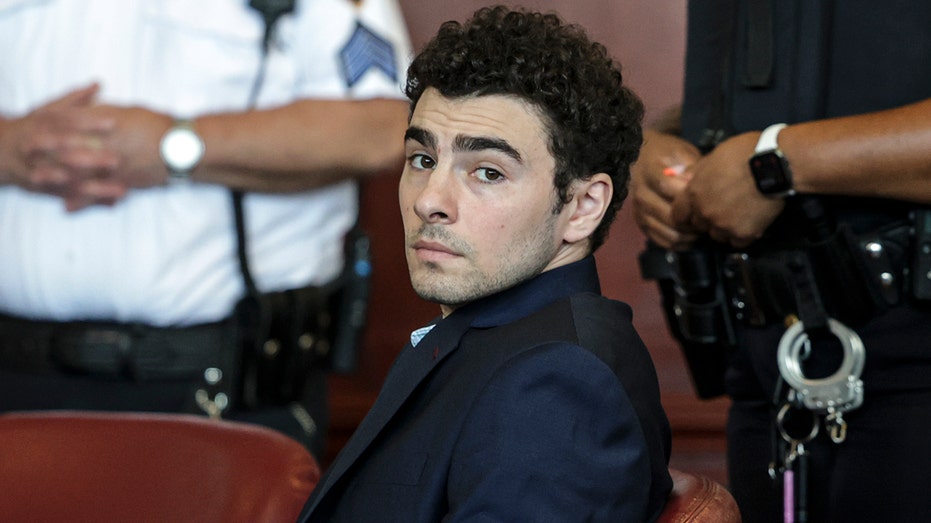
The murder prosecution of Luigi Mangione, the 28-year-old defendant accused of assassinating UnitedHealthcare executive Brian Thompson in Manhattan, took a significant and unexpected turn this week. In a brief but consequential letter submitted to the court, Mangione’s legal team formally withdrew their earlier notice signaling an intent to rely on a psychiatric-based defense at trial.
The filing, addressed to Justice Gregory Carro of the New York State Supreme Court, New York County, offered no explanation for the abrupt reversal. Yet the implications of the decision are enormous. For weeks, legal observers anticipated that Mangione’s defense would center on claims of “extreme emotional disturbance” — a strategy that, if successful, could have substantially altered the legal consequences of a conviction.
Now, with that path apparently abandoned, the stage is set for a more conventional and potentially stark courtroom battle between prosecution and defense when the trial begins.
What the Psychiatric Defense Could Have Meant
Under New York Penal Law §125.25, a defendant charged with second-degree murder may assert the affirmative defense of extreme emotional disturbance (EED). If a jury finds that the defendant acted under such disturbance at the time of the killing, the charge can be mitigated from murder to first-degree manslaughter.
This is not an insanity defense in the traditional sense. Instead, it acknowledges that the defendant intentionally caused a death but argues that overwhelming emotional strain significantly impaired their judgment at the time.
Legal experts have long emphasized that mounting such a defense is complex and risky. It requires defense attorneys to:
- Present psychiatric evaluations and expert testimony.
- Demonstrate a severe emotional crisis at the time of the alleged crime.
- Convince jurors that the emotional state was reasonable under the circumstances.
Had Mangione’s attorneys pursued this avenue, they would have needed to show that he lost self-control due to an intense psychological disturbance at the moment prosecutors say he ambushed Brian Thompson outside a Manhattan business conference.
That argument would have directly clashed with the prosecution’s narrative — one of calculated, deliberate, and documented planning.
Prosecutors Allege Months of Planning
The Manhattan District Attorney’s Office has alleged that Mangione meticulously orchestrated the killing over an extended period. According to earlier court proceedings, prosecutors claim Mangione kept journals detailing grievances and strategic thoughts leading up to the ambush.
Authorities further allege that Mangione:
- Traveled across state lines ahead of the attack.
- Conducted research related to his target.
- Carefully selected the time and place of the shooting in Manhattan.
Brian Thompson, a senior executive at UnitedHealth Group, was gunned down outside a corporate event in what prosecutors describe as a premeditated assassination.
If proven in court, that level of preparation would sharply undercut claims of an impulsive, emotionally driven act. It is precisely this tension that likely made the anticipated psychiatric defense such a pivotal issue in the case.
Why the Defense Withdrawal Matters
The decision to withdraw the psychiatric defense notice does not automatically prevent Mangione’s attorneys from presenting other mitigating evidence. However, it signals a major recalibration of strategy.
In high-profile homicide trials, defense teams must carefully weigh risks and benefits. An EED defense can be a double-edged sword:
- It requires effectively conceding that the defendant caused the death.
- It opens the door to extensive psychiatric testimony that prosecutors can challenge aggressively.
- It may alienate jurors who see the evidence as supporting deliberate action.
Additionally, asserting such a defense often allows prosecutors to conduct their own psychiatric evaluations of the defendant — a process that can generate damaging rebuttal testimony.
By withdrawing the notice, Mangione’s legal team may be signaling that either:
- Psychiatric evaluations did not support an EED argument strongly enough.
- The sealed proceedings revealed strategic downsides.
- They intend to pursue a different legal theory altogether.
Without public access to sealed court documents, those questions remain unanswered.
The Sealed Proceedings Controversy
The defense strategy became further clouded following court proceedings conducted under seal two weeks ago. Media organizations objected to the secrecy, arguing that transparency is critical in a case of such public importance.
However, Justice Carro upheld the sealing order. In a separate ruling issued Thursday, he confirmed that transcripts, emails, and related documents would remain sealed even after the defense withdrew its psychiatric notice.
Sealed proceedings are not uncommon when sensitive medical or mental health information is involved. Courts often balance public transparency against a defendant’s right to privacy and a fair trial.
Still, the continuation of secrecy has fueled speculation about what evaluations may have taken place behind closed doors.
State and Federal Charges Loom
Mangione has pleaded not guilty to the charges against him. He faces prosecution not only at the state level in New York but also in federal court.
The dual-track prosecution adds complexity and gravity to an already intense legal battle. While the state case centers on murder under New York law, federal charges could involve interstate elements tied to alleged travel and planning.
Federal proceedings are expected to follow the state trial, which is scheduled to begin in September.
The overlapping prosecutions underscore the magnitude of the case and the government’s determination to pursue accountability fully.
The Broader Legal Significance
Beyond the specific facts of this case, the Mangione prosecution highlights larger questions about accountability, corporate leadership security, and the limits of psychiatric defenses in violent crime cases.
The concept of extreme emotional disturbance has long been controversial. Supporters argue it allows courts to distinguish between cold-blooded killers and individuals driven to temporary psychological collapse. Critics contend that it risks excusing intentional violence and blurring moral clarity in murder cases.
In a country built on the rule of law, juries are tasked with making those difficult determinations. They must evaluate not only facts and forensic evidence but also mental state — a profoundly complex inquiry.
Mangione’s now-withdrawn defense would have put that debate front and center. With it off the table, at least for now, jurors may instead be asked to consider more traditional arguments such as mistaken identity, evidentiary challenges, or procedural defenses.
Corporate Leadership and Targeted Violence
The assassination of a senior executive from one of America’s largest health care corporations sent shockwaves through the business community.
UnitedHealth Group is one of the nation’s most influential healthcare organizations, serving millions of Americans. An attack targeting a corporate executive at a public event raised concerns about:
- The safety of business leaders.
- The growing climate of political and corporate hostility.
- The security implications for high-profile executives.
Law enforcement agencies have increasingly warned about threats directed at corporate figures and public officials alike. The rule of law demands that grievances — whether economic, political, or personal — be addressed through lawful means, not violence.
What Comes Next
With the psychiatric defense withdrawn, the trial preparation timeline becomes even more critical. Jury selection in a high-profile Manhattan case is expected to be rigorous, particularly given extensive media coverage.
Potential jurors will likely face detailed questioning about their exposure to news reports, opinions about corporate America, and attitudes toward mental health defenses.
Meanwhile, prosecutors will continue assembling their case, which reportedly includes:
- Travel records.
- Written materials attributed to Mangione.
- Ballistics and forensic evidence.
- Witness testimony from the scene.
The defense, in turn, may focus on challenging the admissibility, credibility, or interpretation of that evidence.
Transparency, Justice, and Public Trust
Cases of this magnitude test the strength of America’s judicial system. The Constitution guarantees due process, even for those accused of the most serious crimes. At the same time, the public has a legitimate interest in transparency and accountability.
The continued sealing of certain records reflects the court’s judgment that fairness outweighs immediate public disclosure. Whether appellate challenges emerge remains to be seen.
Ultimately, the withdrawal of the psychiatric defense simplifies one aspect of a case that had threatened to become legally labyrinthine. The core question now returns to fundamentals:
- Did Luigi Mangione deliberately and unlawfully kill Brian Thompson?
- Can the prosecution prove its case beyond a reasonable doubt?
- Will the defense undermine that proof effectively?
Those questions will not be answered in sealed filings or pretrial maneuvering — they will be decided in open court, before a jury of citizens.
A Nation Watching
America’s justice system does not bend to public opinion, political pressures, or corporate stature. It rests on evidence, procedure, and the sober judgment of jurors.
As the September trial date approaches, the public will be watching closely. The assassination of a prominent executive was not only a personal tragedy but also a chilling reminder that violence cannot be tolerated as a means of resolving disputes.
For now, Mangione stands presumed innocent under the law. But with the psychiatric defense abandoned, the path forward appears clearer and potentially more confrontational.
This trial will test not just competing legal theories, but the enduring strength of America’s commitment to justice — transparent, constitutional, and unwavering.