Unsupervised Teens Shut Down Family Carnival in New Jersey After Fights, Chaos
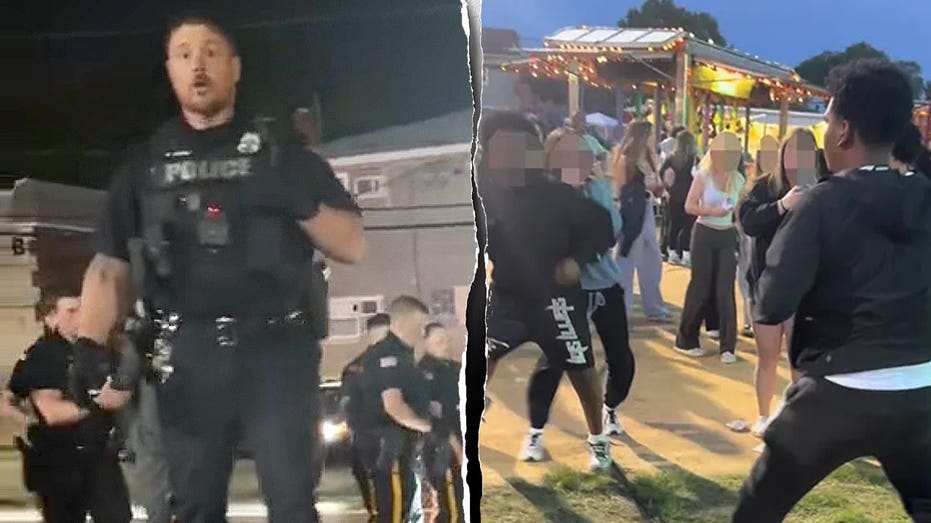
A long-standing community tradition in Maple Shade, New Jersey was cut short after what local officials described as an overwhelming surge of unsupervised juveniles disrupted the annual Maple Shade Tigers Youth Football Carnival on May 1.
According to township leaders and law enforcement, multiple fights broke out during the evening event, prompting officers to intervene and ultimately forcing organizers to shut the carnival down for the remainder of the night. The following day’s festivities were also canceled in response to the unrest.
For a town that prides itself on family-centered events and safe neighborhood gatherings, the incident has sparked serious concern about youth behavior, parental accountability, and the growing challenge local police departments face when large groups of teens gather without supervision.
What Happened at the Carnival
The Maple Shade Tigers Youth Football Carnival is typically a spring highlight in this Burlington County community. Families come out for rides, food vendors, games, and fundraising activities that support local youth football programs.
But this year’s event took a troubling turn.
In a public statement, township officials said the carnival became “overwhelmed with unsupervised juveniles,” and several physical altercations erupted over the course of the evening. Officers on site, working alongside event organizers, attempted to remove those involved and restore order.
Ultimately, the situation escalated to the point where authorities determined it was no longer safe to continue.
“The safety of our community must remain our top priority,” township officials said, explaining the decision to close the event and cancel the following night’s activities.
The Maple Shade Police Department had officers assigned to the event, but the sudden influx of disruptive teens created a volatile environment.
Police Say Teens Provoked Officers
Lieutenant Daniel O’Brien of the Maple Shade Police Department provided additional details in comments to local media outlet WPVI-TV (6ABC), the Philadelphia-based ABC affiliate.
According to O’Brien, some of the teens were not merely engaging in random scuffles but actively attempting to provoke confrontations with police.
“They were cursing at police officers. They were clearly trying to provoke physical confrontations with cops,” O’Brien said.
Such behavior, he noted, makes de-escalation far more difficult and increases the risk of further violence—not just toward officers, but toward bystanders and families attending the event.
Several teens were ultimately charged in connection with the incident, though officials have not publicly disclosed the full list of charges. As is standard protocol for juveniles, identities were not released.
A Pattern of Growing Concerns
This was not the first time local authorities had concerns about disorderly youth gatherings.
Police had already increased monitoring measures following a similar incident earlier in the year. In preparation for this carnival, officers deployed additional surveillance technology, including security cameras and a drone, in an effort to deter misconduct and respond quickly if problems arose.
The use of such technology reflects a broader trend in community policing. Departments across the country—including the New Jersey State Police—have increasingly relied on aerial and camera surveillance to help manage large public gatherings and ensure public safety.
Even with these added precautions, the volume and behavior of the teens on May 1 overwhelmed the available resources.
Community Impact: Families Caught in the Middle
For many Maple Shade residents, the shutdown was more than just a canceled night of entertainment. It represented a troubling sign of changing social dynamics.
The carnival is a fundraiser tied to local youth athletics—a symbol of small-town cooperation and spirit in Burlington County. Parents bring young children expecting a festive, wholesome environment.
Instead, many were exposed to shouting, fights, and police intervention.
Families who had come out to support youth sports were left disappointed, and organizers lost valuable fundraising opportunities. Local businesses and vendors also took a hit due to the early closure and full cancellation of the second day.
The Question of Parental Responsibility
Lt. O’Brien made a point that has become central to the discussion: parental awareness.
“If your kid is leaving the house with a face mask to go to a carnival, I think that should be a sign that they might be getting themselves into trouble,” O’Brien said.
His comment reflects growing frustration among law enforcement officials who argue that some parents are disengaged from their children’s activities—especially at large gatherings where anonymity and peer pressure can fuel misconduct.
New Jersey law provides mechanisms for addressing juvenile delinquency through the state’s family court system, governed in part by statutes accessible through the New Jersey Legislature. In some municipalities across the state, discussions have intensified around local ordinances that could hold parents financially or even criminally accountable when minors repeatedly engage in disruptive or dangerous behavior.
Supporters of such measures argue they create incentives for greater supervision. Critics, meanwhile, caution against overreach.
But in tight-knit towns like Maple Shade, many residents see the conversation less as a political debate and more as a question of common-sense responsibility.
The Broader National Context
What happened in Maple Shade mirrors incidents in other parts of the country, where so-called “teen takeovers” have disrupted malls, beaches, street festivals, and amusement parks.
In some cases, gatherings are organized via social media. In others, word simply spreads quickly among teens. Law enforcement agencies nationwide have warned that large, unsupervised groups can escalate rapidly from loitering to chaos.
According to nationwide crime data compiled by the FBI’s Uniform Crime Reporting (UCR) Program, trends in juvenile offenses fluctuate year to year, with disorderly conduct and simple assault often ranking among the more common charges associated with youth disturbances.
While the majority of American teens are law-abiding, even a relatively small number of bad actors can derail community events and threaten public safety.
The Role of Technology and Social Media
Modern technology presents both challenges and tools for law enforcement.
On one hand, social media platforms make it easier for large groups of teens to coordinate meetups quickly and sometimes anonymously. On the other, police departments increasingly rely on surveillance camera networks and drones to monitor high-traffic areas.
The Maple Shade Police Department’s decision to deploy a drone demonstrates how even smaller suburban departments are adapting to the changing landscape of public safety.
However, technology alone cannot replace supervision, judgment, and accountability.
Balancing Public Safety and Youth Engagement
Maple Shade is not a large urban center. It is a suburban community where residents expect events like the Tigers Carnival to be safe spaces for children and families.
That expectation places significant pressure on local law enforcement.
- Officers must protect attendees.
- They must respect the rights of juveniles.
- They must de-escalate conflicts without excessive force.
- They must preserve the community’s trust.
When teens allegedly attempt to provoke officers—as described by Lt. O’Brien—the margin for error narrows dramatically. Every decision is scrutinized. Every response can become a flashpoint.
For community leaders, the incident underscores the importance of proactive collaboration between parents, schools, youth organizations, and law enforcement.
The Financial and Civic Cost
Carnivals and school-affiliated fundraisers are not just entertainment. They generate critical revenue for extracurricular programs that keep young people engaged in positive activities.
The Maple Shade Tigers Youth Football organization depends on these events to help cover costs such as:
- Equipment and uniforms
- Field maintenance
- League fees
- Scholarships for families in need
When an event is shut down due to disorder, the consequences ripple outward.
There are emergency response expenses. There are lost vendor contracts. There is reputational damage that may affect future attendance.
All of it stems from the actions of a relatively small group of individuals.
Community Reaction and Next Steps
Township officials have emphasized continued cooperation with residents as they assess how to prevent similar incidents in the future.
Potential strategies could include:
- Stronger on-site identification requirements for minors
- Mandatory parental accompaniment for certain age groups
- Enhanced police presence at large community events
- Clearer curfew enforcement
New Jersey municipalities have the authority to enact local public safety ordinances, provided they align with state law. Conversations about strengthening local rules are likely to surface in the wake of this disruption.
At the same time, many in the community stress the importance of providing structured outlets for teenagers—sports, volunteer work, and civic engagement—so that they channel their energy constructively rather than destructively.
A Wake-Up Call for Parents and Community Leaders
The Maple Shade incident serves as a reminder that maintaining civil order requires more than just police presence. It requires active parenting, community standards, and shared expectations about behavior in public spaces.
Events like the Maple Shade Tigers Carnival should be celebrations of hometown pride—where children ride Ferris wheels, families share funnel cakes, and neighbors reconnect after long work weeks.
Instead, this year’s event became a cautionary tale.
The overwhelming majority of American families want safe streets and secure public gatherings. They expect that when they attend a community function, law and order will prevail.
Local authorities in Maple Shade acted to protect that standard, even at the cost of shutting down a beloved event. Now the town faces the challenge of ensuring that next year’s carnival returns to what it is meant to be: a joyful symbol of community spirit—not a battleground for disorder.
As communities across the country grapple with similar incidents, one message grows clearer: public safety starts at home. And when parents, schools, and law enforcement stand together, family traditions can thrive without fear of being overwhelmed by chaos.
For Maple Shade, the hope is that this disruption becomes a turning point—one that reinforces accountability, strengthens community bonds, and restores confidence that small-town American values still matter.