Artemis II Prepares for Historic Pacific Splashdown as America Returns to Deep Space
The United States is once again proving that the spirit which carried Americans to the Moon more than half a century ago is alive and well. NASA’s Artemis II mission — a bold step toward returning American astronauts to the lunar surface — is nearing its dramatic conclusion with a planned splashdown in the Pacific Ocean off the coast of San Diego, California.
After traveling more than 252,000 miles from Earth and circling the Moon, the Orion spacecraft is now heading home. A safe re-entry and recovery operation will mark the successful end of a mission that signals to the world that America is firmly “back in the game of deep space,” as one space museum leader aptly put it.
And fittingly, San Diego — one of America’s proudest Navy towns — will play a central role in bringing these astronauts safely home.
A Mission That Rekindles American Leadership in Space
Artemis II is the first crewed mission in NASA’s Artemis program, which aims to return humans to the Moon for the first time since the Apollo era and lay the groundwork for future missions to Mars. While Artemis I, launched in 2022, successfully tested the Space Launch System (SLS) rocket and Orion spacecraft without a crew, Artemis II carries astronauts on a lunar flyby, restoring human presence to deep space for the first time in generations.
The four-person crew aboard the Orion capsule has journeyed around the Moon in a mission designed to test life-support systems, navigation, and deep-space operations before astronauts eventually attempt a lunar landing under Artemis III.
The mission underscores several key achievements:
- First crewed flight of the Orion spacecraft
- First time astronauts have traveled beyond low-Earth orbit since 1972
- A critical validation step before returning Americans to the lunar surface
- Progress toward long-term goals of establishing a sustained lunar presence and eventual missions to Mars
In a world where geopolitical competitors are aggressively expanding their own space ambitions, Artemis II serves as a powerful reminder that the United States remains the global leader in exploration, innovation, and scientific achievement.
The Critical Role of the U.S. Navy in Recovery Operations
Once Orion blazes through Earth’s atmosphere — enduring temperatures approaching 5,000 degrees Fahrenheit during re-entry — it will deploy parachutes and gently splash down in the Pacific Ocean near San Diego.
From there, it becomes a Navy mission.
The United States Navy, in partnership with NASA, will lead recovery operations. The amphibious transport dock USS John P. Murtha (LPD-26), a San Antonio-class landing platform dock, is tasked with securing the spacecraft and retrieving the crew.
The recovery process is carefully choreographed and reflects decades of accumulated experience — much of it dating back to the Apollo missions:
- Specialized Navy divers and recovery swimmers secure the capsule in the water.
- Rigging lines are attached to stabilize the spacecraft.
- The ship’s well deck is partially flooded, allowing Orion to be maneuvered inside the vessel.
- Astronauts are assisted out of the capsule and undergo immediate medical checks.
For San Diego-based sailors, it is a proud moment. The Navy’s amphibious ships are typically associated with combat readiness and humanitarian missions. Using one for a peaceful venture that celebrates science and exploration highlights the versatility and strength of America’s sea services.
Navy veteran David Haas noted that landing platform docks are “good all-around ships for all sorts of things,” and seeing one used for such a historic, peaceful mission brings added pride to the fleet.
San Diego: A Patriotic City at the Heart of the Homecoming
Few cities are more closely intertwined with America’s military than San Diego. Home to major naval installations and a community deeply supportive of service members, the city is uniquely suited to host this historic homecoming.
Residents and visitors alike are expected to gather along scenic coastal vantage points to witness the splashdown. Local museums, including the San Diego Air & Space Museum, are preparing for a surge of interest as Americans reflect on how far the space program has come — and where it is headed next.
Jim Kidrick, president and CEO of the museum, captured the mood clearly: Americans admire winners and rally behind bold pursuits. The Artemis II mission, he suggested, taps into the same national spirit that fueled the Apollo era and inspired a generation.
That sense of pride is not just nostalgia. It’s a recognition that the United States is once again setting ambitious, forward-looking goals in space exploration.
A Bridge Between Apollo and the Artemis Generation
More than 50 years ago, the United States stunned the world when Apollo 8 astronauts orbited the Moon and Apollo 11 placed American boots on its surface. Those achievements were not merely technological milestones — they were defining moments in the Cold War, symbols of freedom and innovation triumphing over authoritarian competition.
The Artemis program deliberately draws from that heritage. Named after the twin sister of Apollo in Greek mythology, Artemis represents both continuity and renewal.
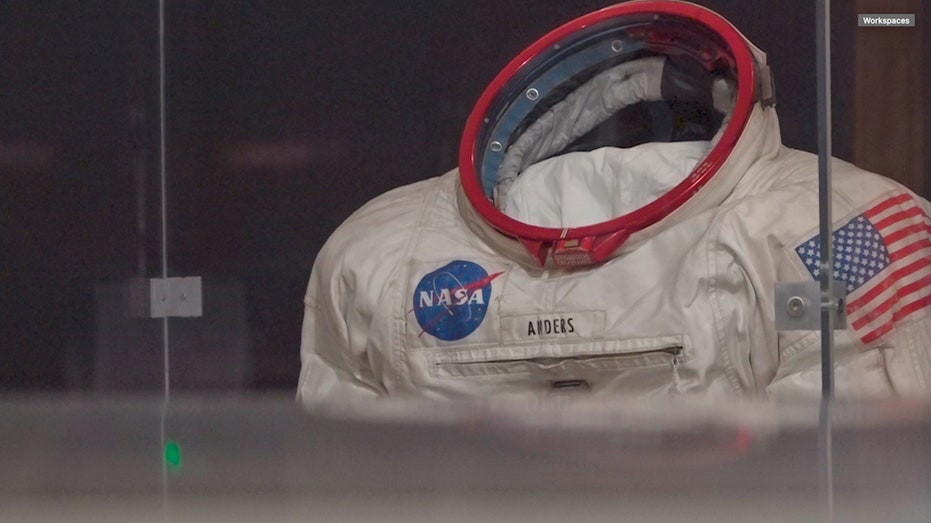
At the Air & Space Museum and across the nation, artifacts and stories from the Apollo era are once again front and center. Visitors standing before lunar modules and historic flags can now connect those achievements with present-day missions happening in real time.
For young visitors, the connection is especially powerful. Abigail Lawrence, visiting from Utah, described the thrill of witnessing what feels like another “historic moment.” For a generation raised on smartphones and streaming video, seeing astronauts travel beyond Earth orbit revives the idea that bold exploration still defines America.
The Artemis Crew and Their Lunar Journey
The Artemis II crew includes some of the most accomplished astronauts in NASA’s corps. Among them is pilot Victor Glover, whose participation adds another inspiring chapter to American space history.
Their journey around the Moon tested critical systems required for long-duration space travel:
- Life support in deep-space conditions
- Radiation shielding beyond Earth’s magnetosphere
- Communication across hundreds of thousands of miles
- Precision navigation and trajectory correction
Unlike missions in low-Earth orbit, such as those to the International Space Station, lunar missions require spacecraft to operate independently for extended periods. Every maneuver and system function is essential to ensuring that future astronauts can safely attempt lunar surface landings.
The mission also provides invaluable data for spacecraft re-entry procedures after traveling at lunar return velocities — far faster than typical orbital missions. Orion’s heat shield, the largest ever built for a crewed spacecraft, is a critical component in ensuring astronaut safety.
Weather: The Final Variable
As with all splashdowns, weather conditions remain a decisive factor.
For the Orion capsule to land safely in the designated recovery zone, there must be no rain or thunderstorms within 35 miles of the splashdown site. Although meteorologists are monitoring a Pacific storm system, forecasts currently suggest conditions will be favorable.
Tracking weather over open ocean adds layers of complexity to mission planning. NASA and Navy officials coordinate closely to ensure that wind speeds, sea states, and visibility remain within strict operational limits.
Safety remains the top priority. If conditions deteriorate beyond acceptable thresholds, alternate contingency plans are in place.
Bigger Than One Mission: The Road to the Moon and Beyond
Artemis II is more than a single flight — it is a turning point.
Future Artemis missions aim to:
- Land American astronauts near the Moon’s south pole
- Establish a sustainable lunar presence
- Deploy the planned Lunar Gateway space station in lunar orbit
- Develop technologies needed for eventual missions to Mars
The Artemis program operates within an increasingly competitive global environment. China, through its China National Space Administration (CNSA), has made clear its ambitions for lunar exploration. Maintaining American leadership in space is not only a matter of prestige but also one of national security, economic growth, and technological innovation.
Space exploration fuels advancements in materials science, computing, energy systems, and communications — industries that translate directly into jobs and competitiveness at home.
Inspiring the Next Generation of American Explorers
Perhaps the most enduring impact of Artemis II will not be measured in miles traveled but in dreams sparked.
At the San Diego Air & Space Museum and communities across the country, educators hope the mission will inspire students to pursue careers in science, engineering, mathematics, and aerospace. Kidrick expressed that there cannot be just one “greatest generation.” The generations that follow must carry the torch.
America’s future lunar explorers, Mars pioneers, and aerospace engineers are today’s schoolchildren watching this splashdown unfold.
In an era when cultural pessimism often dominates headlines, Artemis II provides something rare: a unifying national success story grounded in courage, competence, and ambition.
A Defining Moment Off the California Coast
When Orion’s parachutes deploy over the Pacific and the capsule settles into the swells off San Diego, it will symbolize far more than the end of one mission. It will mark a renewal of American resolve.
From the skilled NASA engineers who designed the mission to the United States Navy sailors standing ready on the USS John P. Murtha, thousands of Americans have contributed to this moment.
The splashdown off California’s coast will close one chapter, but it opens another — one that leads back to the Moon and beyond.
As San Diego residents gather along the shoreline and museum halls fill with eager spectators, the message is clear: America leads when it dares. Artemis II is proof that the nation that first planted a flag on the lunar surface still has the courage and capability to explore new frontiers.
The Pacific Ocean will cradle Orion as it returns home. But the larger journey — America’s renewed quest into deep space — is only just beginning.