Lawmakers Demand Answers as Federal Probe Continues Into Missing and Deceased Scientists
Growing questions surrounding a series of deaths and disappearances among American scientists with ties to sensitive national security work have sparked renewed attention in Washington. At least 13 scientists—many connected to nuclear research, aerospace innovation, and defense intelligence—have died or gone missing since 2022.
Now, members of Congress are demanding transparency from federal agencies, while President Donald J. Trump says the federal government is conducting a serious review of the cases.
The developments have raised understandable concerns among Americans who recognize the critical role our scientific and defense communities play in safeguarding national security. While officials caution against rushing to conclusions, lawmakers insist that the American people deserve clear answers.
Rep. Eric Burlison Pushes for Transparency
Rep. Eric Burlison, R-Mo., has taken a leading role in pressing federal agencies for clarity. He recently stated that 13 American scientists tied to nuclear and space-related work have either died or vanished under circumstances that have raised public concern.
Burlison has directly questioned the Federal Bureau of Investigation about whether a formal probe has been opened into certain cases, including that of Matthew Sullivan. According to the congressman, the bureau declined to confirm or deny the existence of a specific investigation.
The Missouri lawmaker has emphasized that the issue goes beyond individual tragedies. In his view, every loss of highly trained scientific talent weakens America at a time when global competitors are racing to surpass the United States in nuclear, aerospace, and advanced weapons technologies.
“The American people deserve straight answers,” Burlison has argued, underscoring that national strength depends in large part on the security of our top researchers and intelligence personnel.
The Case of Matthew Sullivan
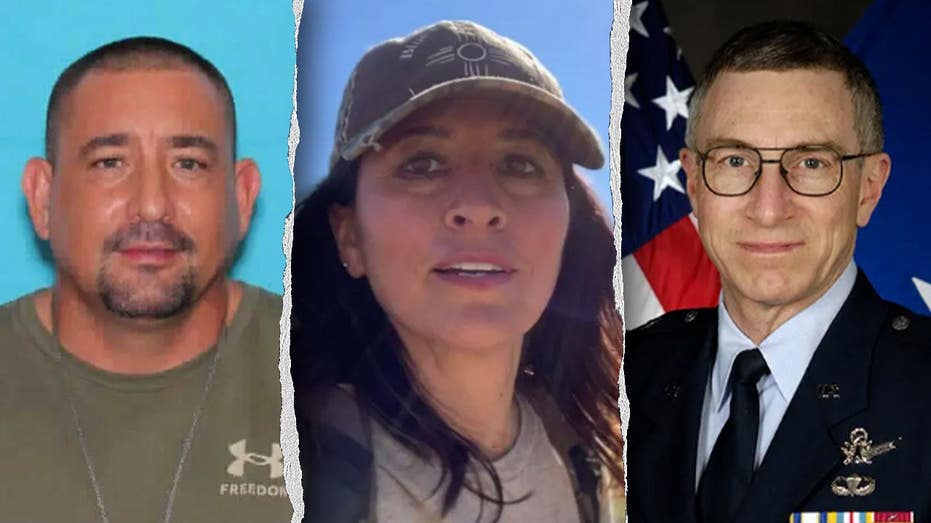
Among the cases drawing attention is the death of Matthew James Sullivan, a 39-year-old former Air Force intelligence officer.
Sullivan reportedly passed away in Falls Church, Virginia, in May 2024. Authorities determined the cause of death to be an accidental drug overdose. His passing occurred shortly after he agreed to testify before Congress regarding alleged government programs involving unidentified aerial phenomena.
According to available records, Sullivan had served with distinction, earning a Bronze Star during Operation Enduring Freedom. He later worked at institutions including the National Air and Space Intelligence Center and the National Security Agency.
While the official cause of death has been reported as accidental, members of Congress have sought confirmation that proper investigative protocols were followed. Lawmakers argue that when individuals connected to classified programs die unexpectedly, heightened scrutiny is not only appropriate but necessary.
Disappearance of Retired Air Force General Sparks Public Concern
Earlier this year, the disappearance of retired Air Force Maj. Gen. William Neil McCasland intensified speculation surrounding the broader pattern.
McCasland previously commanded the Air Force Research Laboratory, one of the nation’s premier defense research organizations responsible for advanced aerospace and weapons development. He was also connected to Los Alamos National Laboratory, a cornerstone of America’s nuclear research and part of the Department of Energy’s national laboratory system.
Los Alamos played a historic role in developing the first atomic weapons and remains central to maintaining America’s nuclear deterrent under the supervision of the U.S. Department of Energy.
The unexplained disappearance of a figure with such deep ties to highly sensitive research understandably fueled public anxiety. However, investigators have not publicly confirmed any link between McCasland’s case and other deaths or disappearances.
The Broader List of Scientists
The total list includes 13 individuals connected in various ways to aerospace, nuclear science, military intelligence, or high-level research institutions.
Those reported missing between 2023 and 2026 include:
- Monica Reza, 60
- Melissa Casias, 53
- Anthony Chavez, 79
- Steven Garcia, 48
Additionally, the following scientists died between 2022 and 2026:
- Michael David Hicks, 59
- Frank Maiwald, 61
- Nuno Loureiro, 47
- Jason Thomas, 45
- Amy Eskridge, 34
- Carl Grillmair, 47
- Joshua LeBlanc, 29
Several of these individuals were affiliated with NASA’s Jet Propulsion Laboratory (JPL), a premier center for robotic space exploration. JPL develops and manages missions including Mars rovers and planetary probes, contributing to America’s technological leadership in space.
Others worked in nuclear-related environments or defense research roles that routinely involve classified materials and sensitive national security programs.
What the FBI Says
The FBI has confirmed that it is “spearheading the effort” to evaluate possible connections between the cases. In coordination with the Department of Energy, the Department of Defense, and state and local law enforcement agencies, federal officials are reviewing the circumstances surrounding the deaths and disappearances.
The Department of Defense oversees numerous advanced research initiatives across nuclear, aerospace, and intelligence domains. Cooperation between agencies is standard practice when cases involve personnel with access to classified information.
However, authorities have not publicly identified evidence of coordinated foul play. No foreign actors have been formally implicated, and officials emphasize that each case must be assessed based on its own facts.
President Trump’s Remarks
Speaking to reporters, President Trump described the situation as “very serious” but cautioned against assumptions.
According to the president, preliminary assessments suggest that many of the cases appear unrelated. He noted that some involved health issues, some were self-inflicted, and others have explanations that do not currently indicate broader coordination.
“We have a lot of scientists,” the president said, emphasizing that the number must be understood within the context of the hundreds of thousands of researchers employed nationwide. “So far, we’re finding that there’s not much of a connection. We’re going to be doing a full report.”
The White House has pledged continued transparency as investigations proceed.
National Security Context: Why These Cases Matter
While officials urge caution, Americans are right to recognize the strategic importance of our scientific workforce.
The United States remains locked in technological competition with adversaries such as China and Russia, particularly in areas including:
- Advanced nuclear weapons modernization
- Space-based defense systems
- Artificial intelligence integration into military platforms
- Quantum computing and cyber warfare
Researchers at institutions like Los Alamos and NASA’s Jet Propulsion Laboratory are not simply conducting abstract academic work. They are directly connected to projects that underpin America’s military superiority and deterrence capabilities.
Any pattern of vulnerability—real or perceived—within this community naturally raises strategic questions.
Separating Fact from Speculation
In the age of social media, it does not take long for speculation to outpace verified facts. The convergence of several high-profile deaths and disappearances has fueled theories ranging from foreign espionage to internal government cover-ups.
However, investigators have not publicly substantiated any large-scale conspiracy. President Trump’s comments suggest that preliminary evidence does not indicate a coordinated campaign.
It is also important to recognize statistical realities. The United States employs hundreds of thousands of scientists across federal labs, universities, private contractors, and corporate research facilities. Over several years, some number of deaths—whether from illness, accidents, or other causes—is statistically inevitable.
Still, when such incidents involve individuals tied to classified programs, heightened scrutiny is not paranoia—it is prudence.
The Role of Congressional Oversight
Congress maintains oversight authority over federal agencies, particularly those involved in national defense and intelligence operations. Lawmakers like Rep. Burlison argue that transparency strengthens public confidence in those institutions.
Proper oversight ensures:
- Thorough investigative procedures
- Accountability across agencies
- Protection against foreign espionage threats
- Confidence among the scientific workforce
In an era of increasing geopolitical tension, ensuring that America’s brightest minds are protected from coercion, targeting, or exploitation is a matter of national interest.
A Delicate Balance Between Vigilance and Responsibility
There is a delicate balance between asking necessary questions and spreading unfounded allegations. Leaders must be careful not to undermine trust in vital institutions without evidence.
At the same time, open societies conduct investigations in the daylight—not behind permanently closed doors. The strength of the United States lies in constitutional checks and balances, robust journalism, and citizen engagement.
The fact that these questions are being raised openly is itself a testament to America’s transparency and democratic accountability.
What Happens Next
The FBI, in cooperation with federal partners, continues its review. President Trump has indicated that a full report will be made available once the investigative process is complete.
Until then, Americans can expect:
- Continued congressional inquiries
- Interagency coordination
- Case-by-case evaluation of findings
- Public communication consistent with protecting classified information
For now, officials maintain that no confirmed link binds these cases together. But lawmakers stress that even coincidence deserves careful validation when national security talent is involved.
America’s Scientific Talent Is a Strategic Asset
At its core, this issue highlights something fundamental: America’s scientific community is not just an academic resource—it is a national treasure.
From the Manhattan Project to the Apollo moon landing to the cutting-edge defense systems of today, American innovation has kept our nation free and secure. Protecting the men and women who carry that mission forward is not optional; it is essential.
Whether the ongoing investigations ultimately reveal common threads or merely tragic individual circumstances, vigilance remains paramount. As Rep. Burlison and others continue pressing for clarity, the American people deserve thorough, transparent answers.
In a dangerous world where adversaries constantly seek advantages, the United States must ensure that its greatest strategic advantage—its people—remains secure.
The investigation continues. And Americans will be watching closely.