DHS Points to Border Failures After Somali National with Piracy Ties Arrested Near Canadian Border
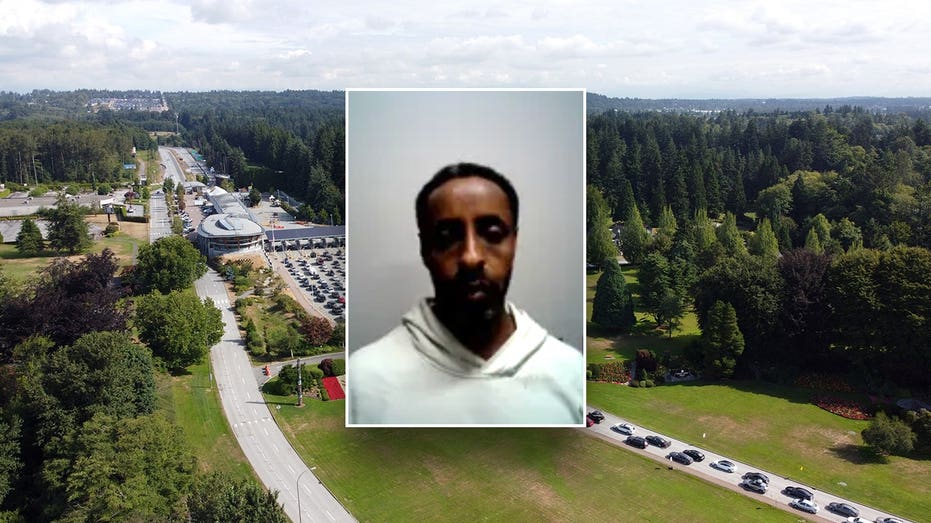
A Somali national with a documented history linked to maritime piracy and an outstanding warrant for passport fraud is now in federal custody after being apprehended near the northern U.S. border. The case is drawing sharp criticism from the Department of Homeland Security (DHS), which argues that years of permissive border practices allowed the individual to enter and remain in the United States despite serious red flags.
According to officials from the U.S. Customs and Border Protection (CBP), Said Jama Ahmed was taken into custody in North Dakota after crossing illegally from Canada earlier this month. A fingerprint match tied him to a 2012 U.S. Navy operation involving suspected Somali pirates in the Gulf of Aden.
DHS leaders say the arrest underscores what they describe as dangerous gaps in immigration enforcement under the Biden administration — gaps they believe have compromised public safety and national security.
Apprehended at the Northern Border
The chain of events began on April 14 when an off-duty officer of the Royal Canadian Mounted Police (RCMP) reportedly observed Ahmed walking south with a backpack just a few miles north of the U.S.-Canada border.
Roughly two hours later, a U.S. Border Patrol agent located and detained Ahmed on the American side of the border in North Dakota. Officials charged him with illegal entry and placed him into federal custody.
While much of the media spotlight in recent years has focused on the southern border, this case highlights a growing concern among law enforcement experts: the northern border, spanning nearly 4,000 miles, presents its own unique enforcement challenges.
The U.S. Border Patrol is tasked with securing both land borders, and agents have warned that uneven enforcement policies can make the United States vulnerable at multiple points of entry.
Fingerprint Match to 2012 Piracy Incident
What makes this arrest particularly alarming is Ahmed’s alleged connection to a piracy incident more than a decade ago.
According to DHS, a biometric fingerprint check matched Ahmed to records collected in 2012 during a U.S. Navy operation in the Gulf of Aden, a region long plagued by Somali piracy.
That year, the guided-missile destroyer USS Halsey (DDG-97), part of the U.S. Pacific Fleet, responded to a distress call from an Indian-flagged commercial vessel reportedly hijacked by armed pirates.
According to DHS, a Navy Visit, Board, Search and Seizure (VBSS) team boarded the ship and encountered Ahmed along with nine other armed suspects. U.S. service members collected biometric data during the operation, including fingerprints — a routine and essential practice in counter-piracy missions.
Those stored fingerprints are what ultimately linked Ahmed to the decades-old case when his prints were taken again after his recent detention.
Maritime piracy off the coast of Somalia peaked in the late 2000s and early 2010s, threatening global trade routes and prompting a multinational security response. The U.S. Navy, working in coordination with allies and under international authorities, increased patrols and interdiction missions to protect commercial shipping.
That a suspect allegedly encountered during one such operation later appeared inside the United States raises serious concerns about immigration vetting processes and long-term tracking of high-risk individuals.
Prior Entry into the United States
DHS officials say Ahmed first entered the United States in September 2022 near San Luis, Arizona, a southern border city frequently cited in discussions about migrant crossings.
Since that time, authorities report that he had multiple encounters with U.S. law enforcement agencies. In 2024, agents from U.S. Immigration and Customs Enforcement (ICE) detained him during an investigation into fraudulent documents.
Compounding concerns, authorities say a full extradition warrant was issued for Ahmed in April 2025 over passport fraud charges.
Despite those encounters and the outstanding warrant, Ahmed was not removed from the country before making his way north and attempting to cross yet another international boundary.
DHS Acting Assistant Secretary Lauren Bis said in a statement that “weak border policies” allowed Ahmed to enter and remain in the United States despite “multiple law enforcement encounters.”
DHS Criticism of Biden-Era Border Policies
The Department of Homeland Security has increasingly faced scrutiny over how immigration enforcement priorities have changed in recent years. Under guidance issued during the Biden administration, enforcement resources were often directed toward individuals deemed to pose the “greatest threat” to public safety.
Critics argue that such prioritization, combined with expanded humanitarian parole programs and large-scale migrant releases, created enforcement backlogs and left federal agents overwhelmed.
In this case, DHS officials contend that systemic weaknesses — rather than a single failure — allowed a foreign national with alleged ties to armed maritime crime to avoid removal for years.
- Illegal entry in 2022 at the southern border
- Multiple law enforcement encounters
- Detention linked to fraudulent documents
- An extradition warrant issued in 2025
- Subsequent illegal crossing attempt from Canada
Each step, critics say, represented an opportunity for stronger enforcement action.
The Broader National Security Question
This case also revives a long-running debate about the intersection of immigration and national security.
After the terrorist attacks of September 11, 2001, the federal government restructured its homeland defense apparatus, ultimately creating the Department of Homeland Security. One of its primary missions is to prevent individuals who pose security threats from exploiting immigration loopholes.
Biometric screening has since become standard practice, allowing agencies to cross-reference fingerprints and other identifiers against global databases. The fact that Ahmed’s prints were still on file more than a decade after they were taken demonstrates that the biometric system itself functioned properly.
The issue, critics argue, was not the database — but the failure to act decisively once high-risk information became known.
“DHS will continue to work to arrest criminal illegal aliens to protect the American homeland from all threats,” Acting Assistant Secretary Bis said following Ahmed’s arrest.
For many Americans, the question is whether policies in place during the past several years sufficiently empowered agents to prevent such cases from unfolding.
The Challenge of Securing a Vast Northern Border
While the southern border has absorbed much of the political attention, the U.S.-Canada border poses distinct challenges. It spans remote terrain, forests, lakes, and rural communities that are difficult to patrol continuously.
Enhanced coordination with Canadian authorities, including the RCMP, has long been a pillar of northern border security. In this incident, that cooperation appears to have worked as intended — with Canadian authorities spotting suspicious activity and U.S. agents acting quickly on the American side.
Still, experts warn that as enforcement pressure shifts geographically, individuals attempting to avoid detection may increasingly test less-monitored routes.
Immigration Enforcement and Public Confidence
Cases like this tend to resonate deeply with the American public because they touch on fundamental questions of sovereignty and safety.
The United States has long been a nation of immigrants, but it has also insisted on lawful entry and adherence to the rule of law. When individuals with alleged criminal backgrounds manage to enter and remain in the country unlawfully, public trust in the system erodes.
Supporters of stricter border enforcement argue that immigration compassion must be balanced by firm standards. They contend:
- Background vetting must be rigorous and continuous.
- Outstanding warrants should trigger mandatory custody and removal.
- Repeat offenders should not be released pending indefinite proceedings.
At the same time, any enforcement policy must operate within constitutional and statutory limits. Courts ultimately play a significant role in determining detention standards, asylum procedures, and removal timelines.
The Importance of Biometric Tracking
One positive takeaway from the case is the effectiveness of biometric data collection by U.S. military and homeland agencies.
The fingerprint collected aboard the USS Halsey in 2012 became a crucial piece of evidence years later. That demonstrates the long-term value of biometric intelligence gathering during overseas operations.
However, identification alone cannot protect Americans unless it is paired with decisive enforcement action.
What Happens Next
Ahmed is currently being held in North Dakota on federal illegal entry charges. Authorities will likely pursue prosecution related to both immigration violations and the outstanding passport fraud warrant.
It remains unclear whether additional charges related to the 2012 piracy incident could be revisited, as maritime cases often involve complex jurisdictional issues and international legal considerations.
Extradition, prosecution, or removal proceedings could take months, depending on court schedules and agency coordination.
A Wake-Up Call on Border Security
This case illustrates several realities at once:
- Biometric systems can successfully identify high-risk individuals years later.
- International cooperation between U.S. and Canadian authorities remains strong.
- Border vulnerabilities — north and south — are real and ongoing.
- Policy decisions in Washington directly impact frontline enforcement outcomes.
For a nation committed to both liberty and security, the responsibility is clear. America must maintain lawful, humane immigration pathways while ensuring that individuals with serious criminal ties cannot exploit systemic weaknesses.
The arrest near the northern border is a reminder that vigilance cannot be selective or seasonal. National security demands consistent, coherent enforcement policies that support the brave men and women serving in CBP, ICE, DHS, and the U.S. military.
As DHS officials have emphasized, protecting the homeland is not a partisan slogan — it is a constitutional duty. Americans across the political spectrum expect their leaders to uphold that duty with clarity, resolve, and respect for the rule of law.
Whether this case becomes a turning point in the broader border debate remains to be seen. But it undeniably reinforces one central truth: border security is national security. And the safety of the American people must always come first.