Another Close Call in American Skies Raises Serious Questions
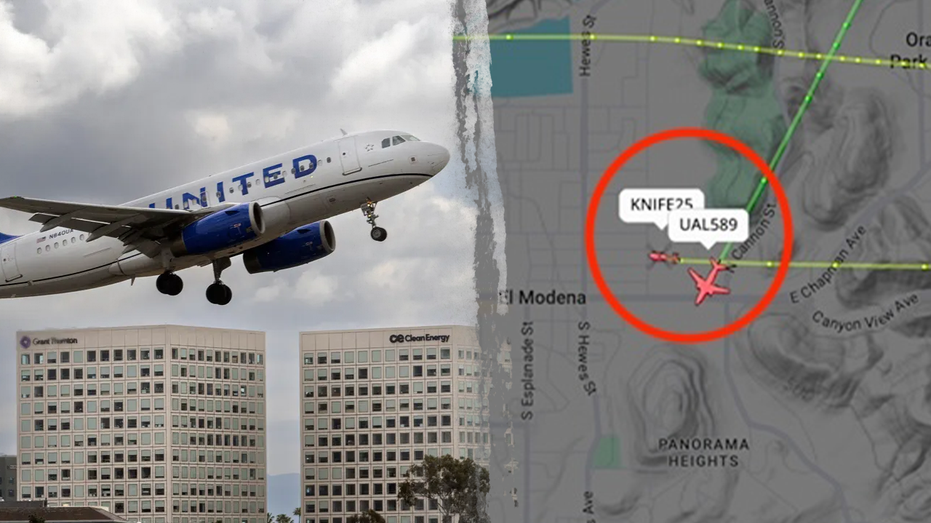
A United Airlines passenger jet carrying 168 Americans narrowly avoided disaster Tuesday night after a U.S. Army Black Hawk helicopter crossed directly into its flight path near John Wayne Airport in Santa Ana, California. The Federal Aviation Administration has launched an investigation into the alarming incident, which unfolded just before 8:40 p.m.
United Flight 589, a Boeing 737-800, was descending toward the runway on its final approach when the military helicopter reportedly cut across the aircraft’s path. Air traffic control had warned the United pilots to be alert for a military helicopter operating in the vicinity. Moments later, that warning became dangerously real.
According to the airline, the flight crew spotted the helicopter and received an urgent cockpit alert from the aircraft’s onboard traffic collision avoidance system. In response, the pilots immediately leveled off the jet—halting their descent to create more vertical separation between the two aircraft.
That quick, professional reaction may have prevented catastrophe.
The aircraft was carrying 162 passengers and six crew members at the time. Thankfully, the plane landed safely and no injuries were reported. But audio from air traffic control paints a sobering picture of just how close this encounter may have been.
“That Was Not Good”
Controllers reportedly reached out to United 589 after the incident to clarify whether the crew had received a simple traffic alert or something more serious. The pilot responded that they had experienced a “resolution advisory”—a warning issued when a midair collision is considered an imminent threat and immediate corrective action is required.
“We’re gonna be addressing that because that was not good,” the controller acknowledged.
A resolution advisory is not routine. It indicates that aircraft were close enough for onboard systems to calculate that evasive action was necessary within seconds. In plain English, disaster may have been only moments away.
FAA Under Pressure After String of Incidents
The FAA now says it is reviewing whether a newly implemented safety directive was properly followed. That directive temporarily suspended the long-standing practice of “visual separation” between airplanes and helicopters. Instead, controllers are required to use radar to maintain strict vertical and lateral distances between aircraft.
The policy change came after the tragic January 29, 2025 midair collision near Ronald Reagan Washington National Airport. In that horrifying crash, an Army Black Hawk collided with an American Airlines passenger jet, killing 64 civilians and three service members. The nation was left grieving, and Americans were promised reforms to ensure our skies remained safe.
Now, just over a year later, another Black Hawk has come dangerously close to a commercial airliner packed with families, business travelers, and hardworking citizens.
A Pattern Americans Can’t Ignore
This incident also comes on the heels of another recent aviation tragedy at New York’s LaGuardia Airport, where an Air Canada jet struck a fire truck on the runway, killing both pilots. Taken together, these events are putting renewed scrutiny on the state of aviation safety and oversight in the United States.
While the U.S. Army has not yet provided additional details about the helicopter’s mission or flight path, the stakes could not be higher. Americans deserve absolute confidence that both civilian and military aircraft operations are coordinated with precision—especially in crowded airspace near major airports.
- 168 souls were aboard the United jet.
- The aircraft’s collision avoidance system was triggered.
- Pilots were forced to take immediate evasive action.
- The FAA is now investigating compliance with updated safety protocols.
The swift actions of the United pilots underscore the professionalism and skill of America’s commercial aviators. But Americans are left with a serious question: why are we continuing to see close calls in some of the busiest airspace in the country?
Our nation’s air traffic control systems and military coordination must operate flawlessly. Near misses involving military helicopters and civilian passenger planes are unacceptable.
For now, tragedy was avoided. But as the FAA investigation moves forward, Americans will be watching closely. We cannot afford complacency when hundreds of lives are on the line at 30,000 feet—or just moments from the runway.