Justice Four Decades in the Making: Alleged Killer of Texas Teen Captured in Mexico After Breakthrough DNA Work
Nearly 40 years after a 16-year-old Texas girl was found brutally murdered along a remote roadside, law enforcement officials have announced what many families pray for but rarely receive in cold cases: a breakthrough.
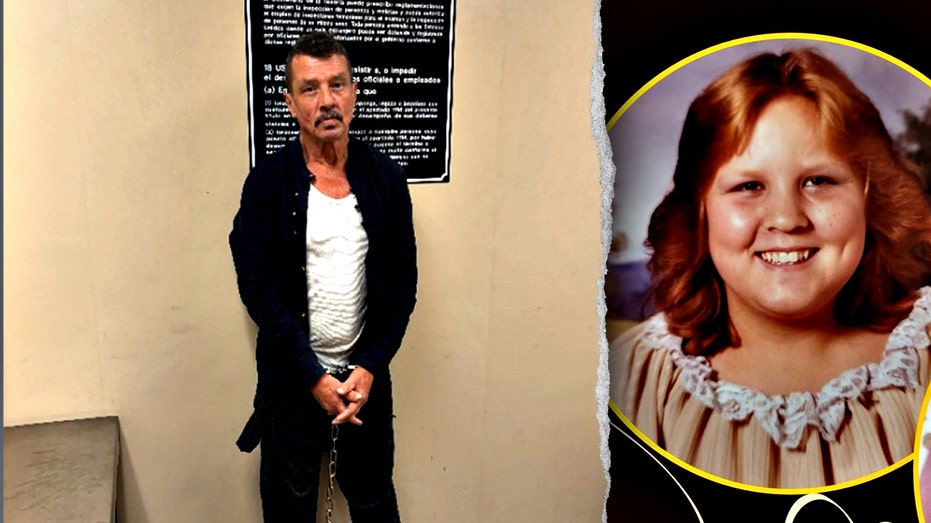
This week, authorities in Montgomery County, Texas revealed that Bobby Charles Taylor Sr., 60, has been arrested in Mexico and accused of capital murder in connection with the 1986 killing of Deanna Ogg. The case had remained dormant for decades, frustrating investigators and leaving a grieving family without answers.
And it was not luck that cracked the case — it was science.
Advancements in forensic DNA analysis and investigative genetic genealogy, paired with renewed pressure from Texas law enforcement, ultimately led authorities to identify Taylor as the suspect. According to the Texas Department of Public Safety (Texas DPS), biological evidence collected nearly 40 years ago was reevaluated using modern methods that simply did not exist in the 1980s.
A Young Life Stolen Too Soon
On September 27, 1986, Deanna Ogg left her home in Porter, Texas, headed to a family gathering. She walked out around 5 p.m., expecting an ordinary evening with loved ones.
She never arrived.
Just two hours later, children playing in a rural area made a horrific discovery. Ogg’s body was found along a logging road approximately seven miles from where she was last seen. The area sits north of Houston in what was then a far less developed stretch of southeast Texas.
According to authorities, the teenage girl had been sexually assaulted, beaten, and stabbed. The crime shocked the local community and left residents shaken in what had been considered a relatively quiet part of the state.
For Ogg’s family, the nightmare was only beginning.
An Early Arrest — and a Wrongful Conviction
In the weeks that followed the murder, investigators arrested a suspect. The man was ultimately convicted in connection with the killing. For a time, it appeared justice had been served.
But as DNA science evolved in the 1990s and early 2000s, biological evidence from the scene was retested. That testing excluded the convicted man as the source of the DNA found in the case. He was eventually exonerated.
This painful reversal underscored a double tragedy:
- An innocent man had been wrongfully convicted.
- The true perpetrator had never been caught.
The case went cold once again. Leads dried up. Witnesses aged. Memories faded. For decades, Deanna Ogg’s murder became another file in the archives of unsolved Texas crimes.
The Sexual Assault Kit Initiative Reopens the Case
The turning point came in March 2020, when the Texas Rangers, a division of the Texas DPS, identified Ogg’s case for review under the Sexual Assault Kit Initiative (SAKI), a U.S. Department of Justice-supported program designed to help jurisdictions test previously unsubmitted sexual assault kits and pursue investigative leads.
The initiative has been instrumental nationwide in clearing evidence backlogs and reopening cases once considered unsolvable. In Texas, where size and population create enormous investigative challenges, such programs have become critical tools in ensuring justice is not denied simply because of time.
In 2021, investigators resubmitted previously tested evidence for advanced DNA processing and genealogy research. The work was conducted through Bode Technology, a forensic laboratory known for pioneering investigative genetic genealogy techniques.
This was not standard DNA comparison. This was cutting-edge science.
Forensic Genetic Genealogy: The New Frontier in Crime Solving
Traditional DNA testing compares crime-scene samples to profiles already stored in criminal databases, such as CODIS. However, if a suspect has never had their DNA entered into the system, that match may never occur.
Investigative genetic genealogy works differently.
In cases like Ogg’s, specialized labs create a broader genetic profile based on recovered biological material. That profile can then be compared against publicly available genealogical databases, looking for partial matches that indicate familial relationships.
From there, investigators build out family trees, narrowing down potential suspects through traditional police work. The method first gained widespread attention after helping solve the infamous Golden State Killer case in California in 2018.
In Deanna Ogg’s murder, authorities say this process ultimately led them to Bobby Charles Taylor Sr.
Suspect Identified — and a Fugitive Status Revealed
According to Montgomery County Sheriff Wesley Doolittle, once Taylor was identified in 2024 through the advanced DNA and genealogical analysis, investigators learned something even more troubling.
Taylor was already a fugitive.
Authorities discovered he was wanted on an unrelated felony charge and believed to be hiding in Mexico. That added another layer of complexity to the investigation, requiring coordination between local Texas agencies, state authorities, and international partners.
The Montgomery County Sheriff’s Office worked to secure additional charges related to bond jumping while communicating with officials beyond the U.S. border.
Ultimately, Taylor turned himself in on April 24, 2026, in Mexico City in connection with the unrelated felony matter. He now faces capital murder charges tied to the 1986 killing.
Seven Mugshots, Decades of Encounters with Law Enforcement
At a news conference announcing the arrest, authorities displayed seven mugshots from Taylor’s past arrests, spanning from 1985 through as recently as 2020.
The visual timeline painted a picture of a man who had repeated interactions with law enforcement over decades — all while the Ogg case remained unsolved.
For many Americans, the revelation raises hard but necessary questions:
- How many serious offenders evade accountability because older cases go dormant?
- How many dangerous individuals remain unidentified without modern forensic investment?
- What role does consistent funding for law enforcement and forensic technology play in public safety?
In this case, it was not a new witness or confession that cracked the mystery. It was persistence — and properly funded, technologically advanced investigative work.
A Mother’s Words After 40 Years
Perhaps the most powerful moment at the press conference came not from forensic experts or sheriff’s deputies, but from Deanna Ogg’s mother.
Too emotional to speak publicly, she prepared a letter, which Sheriff Doolittle read aloud.
“Deanna wasn’t on this earth for a long time. She was here for a good time. Her love of Jesus and love of family has withstood a lifetime.”
Four decades of waiting. Four decades of birthdays missed. Four decades of holidays overshadowed by unanswered questions.
No arrest can restore what was lost. But accountability matters. Truth matters. And for families of victims, the acknowledgment that their child has not been forgotten carries enormous weight.
The Broader Significance for Texas and the Nation
Texas has long embraced a tough-on-crime philosophy. But cases like this remind Americans that maintaining public safety requires more than rhetoric — it requires resources.
Cold case investigations demand:
- Secure evidence storage over decades
- Access to accredited forensic laboratories
- Highly trained investigators willing to revisit old files
- Cooperation across state and international lines
Programs like the Sexual Assault Kit Initiative demonstrate that federal-state partnerships can yield concrete results when properly implemented. They also highlight the importance of ensuring that rape kits and other critical forensic materials are not left untested due to bureaucratic inertia.
For families across America with unresolved cases, Ogg’s case offers renewed hope. Time does not erase responsibility.
Extradition and the Road Ahead
Taylor’s surrender in Mexico marks the beginning of a new legal phase.
Extradition proceedings and coordination between U.S. and Mexican authorities will determine the timing of his return to Texas to formally face capital murder charges. The process will involve adherence to international agreements and due process protections.
Under Texas law, capital murder is among the most serious charges a defendant can face, carrying the possibility of life imprisonment without parole or, in certain circumstances, the death penalty.
Prosecutors will now be tasked with presenting decades-old evidence in a modern courtroom — backed by forensic testimony explaining the genealogical breakthrough that identified the suspect.
The Evolution of Justice
In 1986, DNA testing was in its infancy. Law enforcement relied primarily on eyewitness testimony, physical evidence comparison, and confessions. Today, microscopic traces can unlock long-buried truths.
The transformation of forensic science over the past four decades has reshaped criminal justice in America. It has:
- Freed wrongfully convicted individuals
- Identified previously unknown suspects
- Reinvigorated cold-case units nationwide
- Strengthened the reliability of prosecutions
But technological capability alone is not enough. It must be paired with determination. The Texas Rangers’ decision to revisit Deanna Ogg’s file in 2020 reflects a broader commitment to ensuring violent criminals are not allowed to ride out the clock.
A Message to Criminals: Time Is Not a Shield
Cases like this send a clear message.
The belief that one can commit a heinous act and simply outwait justice is increasingly outdated. Every year, advancements in forensic science narrow that window of anonymity.
For families still waiting on answers, this development stands as proof that persistence matters. For law-abiding citizens, it underscores why strong, well-resourced law enforcement remains essential to maintaining safe communities.
Closing a Chapter — But Not the Memory
Deanna Ogg was 16 years old. She had her entire life ahead of her. She left home for a family gathering and never returned.
This week’s arrest does not bring back the laughter, the milestones, or the decades she was robbed of. But it does represent something foundational to the American justice system: the principle that no life is disposable, and no crime is beyond accountability.
As the legal process unfolds, one thing is certain — this case, once forgotten by time, now stands as a testament to perseverance, faith, and the rule of law.
For Deanna Ogg’s family, for Montgomery County, and for Americans who believe justice delayed must not become justice denied, this long-awaited breakthrough marks a significant — and solemn — turning point.