Florida Jury Delivers Justice in Shocking Plot to Assassinate Haiti’s President
A federal jury in South Florida has convicted four men for orchestrating one of the most audacious international assassination plots in recent history—a conspiracy that was planned and financed from American soil and culminated in the brutal killing of Haitian President Jovenel Moïse in July 2021.
The guilty verdicts, handed down in the U.S. District Court for the Southern District of Florida, underscore the United States’ determination to ensure that criminal networks cannot exploit this country as a staging ground for political violence abroad. Federal prosecutors successfully proved that the conspiracy was hatched, funded, and coordinated out of South Florida, even as the deadly operation unfolded in Port-au-Prince.
The four defendants—Arcangel Pretel Ortiz, Antonio Intriago, Walter Veintemilla, and James Solages—now face the possibility of life in federal prison for their roles in a scheme that destabilized an already fragile Caribbean nation and contributed to years of chaos and bloodshed.
A Brazen International Assassination Plot
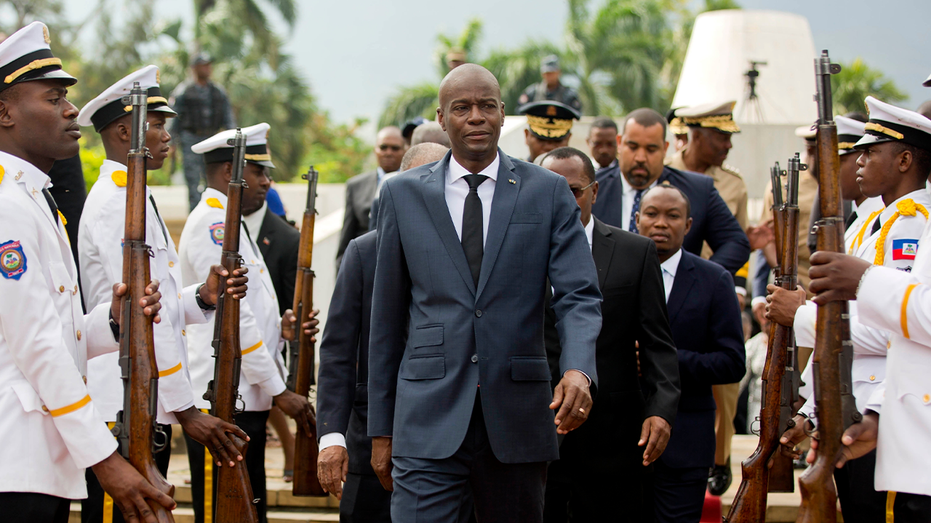
President Jovenel Moïse was gunned down in the early hours of July 7, 2021, when a group of armed men stormed his private residence near Port-au-Prince, the capital of Haiti. The attackers, many of them former Colombian soldiers, overpowered security and killed the sitting head of state inside his own home.
His wife, First Lady Martine Moïse, was critically wounded in the assault but survived after being airlifted to the United States for emergency medical treatment.
According to evidence presented at trial, the defendants were convicted of:
- Conspiracy to kill or kidnap a person in a foreign country
- Providing material support for a violent crime resulting in death
- Violating the U.S. Neutrality Act, which prohibits Americans from launching military actions against nations at peace with the United States
The jury concluded that South Florida was not merely tangentially connected to the crime—it served as the operational and financial nerve center for the plot.
South Florida as the Operational Hub
Federal prosecutors detailed how planning meetings, financing arrangements, recruitment efforts, and equipment purchases all revolved around contacts and businesses based in the Miami area.
Antonio Intriago and Arcangel Pretel Ortiz were associated with a Miami-area security company known as Counter Terrorist Unit (CTU). Prosecutors argued that the firm became a front through which mercenaries were recruited and resources were mobilized.
Walter Veintemilla, head of a South Florida capital lending operation, was accused of providing key funding support. Meanwhile, James Solages, a dual Haitian-American citizen, played a bridging role between the U.S.-based conspirators and individuals on the ground in Haiti.
Trial testimony showed that what began as conversations about political change in Haiti ultimately morphed into a lethal operation. What prosecutors successfully demonstrated was intent—not merely political advocacy, but active coordination of a violent overthrow attempt.
The investigation was led by federal authorities including the Federal Bureau of Investigation (FBI), working alongside international partners. The case stands as a reminder that American law enforcement will pursue justice even when crimes cross borders and involve foreign political instability.
The Night of Terror in Port-au-Prince
The court heard chilling testimony about the events of July 7, 2021. Approximately two dozen heavily armed men, many of them former members of the Colombian military, stormed the president’s residence under cover of darkness.
Martine Moïse recounted her husband’s final words moments before gunfire erupted: “Honey, we are dead.” She described hiding in fear as bullets tore through the home, leaving the president fatally wounded.
The attack shocked not only Haiti but the international community. Assassinations of sitting heads of state are rare in the modern Western Hemisphere, and the killing of President Moïse sent immediate shockwaves through diplomatic and security communities worldwide.
Claims of a “Political Mission” Rejected by Jury
Defense attorneys argued that the defendants believed they were supporting a legitimate effort to “arrest” Moïse under what they thought was a lawful Haitian warrant. They contended that their clients were misled into thinking the operation was aimed at stabilizing Haiti, not assassinating its president.
Central to the alleged plan was the idea of installing Christian Sanon, a dual Haitian-American citizen, as a replacement leader. Prosecutors, however, dismantled that narrative, demonstrating that the planning involved weapons procurement, tactical coordination, and financial maneuvers consistent with a violent coup—not a peaceful arrest.
The jury ultimately rejected the defense’s framing and agreed with the prosecution that the operation evolved into a lethal conspiracy well before the trigger was pulled.
Broader Impact: Haiti’s Descent into Chaos
The assassination of President Moïse did not occur in a vacuum. Haiti was already grappling with political turmoil, disputed elections, and economic hardship. But his killing removed what little central authority remained.
In the years since the assassination, criminal gangs have tightened their grip on large parts of Port-au-Prince. According to assessments from the United Nations, armed groups now exert near-total control over portions of the capital, disrupting daily life and forcing residents to flee.
Violence has escalated dramatically:
- Kidnappings for ransom have surged.
- Critical infrastructure has been targeted or seized by gangs.
- Access to food, medical care, and fuel has been repeatedly disrupted.
While Haiti’s instability cannot be attributed solely to Moïse’s assassination, the power vacuum it created significantly accelerated the country’s downward spiral.
Growing List of U.S. Convictions
The four convictions in Florida add to an expanding list of U.S.-based defendants who have faced justice in connection with the plot.
According to the U.S. Department of Justice, at least five other individuals have previously pleaded guilty and received life sentences in federal court for their involvement in the conspiracy.
Meanwhile, Haitian authorities have charged approximately 20 people domestically, including 17 former Colombian soldiers accused of participating directly in the attack.
This parallel legal effort underscores a critical principle: crimes that destabilize hemispheric neighbors and undermine democratic governance will not go unanswered.
The Neutrality Act and American Responsibility
One of the more significant aspects of this case is the application of the Neutrality Act, an 18th-century law that prohibits individuals in the United States from mounting military-style expeditions against governments with which the U.S. is at peace.
Though rarely used, the law remains an important safeguard. It ensures that private actors cannot drag the United States into international conflicts or destabilize foreign governments from American territory.
The Florida convictions send a clear message:
American soil cannot and will not be used as a launchpad for violent regime-change operations abroad.
That message is critical not just for Haiti, but for global stability. If allowed to operate unchecked, transnational plots like this one could erode diplomatic order and undermine U.S. credibility.
Why This Case Matters to Americans
While the crime occurred in Haiti, the conspiracy’s connection to South Florida makes this case deeply relevant to Americans.
South Florida is home to vibrant Haitian-American and Latino communities, many of whom maintain close ties to the Caribbean. The misuse of businesses and financial networks in the region for violent political schemes threatens not only foreign governments but also the safety and reputation of lawful immigrant communities who contribute positively to American society.
Moreover, the case reinforces the strength of the U.S. justice system. A complex international murder plot was unraveled through methodical investigation, international cooperation, and the rule of law—not through vigilante justice or political posturing.
That is how a constitutional republic responds to global crime: with evidence, due process, and accountability.
What Happens Next
Sentencing hearings for the four convicted men are expected in the coming months. Given the seriousness of the charges—including conspiracy resulting in death—life sentences are a strong possibility.
In Haiti, the broader process of stabilization remains uncertain. International discussions continue regarding security assistance, humanitarian aid, and potential peacekeeping deployments. But without enduring internal reforms, Haiti’s path forward will remain challenging.
The Florida verdict does not solve Haiti’s political crisis. It does, however, ensure that those who used American resources to fuel violent upheaval have been held accountable.
A Clear Message from American Courts
The assassination of President Jovenel Moïse stands as a grim chapter in Caribbean history. Yet the outcome in federal court affirms an equally important truth: the United States will not tolerate the exploitation of its freedoms, financial systems, or institutions for the purpose of undermining democratic governments.
Justice in this case was deliberate, thorough, and rooted in evidence presented before an impartial jury. In an era when global instability can easily cross borders, that principle matters more than ever.
For Haiti, the struggle for stability continues. For America, this case reinforces a foundational commitment: the rule of law extends beyond headlines, beyond politics, and beyond borders.
And when criminals attempt to turn American freedom into a staging ground for assassination and chaos, they will face the full force of American justice.