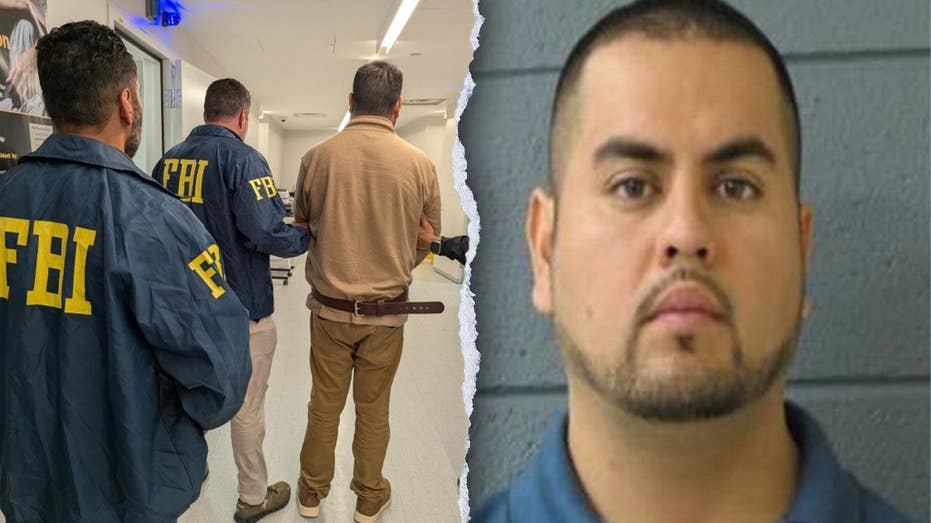
Federal Authorities Arrest Iranian National at LAX in Alleged $70 Million Sanctions-Busting Weapons Scheme
Federal law enforcement officials have arrested a 44-year-old Iranian national at Los Angeles International Airport (LAX) in connection with what prosecutors describe as a sophisticated, multi-million-dollar operation to broker the sale of Iranian-manufactured weapons to Sudan — in direct violation of U.S. sanctions laws.
The arrest underscores growing concerns about the global reach of the Iranian regime and the continuing efforts by U.S. authorities to enforce sanctions designed to block Tehran from expanding its military footprint abroad.
According to a newly unsealed federal criminal complaint, Shamim Mafi, a lawful permanent resident living in Woodland Hills, California, is accused of conspiring to arrange the sale of armed drones, bomb components, and millions of rounds of ammunition to Sudan’s Ministry of Defense. Federal prosecutors say the transactions were valued at more than $70 million.
Arrest at LAX While Attempting to Leave the Country
Mafi was taken into custody on April 18 while allegedly preparing to board an international flight to Turkey. The arrest was carried out by agents from the U.S. Attorney’s Office for the Central District of California and the FBI’s Los Angeles Field Office, including members of the bureau’s Iran Counterintelligence Squad.
In a public statement, First Assistant U.S. Attorney Bill Essayli confirmed the arrest and outlined the central allegation: that Mafi brokered arms transactions on behalf of the Iranian government in violation of federal law.
Mafi is charged under 50 U.S. Code § 1705, part of the International Emergency Economic Powers Act (IEEPA), which authorizes the federal government to impose and enforce economic sanctions against foreign threats. If convicted, she faces a maximum sentence of 20 years in federal prison.
She is scheduled to appear in U.S. District Court for the Central District of California in downtown Los Angeles. As with all defendants in the American justice system, she is presumed innocent unless and until proven guilty in court.
Alleged $70.6 Million Drone Deal with Sudan
At the heart of the complaint is an alleged $70.6 million weapons contract involving the sale of Iranian-made Mohajer-6 combat drones to Sudan’s Ministry of Defense.
The Mohajer-6 drone is a combat-capable unmanned aerial vehicle developed in Iran and designed for surveillance and armed strike missions. These drones have drawn international scrutiny in recent years due to their reported use in conflict zones across the Middle East and beyond.
Prosecutors allege that Mafi acted as a broker in negotiations between Iranian suppliers and Sudanese military officials. In addition to drones, investigators claim she helped facilitate the sale of:
- 55,000 bomb fuses allegedly destined for Sudan’s military
- 10 million rounds of AK-47 ammunition
- A proposed separate deal for 240 million additional rounds of ammunition
- Other bombs and explosive components manufactured in Iran
These transactions, federal prosecutors argue, directly violated U.S. sanctions that prohibit unlicensed brokering and trade of Iranian defense articles.
Understanding the Sanctions at Issue
The charges center on alleged violations of U.S. sanctions imposed under the International Emergency Economic Powers Act. Under IEEPA, the President has authority to declare national emergencies in response to unusual and extraordinary foreign threats.
Sanctions against Iran have been implemented and expanded by multiple administrations in response to:
- Iran’s support for designated terrorist organizations
- Ballistic missile development
- Regional destabilization activities
- Human rights abuses
The U.S. Department of the Treasury’s Office of Foreign Assets Control (OFAC) administers these sanctions programs. Transactions involving Iranian defense articles generally require specific licensing and authorization. Prosecutors say Mafi obtained no such authorization before allegedly orchestrating these deals.
Violations of IEEPA are considered serious federal crimes, particularly when they involve military equipment that could destabilize an already volatile region.
Sudan’s Role in the Alleged Transactions
The complaint alleges that the intended customer for the Iranian arms was Sudan’s Ministry of Defense. Sudan has experienced years of political unrest, military coups, and armed conflict between rival factions.
The U.S. Department of State has repeatedly expressed concern over the security and humanitarian situation in Sudan, which has been marked by violence, displacement, and regional instability.
Any influx of advanced drones and large volumes of ammunition into such an environment raises significant geopolitical and security concerns. U.S. officials argue that sanctions are specifically designed to prevent the kind of arms proliferation alleged in this case.
Alleged Connections to Iranian Intelligence
Perhaps most troubling in the complaint are allegations that Mafi maintained direct contact with an officer of Iran’s Ministry of Intelligence and Security, commonly known as MOIS.
According to investigators, Mafi acknowledged during interviews with U.S. Customs and Border Protection and the FBI that she had communicated with a MOIS officer. Court documents reportedly reference approximately 62 bidirectional contacts between the two between December 2022 and June 2025.
The Office of the Director of National Intelligence has previously identified Iran’s intelligence services as active in conducting influence and espionage operations abroad. Any direct communication between a U.S. permanent resident and an Iranian intelligence officer is certain to draw scrutiny from federal counterintelligence authorities.
Complex International Routing to Evade Detection
The complaint further alleges that Mafi and her co-conspirators employed an intricate international structure designed to obscure the transactions.
According to federal investigators, an Oman-based entity known as Atlas International Business LLC was used to facilitate aspects of the deal. Payments were allegedly routed through financial channels in Turkey and the United Arab Emirates.
Such structures are commonly examined in sanctions-evasion investigations. By moving funds across multiple jurisdictions, individuals allegedly attempt to shield transactions from regulatory oversight and financial monitoring systems.
Federal prosecutors argue that this structure was deliberately designed to avoid U.S. sanctions enforcement mechanisms.
Residency Status and Travel History
Mafi reportedly became a lawful permanent resident of the United States in 2016. While lawful permanent residents enjoy significant rights in the United States, they remain subject to U.S. law — including federal sanctions statutes.
The complaint notes that she maintained a residence in Woodland Hills, California, and traveled frequently to Iran, Turkey, Oman, and other countries.
Frequent international travel — while not unlawful in itself — can raise additional investigative questions when paired with allegations of cross-border defense transactions.
National Security Implications
The case highlights broader national security concerns facing the United States. Federal authorities have repeatedly warned that foreign governments, including the Islamic Republic of Iran, seek to expand defense relationships and circumvent sanctions through intermediaries and overseas facilitators.
American sanctions policy is designed to:
- Limit the global reach of state-sponsored military technology
- Protect U.S. national security interests
- Deter destabilizing arms transfers
- Hold facilitators accountable under U.S. law
By charging an alleged intermediary operating inside the United States, federal prosecutors are signaling a strong enforcement posture against sanctions violations tied to national defense and intelligence matters.
What Happens Next?
Mafi’s initial court appearance will determine conditions of detention and begin the formal legal process. A federal magistrate judge will evaluate factors such as flight risk, potential danger to the community, and the strength of the government’s evidence.
If the case proceeds to trial and results in conviction, she could face up to 20 years in federal prison under IEEPA. Additional penalties could include fines and potential immigration consequences, including removal proceedings.
The prosecution will bear the burden of proving beyond a reasonable doubt that:
- Mafi knowingly participated in brokering prohibited defense transactions
- The transactions involved Iranian-manufactured military goods
- She acted without required U.S. government authorization
- The conduct violated U.S. sanctions laws
Defense attorneys may challenge evidence, intent, jurisdictional reach, or the characterization of the transactions.
A Broader Pattern of Enforcement
This arrest unfolds against the backdrop of heightened enforcement action targeting networks alleged to be tied to the Iranian government, including plots involving weapons procurement, sanctions evasion, and influence operations.
U.S. authorities have emphasized that sanctions enforcement is not limited to individuals operating overseas. Permanent residents and U.S.-based actors can and will be prosecuted if found to be facilitating prohibited foreign defense activity.
For Americans concerned about national security and the integrity of U.S. law, this case serves as a reminder that federal agencies remain vigilant at major international gateways like LAX. Law enforcement coordination between prosecutors, the FBI, Customs officials, and intelligence services continues to play a central role in protecting the homeland from foreign state-linked operations.
As the judicial process unfolds in federal court, more details are expected to emerge regarding the scope of the alleged operation, the identities of any co-conspirators, and the evidence gathered during the investigation.
For now, the arrest represents a significant development in the ongoing effort to ensure that U.S. soil is not used as a staging ground for weapons transfers that could fuel instability abroad — and to reaffirm that American sanctions laws carry real weight and real consequences.
Wake Up America News — Your Source for Patriotic News.