Newly Released Emails Reveal How Campus Police Identified Bryan Kohberger’s Vehicle Weeks Before His Arrest
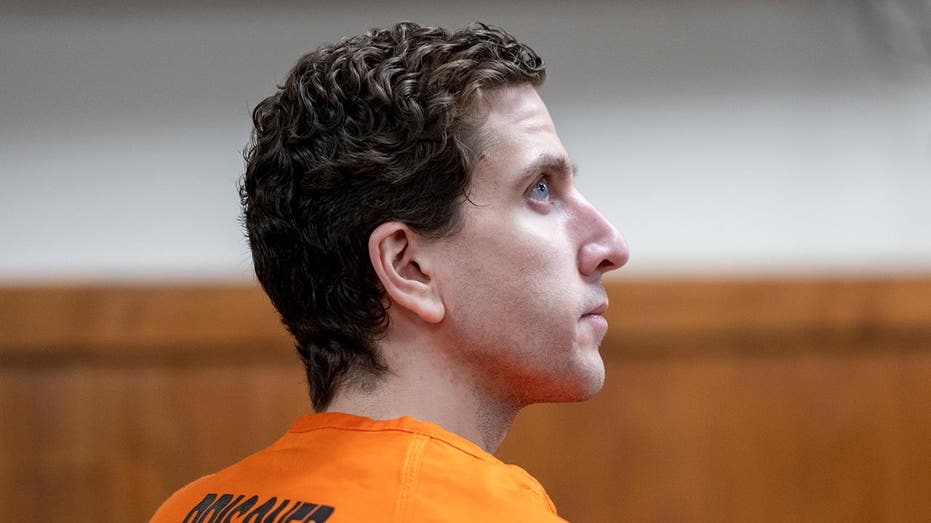
Newly disclosed internal emails from the Washington State University Police Department (WSU PD) shed fresh light on how campus officers identified Bryan Kohberger’s vehicle in the early stages of the investigation into the brutal murders of four University of Idaho students.
The records, released through a public records request, show that WSU officers pinpointed Kohberger’s white 2015 Hyundai Elantra just 16 hours after being alerted to a suspect vehicle on November 28, 2022—weeks before Kohberger was publicly named as a suspect and arrested.
These communications offer Americans a clearer picture of the diligent police work that quietly unfolded behind the scenes in one of the nation’s most wrenching campus murder cases.
A Chilling Crime That Shook the Heartland
On November 13, 2022, four University of Idaho students—Ethan Chapin, Madison Mogen, Xana Kernodle, and Kaylee Goncalves—were found murdered in their off-campus home in Moscow, Idaho. The tragedy stunned the small college town and reverberated across the nation.
The victims were students at the University of Idaho, a public land-grant university that has long been a cornerstone of the region. Their deaths raised immediate questions about safety in America’s college communities and prompted a massive multi-agency investigation led by the Moscow Police Department, with assistance from state and federal authorities.
As details later revealed, one vehicle would become central to the case: a white 2015 Hyundai Elantra seen in the vicinity of the crime scene during the early morning hours of the murders.
How WSU Police Zeroed In on the Elantra
According to internal emails sent by then–WSU Police Chief Gary Jenkins on January 5, 2023, two campus officers—Officer Daniel Tiengo and Sergeant Curtis James Whitman—moved quickly once informed of the suspect vehicle.
The alert did not go out on November 25, as originally suggested in the arrest warrant affidavit. Instead, Jenkins clarified that area law enforcement agencies were not asked to be on the lookout for the vehicle until the morning of November 28.
Within just 16 hours of receiving the information, Tiengo and Whitman identified a white 2015 Hyundai Elantra registered to Bryan Kohberger, then a Ph.D. student at Washington State University in Pullman, Washington—just across the Idaho border.
This detail matters. It shows that local and campus law enforcement were working diligently and methodically, cross-checking vehicle registrations, surveillance footage, and databases even as public scrutiny intensified.
Correcting the Timeline
In his January 5 email, Jenkins acknowledged that the timeline outlined in the publicly released affidavit was not entirely accurate regarding when regional law enforcement agencies were first alerted about the Elantra.
“The affidavit indicates that area law enforcement agencies were asked to be on the lookout for the suspect vehicle on November 25 [2022] when, in fact, that did not occur until the morning of November 28 [2022],” Jenkins wrote.
This clarification does not undermine the integrity of the broader investigation. Rather, it highlights how fast-moving investigations can involve complex timelines and evolving information.
What is clear is that once WSU officers received the notice, they acted swiftly and effectively. In a matter of hours, they had located a vehicle matching the exact description—right in their own campus community.
Orders Not to Stop the Vehicle
Another critical email, dated November 27, 2022, came from Moscow Police Department Lead Detective Corporal Brett Payne. In that communication, he issued a strong directive to regional law enforcement agencies concerning the Elantra.
Despite the vehicle being of investigative interest, officers were explicitly instructed not to initiate a traffic stop or contact the driver—unless there was a life-or-death emergency.
“YOU ARE ORDERED NOT TO STOP, DETAIN, OR CONTACT THE DRIVER unless it is a life-or-death emergency,” Payne wrote.
This instruction speaks volumes about investigative strategy. Law enforcement agencies often delay direct engagement with a suspect to preserve evidence, conduct surveillance, and build a rock-solid case before making an arrest.
Such caution may frustrate a public hungry for quick answers, but it is often critical to securing convictions that hold up in court.
From Person of Interest to Arrest
Bryan Kohberger remained under investigation throughout December 2022. Eventually, after law enforcement gathered additional evidence—including cellphone data, surveillance analysis, and DNA findings—Kohberger was arrested on December 30, 2022.
The arrest came after a nationwide manhunt and coordination among agencies including the Federal Bureau of Investigation.
Authorities later revealed that Kohberger had been pursuing advanced studies in criminology at Washington State University. The idea that someone studying criminal behavior would allegedly commit such a heinous act only added to the nation’s disbelief.
A Plea Deal That Changed the Legal Outcome
On July 2, 2025, Kohberger pleaded guilty to the murders of all four students, as well as one count of felony burglary. In exchange for the plea agreement, prosecutors removed the possibility of the death penalty.
Instead, he will serve four consecutive life sentences without the possibility of parole.
For many Americans, especially the families of the victims, the plea brought complex emotions. On one hand, it guaranteed that Kohberger will never walk free again. On the other, it removed the possibility of a capital sentence in a case many believed warranted the ultimate punishment.
Under Idaho law—outlined by the Idaho Legislature—first-degree murder can carry the death penalty or life imprisonment. Prosecutorial discretion and negotiations ultimately shaped the final resolution.
The Role of Campus Police in Major Investigations
This case also underscores the often-overlooked role of campus law enforcement agencies.
University police departments, such as WSU PD, are fully sworn law enforcement bodies tasked with protecting students, faculty, and campus property. They coordinate with city, county, state, and federal agencies when serious crimes occur.
In this case, the vigilance of campus officers helped connect a suspect vehicle to an individual living within their jurisdiction—well before the broader public knew his name.
The work of Officers Tiengo and Whitman drew praise from Chief Jenkins, who wrote that their efforts placed WSU PD “in a favorable light on a national stage.”
For many Americans, that statement rings true. While national media narratives often focus on controversy or confusion, the release of internal records reveals disciplined, detail-oriented police work.
Why the Vehicle Was So Important
Vehicles frequently become central pieces of evidence in homicide investigations, particularly when surveillance cameras capture movement near crime scenes.
In the Moscow case, a white sedan seen repeatedly driving near the victims’ residence in the early morning hours became a key lead. Law enforcement agencies circulated information about the car across multiple jurisdictions.
- Officers reviewed local registration records.
- Surveillance footage was combed for clarity and patterns.
- Regional alerts were distributed to partner agencies.
- Investigators cross-referenced vehicle data with university housing records.
That systematic approach allowed WSU Police to isolate Kohberger’s Elantra among thousands of similar vehicles nationwide.
In essence, the identification of the car narrowed the investigative field dramatically.
The Importance of Interagency Cooperation
The coordinated response among Moscow Police, Washington State University Police, the FBI, and other agencies demonstrates the power of interagency cooperation.
Small-town departments often rely on partnerships to tackle crimes of extraordinary magnitude. In this case, information sharing across state lines between Idaho and Washington proved essential.
Without immediate communication, a key lead could have slipped away.
This is a reminder that America’s law enforcement infrastructure—from campus patrol officers to federal agents—functions best when agencies operate in tandem, focused on justice rather than headlines.
Public Records and Transparency
The release of these emails through a public records request also reflects America’s commitment to transparency.
Washington’s public records law allows citizens and journalists to access certain government documents, ensuring oversight and accountability. Institutions like Washington State University must comply with legitimate requests for non-exempt communications.
In this instance, the disclosure allowed the public to see a fuller timeline and to better understand the behind-the-scenes work that occurred during those tense weeks in late 2022.
A Case That Will Be Studied for Years
The Kohberger case will likely be examined in criminal justice courses for decades. It involves forensic science, digital evidence, surveillance analytics, interagency coordination, and plea bargaining strategy.
It also raises broader cultural questions about campus safety, the psychology of violent crime, and how communities respond to unimaginable tragedy.
For law enforcement professionals, the early identification of Kohberger’s vehicle stands as a textbook example of thorough investigative groundwork paying dividends later in a case.
Justice, Accountability, and the American System
While debates over the plea deal continue, one fact remains clear: Bryan Kohberger will spend the rest of his life behind bars.
The legal system, though sometimes imperfect, ultimately delivered a definitive outcome. The families were spared a lengthy capital trial filled with graphic testimony. The community received a final resolution.
And Americans learned that persistent, methodical police work—often conducted far from cameras—can make the difference between an unsolved horror and a secured conviction.
The Bigger Picture
The newly revealed emails do more than clarify dates. They reinforce a broader truth about law enforcement in America: success often depends on steady professionalism rather than dramatic gestures.
Two campus officers, acting on an interagency alert, checked databases, reviewed records, and connected the dots. Their actions became one piece of a much larger investigative puzzle.
In a time when many institutions face skepticism, it’s worth recognizing when government agencies fulfill their duty with competence and dedication.
The tragic loss of four young Americans can never be undone. But the pursuit of justice—methodical, coordinated, and ultimately successful—stands as a testament to what can happen when officers across jurisdictions commit themselves to the rule of law.
For a grieving nation, that is a truth worth remembering.