Trump’s Final Iran Deadline Nears as America Faces a Defining Moment Abroad and at Home
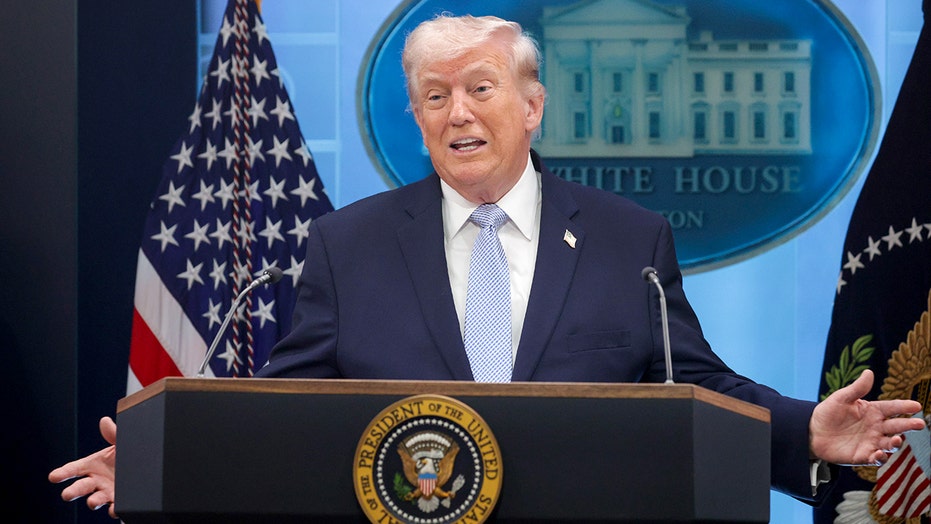
With just hours left before President Donald J. Trump’s self-imposed “final” deadline for Iran to agree to a new nuclear framework, tensions in the Middle East are reaching a boiling point. The administration has made clear that the era of endless extensions and weak enforcement is over.
At the same time, Americans are watching a cascade of major developments at home — from NASA’s Artemis II mission circling the Moon to heated political battles over border security, race-based policy proposals, media bias, and the fragile Republican majority in Congress.
Here’s a deeper look at the most significant stories shaping this critical moment for our nation.
Trump’s Final Warning to Iran: A High-Stakes Standoff
The President’s deadline to Tehran marks a turning point in U.S. foreign policy. After years of what many conservatives viewed as appeasement under prior administrations, Trump has placed unprecedented economic and diplomatic pressure on the Islamic Republic.
The original 2015 nuclear agreement — formally known as the Joint Comprehensive Plan of Action (JCPOA) — was negotiated during the Obama administration. Critics argued it handed billions of dollars in sanctions relief to Iran while failing to permanently dismantle its nuclear ambitions.
President Trump withdrew the United States from the JCPOA during his first term, citing:
- Weak inspection mechanisms
- Sunset clauses that would eventually lift restrictions
- Failure to curb ballistic missile development
- No accountability for Iran’s regional proxy warfare
Now, with a new ultimatum on the table, the administration is signaling that either Tehran agrees to a stricter, enforceable deal — or faces intensified sanctions and possibly military consequences.
The U.S. Department of State has reiterated that Iran must verifiably halt uranium enrichment beyond civilian thresholds. Meanwhile, observers at the International Atomic Energy Agency (IAEA) continue to monitor Iran’s nuclear activities, though access disputes have persisted.
The global implications are enormous. Tensions in the Persian Gulf and surrounding waters, including chokepoints like the Strait of Hormuz, have raised concerns about energy markets and NATO alignment.
Sen. Lindsey Graham has called the situation “a defining moment in the history of the Middle East,” underscoring how America’s posture will shape regional stability for decades.
For many Americans, the broader question remains clear: will the United States project strength and deterrence — or allow adversaries to exploit hesitation?
Artemis II: Americans Return to Deep Space
While geopolitical tensions rise, American astronauts are once again venturing beyond low Earth orbit. NASA’s Artemis II mission recently completed a historic lunar flyby, marking a major milestone in the nation’s effort to return astronauts to the Moon.
The crew reportedly made “interesting observations” during their journey around the lunar surface — a reminder that American innovation continues to lead on the world stage.
The Artemis program, overseen by NASA, aims to:
- Establish a sustainable human presence on the Moon
- Test systems for eventual Mars exploration
- Strengthen U.S. leadership in space amid competition from China
This mission carries historic weight. The last time humans traveled beyond low Earth orbit was during the Apollo program, capped by Apollo 11 in 1969. Artemis signals that American exploration is not just nostalgia — it’s the future.
In an era where China has dramatically expanded its space program, American dominance in space is about more than prestige. It’s about national security, economic leadership, and inspiring the next generation.
DOJ Clashes with Progressive ‘Racial Equity’ Proposal
Domestically, a fierce debate is unfolding over race-based public policy. Progressive politician Zohran Mamdani unveiled a sweeping “racial equity plan” intended to reshape government resource allocation.
The proposal quickly drew sharp scrutiny from President Trump’s Department of Justice, which signaled potential legal concerns.
At the heart of the debate is a fundamental constitutional question: can government policy explicitly allocate benefits or burdens based on race?
The U.S. Constitution’s Fourteenth Amendment guarantees equal protection under the law. The Supreme Court has repeatedly grappled with race-conscious policy, most recently in decisions affecting higher education admissions.
Critics argue that efforts framed as “equity” risk replacing one form of discrimination with another. Supporters counter that disparities cannot be addressed without targeted interventions.
The DOJ’s swift reaction signals that the court battles over race-based programs are far from over.
Democratic Governors and Sinking Poll Numbers
Another storm is brewing for at least one Democratic governor facing sagging approval ratings. A new statewide survey shows plummeting support amid voter dissatisfaction over leadership and governance.
Poor poll performance can have serious consequences:
- Increased primary challenges
- Fundraising difficulties
- Legislative gridlock
- Heightened vulnerability in general elections
With Americans facing economic pressure from inflation and interest rates, gubernatorial leadership is under intense scrutiny nationwide.
Battle for the House: Trump-Backed Candidate Seeks to Bolster GOP Majority
In Congress, Republicans are fighting to defend a razor-thin majority in the U.S. House of Representatives. A Trump-backed candidate is seeking to fortify GOP ranks in a competitive district tied to the political orbit of Rep. Marjorie Taylor Greene.
The stakes are clear. Even one seat can determine:
- Control of committee chairmanships
- The legislative calendar
- Oversight authority over the executive branch
If Democrats retake the House, the administration could face aggressive investigations and legislative roadblocks. If Republicans expand their margin, Trump’s agenda gains breathing room.
Arizona GOP Pushes Back Against Anti-ICE Policies
In Arizona, Republican lawmakers are pressing Attorney General review of a county’s anti-ICE posture. The controversy centers around cooperation with U.S. Immigration and Customs Enforcement.
State Republicans argue that policies limiting local cooperation with federal immigration authorities create de facto sanctuary conditions.
Immigration enforcement falls under federal jurisdiction through the Department of Homeland Security, but state and local cooperation plays a critical role in policing outcomes.
The showdown reflects a broader national divide over border management and federal-state authority.
Media Firestorms and Cultural Flashpoints
Several major media controversies are unfolding simultaneously:
- The White House rebuked Saturday Night Live following what it described as an inappropriate assassination joke.
- CBS reportedly decided to replace Stephen Colbert’s “Late Show” with Byron Allen’s “Comics Unleashed,” signaling possible programming shifts at CBS.
- Billy Bush alleged that ABC News once dedicated significant internal resources to scrutinizing President Trump.
The larger issue at play is public trust in the media. Poll after poll shows declining confidence in institutional journalism, especially among conservatives.
Americans increasingly question whether major networks function as neutral arbiters or ideological actors.
Michigan Ends Championship Drought
In sports, there was at least one unifying moment: the University of Michigan claimed its first men’s NCAA basketball title since 1989.
The victory over powerhouse UConn electrified fans and restored pride to the University of Michigan athletics program.
College sports remain one of America’s most enduring cultural pillars — a reminder that fierce competition can unite rather than divide.
California’s High-Speed Rail Reality Check
On the West Coast, California officials acknowledged mounting setbacks in the state’s ambitious high-speed rail project. Originally envisioned as a transformative infrastructure investment, the project has faced cost overruns and construction delays.
The California High-Speed Rail Authority has defended its work, but critics point to escalating budget projections and incomplete segments.
Infrastructure debates like this one feed into broader national conversations about federal spending, accountability, and return on taxpayer investment.
Military Education Shake-Up: Hillsdale in the Spotlight
Defense Secretary Pete Hegseth reportedly moved to reduce Ivy League influence in certain military education programs, pivoting instead toward partnerships with institutions such as Hillsdale College.
Hillsdale, known for its classical liberal arts curriculum and emphasis on constitutional principles, has long been popular among conservatives.
The decision reflects an ongoing debate about ideological influence within military training environments — and what kind of civic philosophy should shape future officers.
Cultural Moments: From Obama Center ID Rules to Microplastics ‘Wars’
The Obama Presidential Center reportedly requires identification for entry, drawing criticism from some who argue that such policies contrast with opposition to voter ID laws.
Meanwhile, environmental advocates continue raising alarms about microplastics — tiny plastic particles increasingly found in water systems and even human tissue. The Environmental Protection Agency has monitored related environmental concerns, though the policy debate remains ongoing.
The Bigger Picture: Strength Abroad, Stability at Home
As President Trump’s Iran deadline approaches, Americans find themselves at a crossroads across multiple fronts.
Abroad, the question is whether U.S. resolve will deter nuclear escalation. At home, the battles over border security, constitutional equality, media accountability, infrastructure spending, and cultural identity continue to shape the national conversation.
This is not a quiet moment in American history. It is a defining one.
From lunar missions to legislative fights, from Middle East standoffs to NCAA triumphs, the story of America remains one of strength, debate, innovation, and resilience.
And as always, the American people are watching — determined that their nation remains secure, prosperous, and free.