Washington State Driver Accused of Chasing Child on Sidewalk Faces Multiple Charges — and Swift Release
A disturbing incident in eastern Washington has sparked serious concerns about public safety, accountability, and the justice system after authorities say a 56-year-old driver chased a young boy on a dirt bike along a residential sidewalk and later attempted to enter a stranger’s home.
The suspect, Wendy A. Clemente, was arrested Monday evening by deputies from the Spokane County Sheriff’s Office. She now faces several charges, including attempted first-degree assault, driving under the influence (DUI), and first-degree criminal trespass. Yet despite the alarming allegations, she was reportedly released from the Spokane County Jail the very next day without having to post bond.
Thankfully, no injuries were reported. But for many families in Spokane County, the incident has become a sobering reminder of just how quickly reckless behavior can spiral into potential tragedy — and how swiftly suspects can reenter the community.
Sidewalk Pursuit Shocks Residential Neighborhood
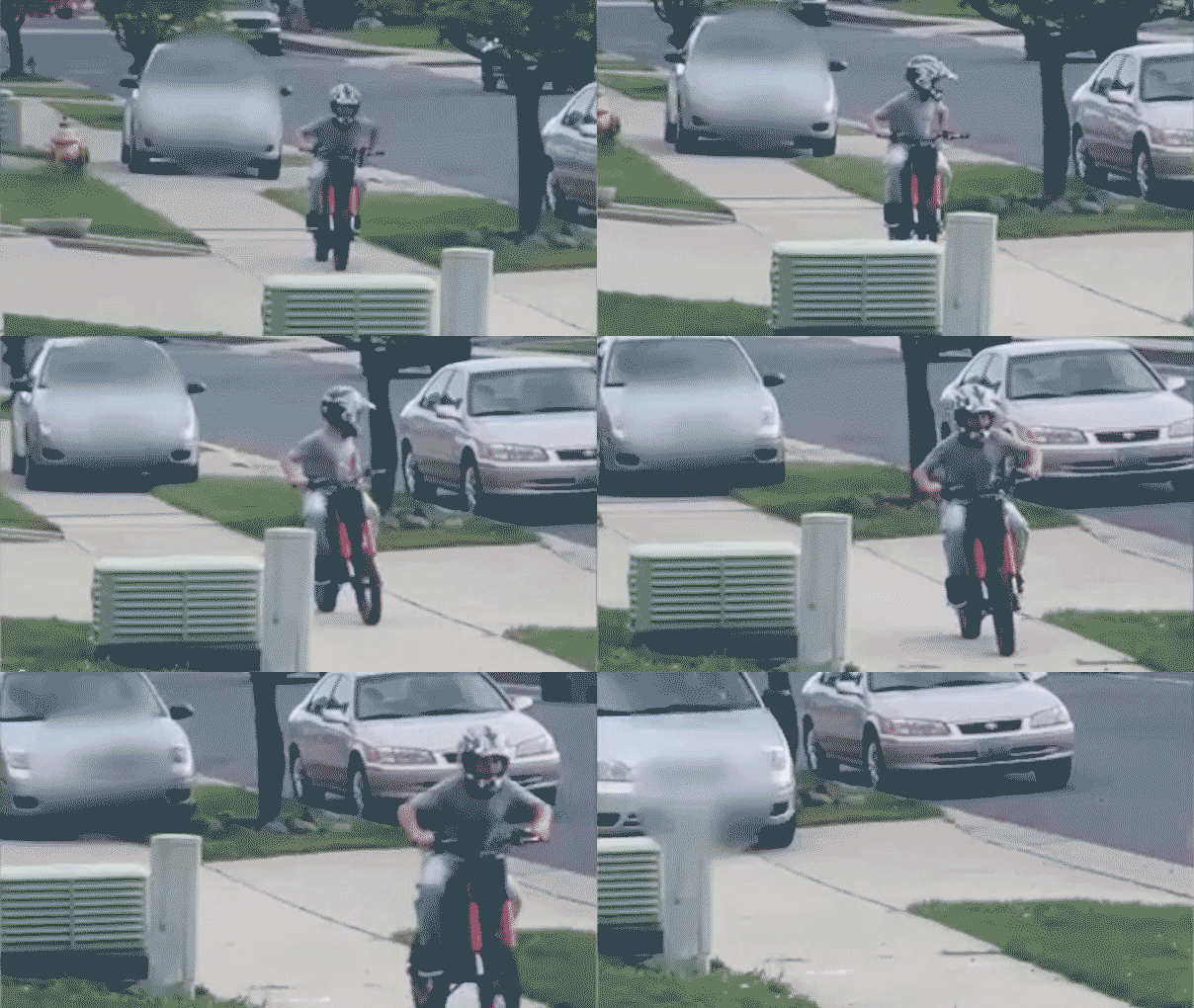
According to investigators, the incident unfolded around 5:05 p.m. on a residential street in Spokane County, Washington state. Authorities allege Clemente drove her silver sedan onto a sidewalk in pursuit of a child riding a dirt bike.
Sidewalks are designed to protect pedestrians and children from vehicular traffic. For a vehicle to mount the sidewalk and chase a minor raises deeply troubling questions about intent and judgment.
A witness captured video footage reportedly showing the sedan following closely behind the child along the sidewalk. The footage quickly became a key piece of evidence, helping deputies identify and locate the suspect.
Under Washington law (RCW 9A.36.011), first-degree assault includes attempts to inflict great bodily harm with a deadly weapon — and a motor vehicle can qualify as such if used in a threatening or dangerous manner. Prosecutors must now determine whether the evidence supports that high-level charge.
Miraculously, the child was not injured.
Second Call Leads Deputies to Suspect
Roughly one hour after the alleged chase, deputies responded to another call about a mile away. This time, a homeowner reported suspicious activity at his property.
The resident, who was monitoring his home security cameras, observed a woman allegedly attempting to open door handles on his property. In an age when more Americans are turning to home surveillance technology for protection, these systems increasingly play a vital role in addressing crime in real time.
When deputies arrived at the scene, they located Clemente in the driveway and placed her into custody.
Authorities believe the two incidents are connected and occurred within a short timeframe, painting a picture of increasingly erratic behavior.
Claims of Memory Loss and Signs of Impairment
Investigators say Clemente initially denied any wrongdoing. Regarding the alleged trespassing, she reportedly claimed she had stopped at the home to look for dogs so her own dog could socialize. She acknowledged she did not know the homeowner.
When questioned about the earlier incident involving the dirt bike, she allegedly told deputies she did not remember it.
Deputies documented signs of impairment during their interaction with Clemente. Although she initially denied consuming alcohol, authorities say she later admitted to drinking.
Driving under the influence remains one of the most persistent public safety threats in America. According to the National Highway Traffic Safety Administration (NHTSA), thousands of Americans die each year in alcohol-related crashes. In Washington state, DUI offenses are governed by strict statutes under RCW 46.61.502, which prohibits operating a vehicle while impaired by alcohol or drugs.
As part of the investigation, deputies obtained a search warrant for a blood sample — a common step in DUI cases when impairment is suspected and further evidence is needed to support charges.
Alleged Resistance During Arrest
Authorities also report that Clemente resisted as deputies attempted to place her inside a patrol vehicle. According to the sheriff’s office, she allegedly tried to kick one of the deputies during the process.
Resisting arrest can result in additional charges under Washington law, depending on the circumstances and whether officers determine that force was used or threatened.
Law enforcement officers frequently face dangerous and unpredictable situations. Attempting to kick a deputy while already under investigation for multiple serious allegations only escalates an already volatile encounter.
Charges Filed — and a Rapid Release
Following her arrest, Clemente was booked into the Spokane County Jail on several charges:
- Attempted first-degree assault
- Driving under the influence (DUI)
- First-degree criminal trespass
Yet in a development that has raised eyebrows, a court commissioner ordered that Clemente be released on her own recognizance the following day. Release on one’s own recognizance (often abbreviated as OR) means the defendant is freed without posting monetary bail, based on a promise to return for future court proceedings.
Washington courts operate under state bail guidelines that allow judges or commissioners to weigh:
- The seriousness of the alleged crime
- The defendant’s criminal history
- Community ties
- Risk of flight
- Public safety concerns
Critics of no-bond releases argue that cases involving alleged violent conduct — especially involving minors — merit stricter pretrial detention standards. Supporters counter that defendants are presumed innocent until proven guilty and that unnecessary pretrial incarceration can burden both families and taxpayers.
The court’s decision in this case will likely reignite local debates about criminal justice reform, bail standards, and judicial discretion.
Public Safety Concerns in Residential Areas
The alleged pursuit of a child along a sidewalk strikes a particular nerve because residential neighborhoods are expected to be safe havens for families. Sidewalks are intended as protected zones where children can ride bikes or walk home without fear of vehicular traffic.
When a vehicle leaves the roadway and enters pedestrian space, the danger multiplies instantly. Even at low speeds, a car outweighs a dirt bike by thousands of pounds and can cause catastrophic injury.
Parents across America understand that children often ride dirt bikes, bicycles, or scooters near their homes. While communities may have varying rules about off-road vehicles, none permit motorists to respond with vigilante-style actions that endanger a minor’s life.
The Role of Witnesses and Technology
This case highlights the growing role of citizen-captured video and home surveillance systems in modern policing. A witness’s video of the sedan chasing the dirt bike reportedly helped deputies quickly identify the suspect vehicle.
Likewise, the homeowner’s security camera footage was instrumental in bringing deputies to the second scene.
In recent years, video evidence has transformed investigations. Whether through dashboard cameras, body-worn cameras, or private home systems, visual records can:
- Speed up suspect identification
- Clarify contested narratives
- Strengthen prosecutorial cases
- Protect both citizens and officers
Technology has become a powerful force multiplier for law enforcement agencies across the country.
Broader Justice System Debate
While the facts of this case will ultimately be determined in court, the rapid release component is likely to generate ongoing public debate.
Across many states, including Washington, criminal justice policies have evolved in recent years in response to concerns about overcrowded jails, fairness in cash bail systems, and pretrial rights. Advocacy groups argue that cash bail disproportionately affects lower-income individuals. Opponents contend that eliminating or minimizing bail in serious cases can put communities at unnecessary risk.
This tension reflects a broader national conversation about how best to balance:
- Public safety
- Due process rights
- Judicial discretion
- Community trust in law enforcement
For residents of Spokane County, the pressing question is immediate and local: Was releasing a suspect facing attempted assault charges after an alleged child-targeted vehicle chase the right call?
What Happens Next?
The case will now proceed through Washington’s court system, where prosecutors must present evidence supporting each charge. Blood test results, video footage, witness statements, and deputy reports will all likely play central roles.
If convicted of attempted first-degree assault, Clemente could face significant penalties under Washington law. DUI convictions similarly carry escalating consequences depending on prior offenses and blood alcohol concentration levels.
For now, the fact that no one was physically injured stands as the single most fortunate outcome in a situation that could have ended far differently.
A Wake-Up Call for Community Vigilance
This incident serves as a reminder of the unpredictable risks families can face even in quiet neighborhoods. It underscores the importance of:
- Active, alert neighbors
- Prompt law enforcement response
- Technological safeguards like security cameras
- Strong accountability through the legal system
America’s communities rely on both responsible citizens and a criminal justice system that protects the innocent while respecting constitutional rights. When allegations involve aggressive driving, potential intoxication, and a child endangered on a sidewalk, the stakes are especially high.
Residents in Spokane County — and parents nationwide — will be watching closely as this case unfolds. While the suspect is presumed innocent until proven guilty, the seriousness of the charges and the circumstances described by authorities ensure this case will remain under scrutiny.
For now, one thing is clear: We should never take neighborhood safety for granted. Vigilance, accountability, and steadfast respect for the rule of law remain essential pillars in protecting America’s families.
Wake Up America News — Your Source for Patriotic News.