Chicago Officer Killed in Hospital Shooting as Questions Mount Over Illinois’ Pretrial Release Policies
A Chicago police officer is dead and another remains in critical condition after a suspect who was already out on pretrial release allegedly opened fire inside a city hospital. The tragedy has reignited fierce debate over Illinois’ criminal justice policies and whether repeat violent offenders are being allowed too much freedom before trial.
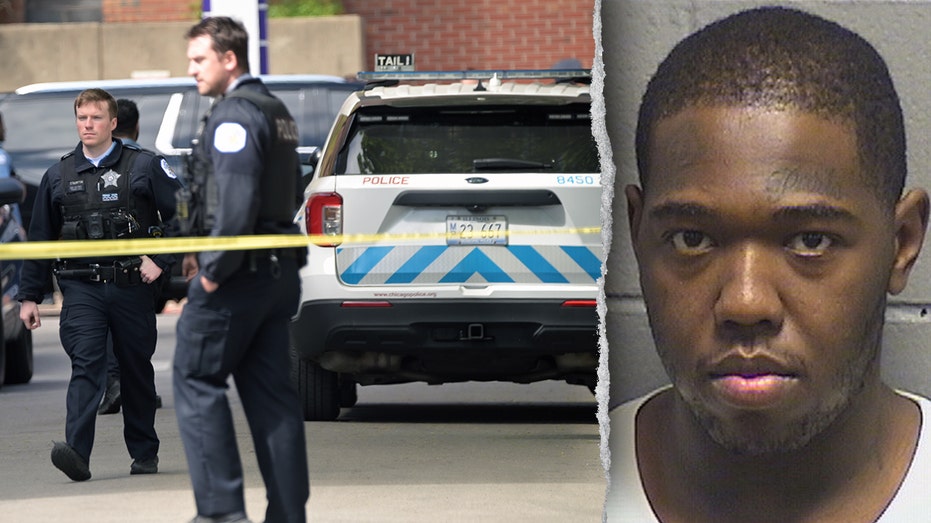
Prosecutors say the suspect, 26-year-old Alphanso Talley, carried out the brazen shooting inside Swedish Hospital on Chicago’s North Side, killing Officer John Bartholomew, a 38-year-old member of the Chicago Police Department (CPD), and critically wounding his veteran partner.
The case is not just another violent crime in a major American city. It has become a flashpoint in an ongoing battle over Illinois’ controversial pretrial release reforms and the broader direction of public safety policy in the Land of Lincoln.
A Deadly Ambush Inside a Chicago Hospital
According to prosecutors, the shooting unfolded around 11 a.m. Saturday as Talley was under police custody at Swedish Hospital. He was there in connection with a prior armed robbery case.
Authorities allege that as Talley was being transported within the hospital for medical treatment, including a CT scan, he concealed a 10mm handgun beneath a hospital blanket. In a stunning act of violence, prosecutors say Talley pulled out the weapon and opened fire on the two officers assigned to guard him.
Officer John Bartholomew was struck and later died from his injuries. His partner, a 57-year-old officer with over two decades of service to the city, also was shot and remains in critical condition.
The idea that a suspect could allegedly smuggle a firearm into a hospital setting while in custody has raised serious questions about procedures, security gaps, and the risks officers face even when they believe they have a suspect under control.
A Desperate Flight and Arrest
Prosecutors say Talley fled the hospital immediately after the shooting. A manhunt ensued in the surrounding neighborhood as law enforcement scrambled to secure the area and apprehend the suspect.
Talley was eventually found hiding under a nearby porch. Authorities say he was still wearing his hospital gown and allegedly still had the 10mm handgun in his possession at the time of his arrest.
Investigators recovered shell casings from the hospital, and prosecutors allege that forensic evidence matched those casings to the firearm found with Talley.
He now faces 20 felony charges, including:
- First-degree murder
- Attempted murder
- Aggravated unlawful restraint
- Unlawful possession of a weapon by a repeat offender
At a court hearing Monday, Talley was ordered detained and remanded to the custody of the Cook County Department of Corrections.
A History of Violent Crime
What makes this case particularly alarming is Talley’s prior criminal record.
According to prosecutors, Talley has:
- A prior gun-related conviction from 2021
- Four aggravated robbery convictions from 2017
Despite this history, Talley was out on pretrial release related to a separate armed robbery case when the hospital shooting allegedly took place. The Clerk of the Circuit Court of Cook County records show that a warrant had been issued for his arrest on March 11 while he was already on pretrial release.
This series of events—multiple violent convictions, release pending trial, a new alleged offense, and then an officer’s death—has left many Chicagoans asking how the system allowed a repeat offender to remain on the street.
The SAFE-T Act Under the Microscope
The shooting has intensified scrutiny of Illinois’ controversial SAFE-T Act, legislation signed into law in 2021 that reformed various aspects of policing and criminal justice policy across the state.
The law, formally known as the Safety, Accountability, Fairness and Equity-Today Act, included significant changes to the pretrial system. Most notably, Illinois became the first state to eliminate cash bail statewide, shifting to a system in which judges determine whether a defendant should be detained or released based on risk assessments rather than financial ability to post bond.
Supporters argue the reforms correct longstanding inequities in the justice system and ensure that low-income defendants are not jailed simply because they cannot afford bail. Critics, however, contend that the reforms have weakened accountability and made it more difficult to keep repeat violent offenders off the streets.
In this case, critics say, the consequences have become tragically clear.
Union Leadership Sounds the Alarm
John Catanzara, president of the Fraternal Order of Police Chicago Lodge 7, did not mince words in the aftermath of the shooting.
“Without pressure from the media, nothing changes,” Catanzara said at a news conference. “They go hide in a corner and continue on with their nonsense of trying to let criminals out on the street in any way, shape or form they can.”
Catanzara called the shooting a wake-up call for Illinois lawmakers and judges, urging the public and media to closely scrutinize how repeat offenders are assessed under the state’s current pretrial framework.
The union has long been critical of policies it believes tie officers’ hands and erode deterrence. In a city already grappling with fluctuating violent crime rates, morale among officers has been strained for years.
Remembering Officer John Bartholomew
The Chicago Police Department described Officer John Bartholomew as a “beloved father, husband, son and brother” who dedicated his life to protecting the people of Chicago.
At 38 years old, Bartholomew was in the prime of his career. Colleagues say he was deeply committed to public service and took pride in serving his community despite the dangers of the job.
“Officer Bartholomew dedicated his life to protecting his fellow Chicagoans,” the department said in a statement. “We promise to ensure his sacrifice will never be forgotten.”
His death marks yet another somber reminder of the risks that law enforcement officers face daily. According to the National Law Enforcement Officers Memorial Fund, dozens of officers are killed in the line of duty each year across the United States, often in situations that escalate without warning.
The Danger of Guarding Hospitalized Suspects
Incidents involving suspects in medical settings present unique security challenges.
Hospitals are open environments designed for care, not containment. Officers assigned to guard detainees must balance vigilance with the logistical constraints of a healthcare facility.
In this case, prosecutors allege the suspect managed to conceal a powerful handgun under a blanket while being transported for medical imaging. That allegation raises questions about search procedures, staffing levels, and coordination between law enforcement and hospital security.
These are operational questions that investigators will likely explore in depth in the months ahead.
A Broader Debate on Public Safety
Chicago, the nation’s third-largest city, has long been at the center of America’s public safety debate. Discussions about policing, criminal justice reform, and violent crime often play out most visibly in cities like Chicago, Los Angeles, and New York.
In Illinois, the SAFE-T Act has been both praised and condemned as a bold step forward. Some legal experts argue that pretrial detention decisions must carefully weigh an individual’s constitutional rights under the Eighth Amendment, which addresses excessive bail. Others maintain that reforms must not come at the expense of community safety.
This case will almost certainly become a focal point in that debate. Lawmakers may face renewed calls to revisit or revise aspects of pretrial release policy, particularly regarding repeat violent offenders.
What Comes Next
Talley’s case will proceed through the Cook County court system, where prosecutors will seek to prove the extensive charges against him. If convicted of first-degree murder, he could face a sentence of decades in prison, potentially life.
Meanwhile, the wounded officer continues to fight for his life, and a grieving family prepares to lay Officer John Bartholomew to rest.
The broader impact of this case may extend beyond one courtroom. It may shape the next chapter of Illinois’ public safety policies and the national conversation over how best to balance reform with responsibility.
A Moment of Reflection for Illinois
This tragedy forces residents and lawmakers alike to reckon with difficult questions.
- How should repeat violent offenders be handled before trial?
- Are current risk assessments sufficient to protect the public?
- What additional safeguards, if any, are necessary?
Public safety is a core responsibility of government. Americans expect that those with a demonstrated record of violent crime will be handled with caution and seriousness.
As Chicago mourns one of its own, the stakes of that responsibility have rarely felt higher.
For the men and women of the Chicago Police Department, the mission continues. But for one fallen officer and his family, the cost has already been paid in full.
Wake Up America News will continue to follow developments in this case and the policy debate it has reignited—because the safety of our communities is not a partisan issue. It is an American one.