DNA Breakthrough Brings Long-Awaited Answers in Ohio Cold Case
After nearly three decades of unanswered questions, a chilling cold case in eastern Ohio has finally been resolved — not through luck, but through the steady march of American forensic science and old-fashioned persistence by local law enforcement.
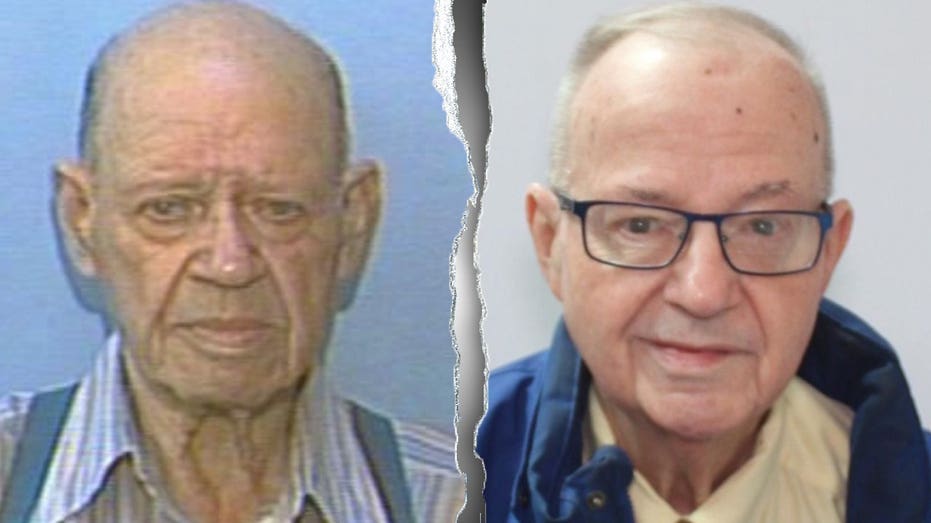
Authorities in Tuscarawas County, Ohio, announced that 81-year-old Larry Drotleff of Euclid has confessed to dismembering his father, Lawrence A. Drotleff, in 1998 and disposing of his remains in suitcases tossed along rural roadways. The grim discovery stunned the quiet community at the time. Now, thanks to advances in DNA analysis and renewed investigative effort, the truth has come to light.
While the case did not ultimately result in homicide charges, the disturbing details — and the alleged theft of more than $250,000 in government benefits — underscore the depth of betrayal and greed involved in what investigators called an “inhumane” act.
The Grim Discovery in 1998
The case began in February 1998 when a group of children stumbled upon a suitcase abandoned along Winkler Hill Road in Dover Township, Ohio. Inside were human body parts — specifically, a pelvis and part of a leg — belonging to an unidentified male.
Just one week later, a second suitcase was discovered along Boltz Orchard Road in nearby Jefferson Township. That suitcase contained additional remains, including a torso. The two grisly findings set off an intensive investigation by the Tuscarawas County Sheriff’s Office.
Despite immediate efforts, authorities faced serious limitations:
- No reliable identification of the victim
- No usable fingerprint matches
- No clear suspect
- No missing person report that immediately aligned with the remains
DNA evidence was collected from the recovered body parts and from items in the suitcases. But in 1998, forensic capabilities were far more limited than they are today. The DNA profile entered into law enforcement databases generated no hits.
Investigators tracked down dozens of leads over the years, but each one came up empty. The case went cold, joining thousands of unsolved crimes across the nation.
The Role of Modern DNA Technology
Fast forward to February 2023. With the rapid evolution of forensic genealogy and DNA database expansion, authorities decided to take another look at the evidence. Across the country, similar cold cases have been solved using advanced techniques that simply didn’t exist when many of these crimes were first investigated.
Today, law enforcement agencies frequently rely on:
- National DNA databases coordinated through the FBI’s Combined DNA Index System (CODIS)
- Improved sequencing technology capable of analyzing degraded samples
- Familial DNA matching methods that can identify relatives of unknown victims
In this case, new testing revealed a crucial connection: the unidentified remains belonged to Lawrence A. Drotleff, who would have been 93 years old at the time the body parts were discovered.
DNA pointed investigators toward a biological relative — his son, Larry Drotleff.
Unraveling a Family Secret
Once authorities turned their attention to Larry Drotleff, troubling information quickly emerged.
Years earlier, Larry Drotleff had been investigated for collecting his father’s retirement and Social Security benefits even after claiming that his father had moved away. According to law enforcement, he had continued receiving these funds long after Lawrence Drotleff was dead.
When questioned at the time by Social Security investigators, Larry allegedly stated that his father had relocated. That explanation was never fully substantiated, but without evidence of the father’s death, authorities had limited grounds for criminal charges related to disappearance.
In January 2024, confronted with the mounting DNA evidence, Larry Drotleff cooperated with investigators. He provided his own DNA sample, which confirmed that the remains belonged to his father.
He then offered a shocking confession.
The Confession
According to statements released by Tuscarawas County Sheriff Orvis Campbell, Larry Drotleff admitted that he was living with his father in 1998. He claimed that he came home from work one day and found his father deceased.
Rather than contact authorities, emergency services, or neighbors, Larry allegedly made a deliberate and horrifying decision. He told investigators that he used a manual handsaw to cut up his father’s body.
Some of the remains were placed inside two suitcases and left along roadside areas in Tuscarawas County. Other portions were reportedly placed in bags and discarded in a dumpster near his workplace.
The admission stunned even seasoned investigators.
“While the case did not prove to be a murder, it should be noted that the inhumane treatment of the corpse was conduct so inexcusable that this case remained a priority,” Sheriff Campbell said in a statement.
Authorities have not indicated that evidence exists proving homicide. Based on available information and the passage of time, the case has not resulted in murder charges.
Statute of Limitations and Legal Boundaries
One of the most difficult aspects of this case is that the statute of limitations has expired for certain state-level offenses, including abuse of a corpse under Ohio law.
Ohio criminal statutes, outlined in the Ohio Revised Code, place time limits on prosecuting many non-homicide crimes. Because 27 years have passed since the dismemberment occurred, state prosecutors are legally barred from filing those specific charges.
However, financial crimes present a different scenario — particularly when they involve federal funds.
Authorities allege that Larry Drotleff collected more than $250,000 in Social Security and pension payments to which he was not entitled. As a result, he now faces two federal counts connected to theft of government funds.
Cases involving fraud against federal benefit programs are often prosecuted under statutes enforced by the U.S. Department of Justice and agencies such as the Social Security Administration Office of Inspector General.
The Bigger Picture: Social Security Fraud in America
This case also highlights a broader national issue — fraud involving taxpayer-funded benefits.
The Social Security program, administered by the federal government since 1935, exists to provide retirement, disability, and survivor benefits to eligible Americans. It is a cornerstone of financial security for millions of seniors.
According to data published by the Social Security Administration, improper payments and fraud — while representing a small fraction of total disbursements — cost taxpayers billions of dollars over time.
Fraud schemes may include:
- Continuing to collect benefits after a recipient’s death
- Making false statements to obtain disability payments
- Identity theft targeting seniors
While the overwhelming majority of Americans rely on Social Security honestly and lawfully, cases like this erode trust and divert resources meant for hardworking retirees.
The Persistence of Local Law Enforcement
What stands out in this story is not just the crime, but the determination of a county sheriff’s department that refused to forget.
The Tuscarawas County Sheriff’s Office kept the case active for nearly three decades. Leads were re-examined, evidence was preserved, and when technology advanced, investigators revisited the file rather than letting it gather permanent dust.
This approach mirrors a nationwide trend in which cold case units are leveraging:
- DNA advancements
- Digital record analysis
- Inter-agency cooperation
- Public genealogy databases (where legally permitted)
Across America, similar efforts have identified unknown victims decades after their deaths. These technologies have helped restore names to the nameless and provide families with long-overdue answers.
In this instance, although the suspect and victim were related, identification still required confirmation through scientific methods and legal procedure.
Moral and Cultural Implications
Perhaps the most disturbing element in this case is not the forensic process or the legal technicalities — it is the profound breach of familial trust.
American culture has long emphasized respect for parents, care for elders, and dignity in death. Across faiths and traditions, honoring one’s father and mother is considered foundational to a stable society. The alleged actions in this case stand in direct opposition to those enduring values.
Sheriff Campbell’s statement underscored that sentiment, noting how difficult it is to comprehend the level of greed necessary to treat one’s own father “in this manner.”
Even without a homicide charge, the emotional weight of the crime resonates deeply. Communities expect decency toward the deceased — at minimum — regardless of family disputes or financial stress.
Cold Cases and the American Justice System
This case also serves as a reminder that in the United States, justice can be delayed — but technological progress increasingly makes it difficult to escape accountability forever.
Decades ago, investigators relied heavily on fingerprint databases and eyewitness testimony. Today, DNA technology has transformed criminal investigations nationwide, allowing authorities to:
- Identify unknown remains
- Exonerate the wrongfully convicted
- Link suspects to crimes previously considered unsolvable
The ability to preserve evidence for decades and re-test it using improved methods demonstrates both the strength and resilience of the American criminal justice system.
In many cases, law enforcement professionals who originally worked on a file may have retired or passed away — yet their work continues through archived evidence and detailed documentation.
Where the Case Stands Now
As of the latest reports, Larry Drotleff faces federal charges related to the alleged theft of Social Security and pension benefits totaling more than $250,000.
There is no murder charge at this time. Authorities have not stated that evidence exists contradicting his claim that his father was already deceased when he returned home in 1998.
However, the confession itself closes one of Tuscarawas County’s most disturbing unresolved cases and provides a definitive identity for the victim.
For nearly 27 years, the remains found in two abandoned suitcases represented a haunting mystery. Today, they represent a cautionary tale — about greed, about responsibility, and about the certainty that scientific progress continues to narrow the gaps where criminals once hid.
A Sobering Conclusion
This case reminds Americans of two enduring truths.
First, technology is a powerful tool in the pursuit of justice. The same DNA science that protects the innocent and solves violent crimes also strengthens the integrity of our legal system.
Second, moral character still matters.
No statute of limitations erases the fact that a father’s remains were dismembered and discarded rather than laid to rest with dignity. And no amount of time can fully conceal a financial fraud scheme fueled by taxpayer dollars meant to protect seniors.
Thanks to diligent investigators and advancements in forensic science, a long-standing mystery in Ohio is no longer unsolved. The American people can take some measure of reassurance knowing that even after nearly three decades, the truth was uncovered.
Justice may not always arrive swiftly. But in the United States, strengthened by innovation and anchored by the rule of law, it has a remarkable way of catching up.
Wake Up America News — Your Source for Patriotic News.