DHS Presses Wisconsin Officials to Honor ICE Detainer in Shocking Elder Care Assault Case
The U.S. Department of Homeland Security (DHS) is calling on local officials in Dane County, Wisconsin, to keep a Nicaraguan national in custody following serious criminal charges involving elderly residents at a care facility in Fitchburg.
The case has quickly become a flashpoint in the ongoing national debate over so-called “sanctuary” policies and cooperation between local law enforcement and federal immigration authorities. At the center of the controversy is a 31-year-old man now facing two felony counts of second-degree sexual assault of an elderly victim.
Federal officials say the stakes are clear: public safety must come first.
The Charges: Allegations of Sexual Assault at a Vulnerable Care Facility
According to local reporting and law enforcement statements, Julio Cesar Morales-Jarquin was arrested after authorities began investigating complaints from a residential care facility in Fitchburg, Wisconsin, a suburb of Madison.
The facility contacted police after concerns arose that an employee may have sexually assaulted vulnerable elderly residents. An investigation followed, ultimately leading to Morales-Jarquin being charged with two counts of second-degree sexual assault of an elderly person.
Under Wisconsin law, second-degree sexual assault is a serious felony offense. When the alleged victim is elderly or otherwise vulnerable, the moral gravity of the crime is compounded. Facilities that provide residential care are entrusted with safeguarding some of society’s most defenseless citizens — individuals who depend on staff for daily living assistance, medical supervision, and personal safety.
The case has shaken the local community and raised urgent questions about accountability and screening practices at assisted living facilities.
ICE Detainer Issued After Arrest
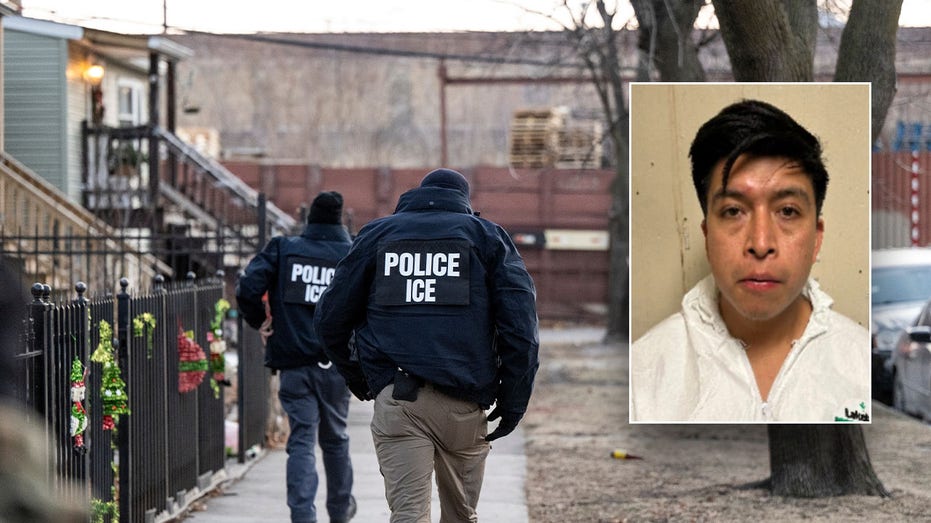
Following Morales-Jarquin’s arrest, U.S. Immigration and Customs Enforcement (ICE) issued a detainer request on April 27. An ICE detainer is a formal request to a local or state law enforcement agency to hold an individual for up to 48 hours beyond their scheduled release so federal immigration authorities can take custody.
Detainers are routinely used when non-citizens are charged with or convicted of crimes and are believed to be removable under federal immigration law.
- ICE identifies the individual as potentially removable.
- A detainer is filed with the local jail.
- Local authorities are asked to notify ICE before release and briefly maintain custody.
- ICE officers then assume custody and begin immigration proceedings.
However, compliance with ICE detainers varies significantly across jurisdictions — especially in counties that have adopted policies limiting cooperation with federal immigration enforcement.
Dane County and the “Sanctuary” Debate
DHS has publicly urged officials in Dane County not to release Morales-Jarquin back into the community if ICE is prepared to take him into federal custody.
Dane County has previously been criticized for declining to consistently honor ICE detainers unless certain legal thresholds are met. Critics of these policies refer to such jurisdictions as “sanctuary counties,” arguing that the refusal to fully cooperate with immigration enforcement creates public safety risks.
DHS also stated that in past cases the county has provided federal officials with minimal notice — in some instances as little as 30 minutes — before releasing individuals from jail. Federal authorities argue that short notification windows complicate coordination and increase the likelihood that a suspect will be released before ICE agents can arrive.
Supporters of sanctuary-style policies contend they are necessary to protect civil liberties and maintain trust between immigrant communities and local law enforcement. Opponents counter that these policies undermine the rule of law and shield potentially dangerous individuals from federal custody.
This latest case is likely to deepen that divide.
Entry Under Humanitarian Parole Program
According to DHS, Morales-Jarquin entered the United States in 2023 through a humanitarian parole program made available to certain nationals of Nicaragua.
Humanitarian parole authority is granted under federal immigration law and administered by U.S. Citizenship and Immigration Services (USCIS). It allows individuals to temporarily enter the U.S. for urgent humanitarian reasons or significant public benefit.
In recent years, the federal government expanded the use of parole for nationals of certain countries, including Nicaragua, amid changing migration patterns and regional instability.
DHS states that although the specific program under which Morales-Jarquin entered has since been rolled back, he remained in the United States unlawfully after the expiration or termination of his status.
The agency has made clear that it views this case as an example of immigration enforcement breakdown — particularly in situations where individuals who entered under temporary programs later become subject to criminal charges.
DHS Statement: “Keep This Criminal in Jail”
In a statement addressing the case, DHS emphasized that the accused is facing serious charges involving elderly victims in a residential care setting.
Acting Assistant Secretary Lauren Bis condemned the alleged conduct and called on elected officials in Dane County to cooperate with federal authorities. DHS’s position is firm: individuals charged with violent crimes — particularly against vulnerable populations — should not be released into the community if federal authorities are ready to detain them.
The agency framed the issue as one of public safety rather than politics, urging what it described as “sanctuary politicians” to prioritize the protection of residents over ideological commitments.
The Bigger Picture: Immigration Enforcement and Public Safety
This case lands squarely in the middle of a broader national debate about the intersection of local law enforcement, federal immigration authority, and public safety.
The federal government has primary authority over immigration enforcement under the U.S. Constitution. However, local jails and state authorities often serve as critical partners when non-citizens are arrested for criminal offenses.
When cooperation breaks down, tensions can escalate between federal agencies and local governments.
Key questions raised by this case include:
- Should local jurisdictions be required to honor all ICE detainer requests?
- Do sanctuary-style policies enhance or diminish public safety?
- How should temporary humanitarian programs be monitored and enforced?
- What screening procedures are in place for individuals working in elder care facilities?
Each of these issues carries significant public policy implications — particularly as border security and immigration enforcement remain top concerns for many American voters.
Protecting America’s Elderly
Beyond immigration politics, the allegations underscore the vulnerability of elderly residents in assisted living and long-term care environments.
Facilities are entrusted with the care of individuals who often suffer from:
- Cognitive impairment
- Mobility limitations
- Chronic illness
- Dependence on caregivers for daily needs
When abuse occurs in these settings, it represents not just a criminal violation but a betrayal of trust.
Wisconsin lawmakers and regulators may now face renewed scrutiny over background checks, oversight procedures, and employee screening protocols in residential care facilities. Ensuring that proper safeguards are in place is essential to prevent future tragedies.
The National Sanctuary Policy Landscape
Sanctuary policies differ from state to state and county to county. Some jurisdictions prohibit local law enforcement from honoring ICE detainers without a judicial warrant. Others simply limit proactive communication with federal authorities.
In contrast, many counties across the country fully cooperate with ICE officers, arguing that joint operations enhance public safety and uphold immigration laws passed by Congress.
The tension between federal enforcement and local discretion has led to numerous legal challenges and federal policy shifts over the last decade.
As immigration continues to be a defining issue in American politics, single cases — particularly those involving violent crime — often serve as catalysts for renewed legislative proposals and public debate.
Awaiting Dane County’s Response
As of this writing, DHS has publicly pressed Dane County leaders to ensure Morales-Jarquin is not released without ICE notification and cooperation. The Dane County Executive’s Office has been contacted for comment.
The coming days will likely determine whether local officials comply fully with ICE’s detainer request or adhere to existing county policy.
For residents of Wisconsin — and Americans nationwide — the issue goes beyond a single defendant. It cuts to the heart of whether local jurisdictions will stand with federal law enforcement when serious criminal allegations are involved.
A Test of Priorities
At its core, this case poses a straightforward question: when someone stands accused of preying on elderly residents in a care facility, should cooperation between local and federal authorities be automatic?
DHS argues the answer is yes.
Critics of sanctuary policies say protecting vulnerable American citizens must supersede political considerations. They contend that honoring ICE detainers in cases involving violent charges is not a partisan issue but a matter of common sense.
As Wake Up America News continues to follow this developing story, one thing remains certain: Americans expect their leaders — at every level of government — to prioritize safety, uphold the law, and protect the most vulnerable members of our communities.
Whether Dane County officials choose to align fully with federal authorities in this case will send a clear signal about where they stand.
For now, the case proceeds in Wisconsin’s court system — and the eyes of the nation are watching.