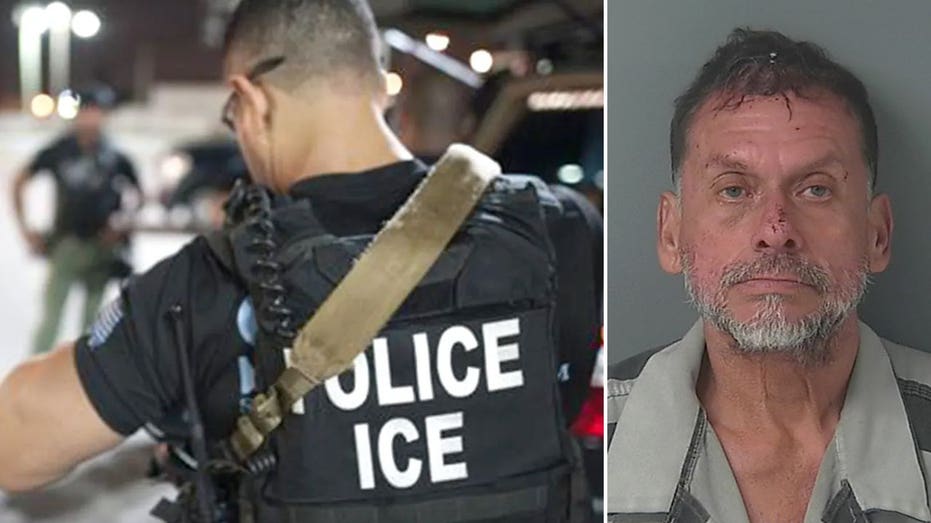
ICE Highlights Arrests of Criminal Illegal Aliens as Federal Enforcement Push Continues Nationwide
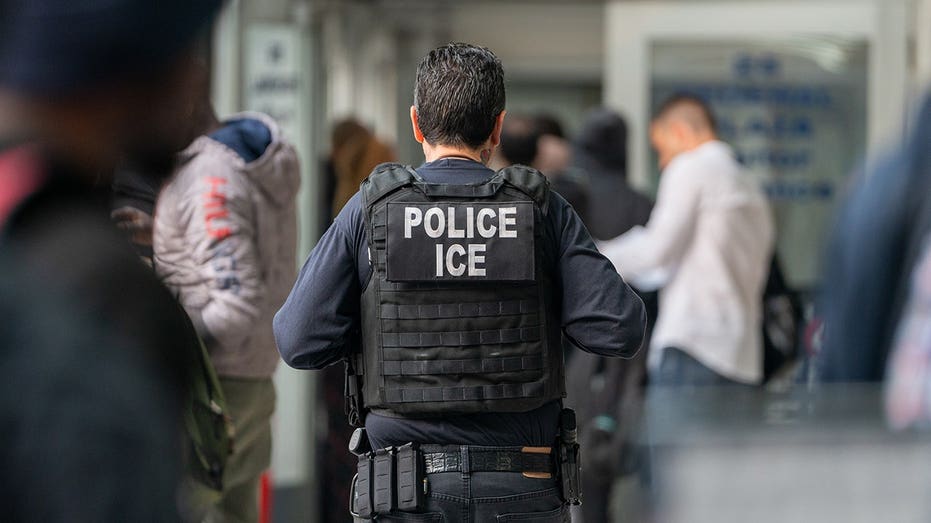
Federal immigration authorities are drawing renewed attention to a series of recent arrests involving illegal aliens convicted of serious crimes, including arson, violent burglary, and large-scale drug trafficking. Officials with U.S. Immigration and Customs Enforcement (ICE) say the arrests are part of an ongoing nationwide enforcement effort focused squarely on public safety and the removal of offenders who have violated both immigration law and criminal statutes.
According to ICE, nearly 70% of those taken into custody in the most recent enforcement actions had either been charged with or convicted of crimes inside the United States. That figure, officials argue, underscores a central mission: prioritizing the apprehension and removal of individuals who pose a threat to American communities.
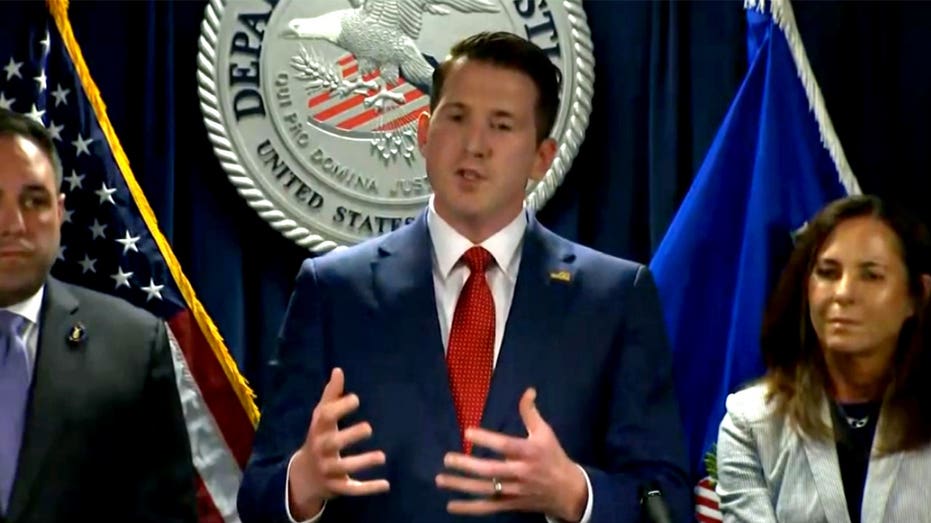
“The men and women of ICE continue to make American communities safer,” acting Assistant Secretary Lauren Bis said in a statement, emphasizing that those who enter the country unlawfully and commit further crimes “will be found and arrested.”
The enforcement push aligns with the broader immigration agenda under President Donald J. Trump, which places illegal immigration and interior enforcement at the forefront of federal public safety policy.
A Focus on Public Safety and Criminal Convictions
ICE operates under the umbrella of the U.S. Department of Homeland Security (DHS) and is primarily tasked with enforcing federal immigration laws inside the country. Within ICE, Enforcement and Removal Operations (ERO) serves as the agency’s arm responsible for identifying, arresting, detaining, and removing removable noncitizens.
Officials repeatedly stressed that the enforcement actions spotlighted in the announcement focused on individuals already convicted of serious crimes in American courts. The nearly 70% figure indicates that the majority of those arrested were not merely immigration violators, but individuals already processed through the U.S. criminal justice system.
Among the crimes cited:
- Arson convictions in Texas
- Burglary with assault in Florida
- Federal methamphetamine trafficking conspiracy in Florida
- Multiple burglary-related convictions in Pennsylvania
- Burglary convictions in New York
By highlighting these cases, federal officials aim to reassure the public that enforcement efforts prioritize offenders with established criminal histories rather than simply conducting broad, indiscriminate sweeps.
Arson Conviction in Tarrant County, Texas
One of the individuals taken into custody was Elias Torres-Collins, a Honduran national convicted of arson in Tarrant County, Texas. Arson is widely regarded as a serious felony offense because of the potential for widespread destruction, endangerment of human life, and significant property loss.
Tarrant County, which includes the city of Fort Worth, has experienced steady population growth in recent years. Local law enforcement agencies in fast-growing regions often face mounting public safety pressures. ICE officials emphasized that removing individuals convicted of violent property crimes helps reduce risks to residents and first responders alike.
Arson investigations are typically handled in coordination with local police and fire departments, and federal involvement often follows where immigration violations are discovered. In cases where a convicted noncitizen lacks legal immigration status, ICE may lodge a detainer and pursue removal proceedings following sentencing.
Burglary With Assault in Miami, Florida
In Florida, ICE officers arrested Juan David Fernandez-Garcia, a Colombian national convicted of burglary with assault in Miami. Miami falls within the jurisdiction of the Southern District of Florida, one of the busiest federal judicial districts in the country.
Burglary with assault elevates what would otherwise be a property crime into a violent offense. When an assault component is added, the potential for physical harm increases dramatically. Federal immigration authorities consider such convictions particularly serious when assessing enforcement priorities.
Florida has long been a flashpoint in immigration debates, balancing its diverse immigrant communities with growing public concerns about crime and border control. State and federal authorities have, at times, differed on enforcement approaches. However, when convictions are entered into the court system, ICE often steps in to determine immigration consequences.
Federal Methamphetamine Trafficking Case
Another arrest involved Juan Flores-Perez, a Mexican national convicted in federal court in the Southern District of Florida of conspiracy to possess 500 grams or more of methamphetamine with intent to distribute. Federal drug trafficking prosecutions typically involve coordination among the U.S. Drug Enforcement Administration (DEA), U.S. Attorneys, and local law enforcement agencies.
Methamphetamine remains a major driver of violent crime and addiction across the United States. According to federal drug enforcement data, trafficking networks often span international borders, making immigration enforcement an intersecting concern for public safety and national security officials.
Conspiracy to distribute 500 grams or more of meth carries steep federal penalties, reflecting the seriousness with which U.S. courts treat high-volume narcotics operations. ICE’s involvement following conviction focuses on ensuring that individuals without legal status do not remain in the country after serving criminal sentences.
Burglary-Related Arrests in the Northeast
In the Northeast, Sophath Phuong, a Cambodian national, was taken into custody after being convicted in Philadelphia of burglary, possessing instruments of crime, and criminal conspiracy. Philadelphia falls under the jurisdiction of the U.S. Attorney’s Office for the Eastern District of Pennsylvania, although many burglary cases are handled in state court.
Burglary and conspiracy charges often indicate coordinated criminal activity, rather than opportunistic offenses. ICE officials say such patterns raise heightened public safety concerns, especially in densely populated urban areas.
In New York, Juan Reyes-Gonzalez, a Colombian national, was arrested following a burglary conviction in Carmel. Carmel is located in Putnam County, part of the broader New York metropolitan region. As in other states, once a noncitizen is convicted of certain aggravated felonies or crimes involving moral turpitude, federal immigration consequences may follow under the Immigration and Nationality Act (INA).
How Criminal Convictions Affect Immigration Status
Under U.S. immigration law, certain convictions can trigger removal proceedings, mandatory detention, or permanent bars from reentry. These include:
- Aggravated felonies
- Drug trafficking offenses
- Crimes of violence
- Multiple crimes involving moral turpitude
The INA provides the statutory framework governing deportation and inadmissibility standards. Once a noncitizen is convicted of qualifying offenses, ICE may issue a notice to appear before an immigration judge within the Executive Office for Immigration Review (EOIR).
Removal proceedings are civil, not criminal, but they can have life-altering consequences. Individuals may contest removal, seek relief, or apply for asylum or other protections, depending on eligibility. However, many criminal convictions significantly narrow available legal options.
The Broader Policy Context
Immigration enforcement remains one of the most debated issues in American politics. The Trump administration has consistently argued that interior enforcement—especially against criminal illegal aliens—is essential to restoring respect for the rule of law.
Critics of aggressive enforcement sometimes raise concerns about due process or the impact on immigrant families. Supporters counter that individuals who commit serious crimes forfeit claims to remain in the country unlawfully.
ICE data frequently distinguishes between noncriminal immigration violators and those with criminal records. By emphasizing that nearly 70% of the recent arrests involved individuals charged or convicted of crimes, federal officials appear intent on highlighting a targeted, public safety–driven approach.
Local Cooperation and Federal Authority
ICE’s ability to carry out arrests often depends on cooperation—formal or informal—with state and local authorities. Programs such as detainer requests and information-sharing mechanisms allow federal officials to identify removable individuals already in custody on criminal charges.
In recent years, so-called “sanctuary” policies in some jurisdictions have limited the degree to which local agencies cooperate with ICE detainer requests. Federal officials argue that such policies can lead to preventable releases of individuals who later reoffend. Opponents contend that community trust depends on limiting local entanglement with federal immigration enforcement.
Regardless of local political dynamics, ICE retains independent federal authority to enforce immigration law nationwide.
Public Safety as the Stated Priority
In announcing these arrests, ICE officials framed the actions as part of a broader effort to safeguard American neighborhoods from repeat offenders and serious criminals. Crimes such as arson, drug trafficking, and violent burglary carry significant risks not only for direct victims but for entire communities.
Federal enforcement leaders argue that when illegal entry is paired with subsequent criminal conduct, the government has both a legal obligation and a moral responsibility to act decisively.
“If you come to our country illegally and break our laws, we will find you, and we will arrest you,” acting Assistant Secretary Bis stated.
For supporters of strict immigration enforcement, that message represents a reaffirmation of national sovereignty and the rule of law. They contend that clear consequences deter further illegal immigration and signal that the United States will not tolerate criminal exploitation of its immigration system.
What Comes Next
ICE did not release a total number of arrests associated with the announcement but indicated that the highlighted cases represent a snapshot of wider enforcement activity across multiple states and regions.
Following arrest, individuals typically remain in ICE custody pending immigration proceedings or removal. Some may be transferred to detention facilities managed directly by ICE or through contracted partners. Others may be removed relatively quickly if prior removal orders are already in place.
As the national debate over immigration continues, enforcement statistics and case examples such as these are likely to remain central to discussions about border security, interior enforcement, and criminal justice policy.
For many Americans, the central issue is straightforward: individuals who commit serious crimes and lack legal authorization to remain in the country should be removed. Federal officials say their ongoing enforcement efforts are designed to do exactly that—prioritizing public safety while upholding the nation’s immigration laws.
At a time when communities across the country continue to grapple with violent crime and drug trafficking, the administration’s message is clear: enforcing the law is not optional. It is a fundamental responsibility of a sovereign nation committed to protecting its citizens.
Wake Up America News will continue following developments in federal immigration enforcement and the broader policy debate as new data and actions are released.