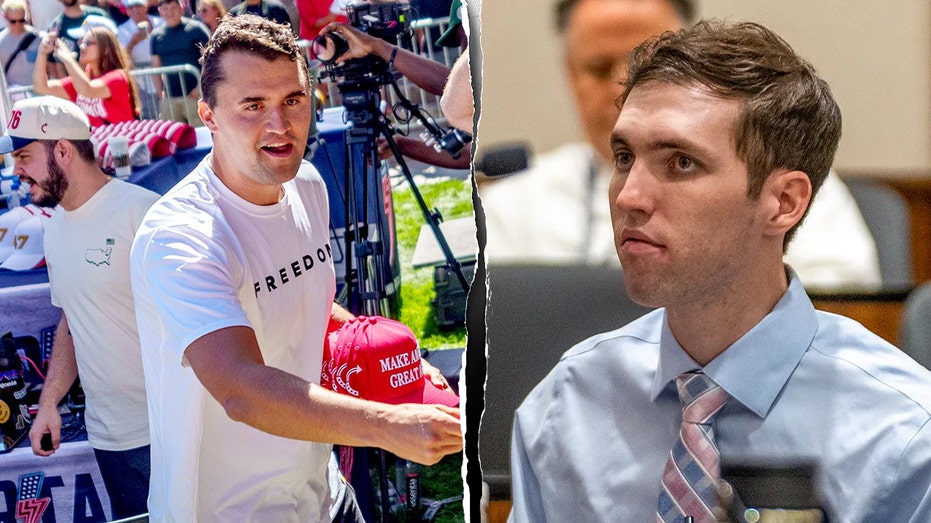
Judge Greenlights Courtroom Cameras in Charlie Kirk Assassination Case as Preliminary Hearing Is Pushed to July
The prosecution of the man accused of assassinating conservative leader Charlie Kirk moved closer to a pivotal stage this week, as Judge Tony Graf Jr. ruled that courtroom cameras will remain in place for upcoming proceedings and postponed the preliminary hearing until early July.
Tyler Robinson, who faces multiple felony charges including aggravated murder in connection with Kirk’s September 10, 2025 killing, had asked the court to delay the hearing for several months and to ban cameras from the courtroom. The judge granted a limited delay—but refused to shut out electronic media—marking a defining moment in a case that has gripped the nation.
The new preliminary hearing dates are set for July 6 through July 10. The proceedings will take place in Utah County, under the jurisdiction of the Utah State Courts, and will continue to be open to media coverage under existing judicial guidelines.
A Critical Stage in a Capital Case
The preliminary hearing in a criminal case is not a trial. It is a focused legal proceeding designed to determine whether prosecutors have enough evidence to establish probable cause that the accused committed the crimes charged. Under Utah criminal procedure law, prosecutors must clear that threshold before a case can proceed to trial.
In this instance, Robinson faces charges that include aggravated murder—a capital offense in Utah. The state’s capital punishment statute, outlined under Utah Code § 76-5-202, makes the case eligible for the death penalty if certain aggravating factors are proven.
Judge Graf underscored that the hearing’s purpose is narrow: to assess whether sufficient evidence exists for the case to move forward—not to determine guilt or innocence. However, with prosecutors claiming an enormous and growing body of evidence, and the defense arguing that reviewing that material will take months, the timeline became a central issue.
Why the Hearing Was Delayed
The defense sought a six-month delay, arguing that the discovery process is far from complete and that Robinson’s constitutional right to effective counsel depends on adequate review of the evidence. Attorneys for Robinson said they have received more than 600,000 files to date, with roughly 1,600 additional files recently delivered.
Prosecutors informed the court that discovery remains ongoing and includes materials from federal agencies. In complex homicide cases—especially those involving digital evidence, communications records, and forensic testing—discovery can balloon quickly.
Judge Graf agreed that the volume of evidence is substantial and that fairness requires giving defense counsel adequate time to analyze the material. In doing so, he cited the importance of protecting Robinson’s Sixth Amendment right to effective assistance of counsel, as guaranteed under the U.S. Constitution.
At the same time, Graf noted that justice delayed can become justice denied—not only for the defendant but also for the victim’s family and the public. Striking a balance, he approved a more limited continuance, setting the hearing for early July rather than granting the full six-month delay requested by the defense.
No Blanket Ban on Cameras
One of the most hotly contested issues was whether electronic media should be barred from the courtroom.
The defense argued that saturation coverage of the case has already tainted the jury pool. They cited survey data indicating that 99 percent of respondents in Utah County were aware of the case and that 64 percent believed Robinson to be guilty based on media coverage.
Defense experts, including a social psychologist, testified that continuous exposure to commentary and livestreamed proceedings could reinforce bias among potential jurors, making it difficult to empanel an impartial jury—a cornerstone requirement under the Sixth Amendment.
However, Judge Graf declined to impose a blanket prohibition on cameras.
Under Utah’s policies governing media access, requests for electronic coverage are evaluated on a case-by-case basis rather than through sweeping bans. The court emphasized that its role is not to shut down transparency based on generalized fears of publicity, especially when existing safeguards are already in place.
Those safeguards include:
- Restrictions on camera placement inside the courtroom
- Limitations on how and when footage may be used
- Rules of courtroom decorum
- Ethical constraints on attorneys’ public comments
The judge also pointed to a practical reality: only a fraction of the public watches live courtroom coverage. Most individuals encounter case information through commentary, social media platforms, or secondary reporting. Banning cameras, in his view, would not necessarily halt speculation or public debate.
The ruling aligns with a broader American tradition of open courts. Public access to judicial proceedings is rooted in both constitutional principles and Supreme Court precedent affirming that transparency promotes accountability and public trust. While not absolute, that access is considered foundational to our system of justice.
The Victim: Charlie Kirk’s National Impact
The gravity of this case extends well beyond Utah because of who the victim was.
Charlie Kirk was the founder of Turning Point USA, a national conservative organization focused on mobilizing young Americans around free-market principles, limited government, and constitutional values. TPUSA grew into one of the most visible youth-oriented political movements in the country, with chapters on high school and college campuses nationwide.
Kirk’s influence within conservative circles made him both a prominent public figure and, according to authorities, a potential target. His death sent shockwaves across the political spectrum and prompted strong reactions from leaders nationwide, including Utah Governor Spencer Cox, who publicly urged Americans to reject conspiracy theories and inflammatory rhetoric in the aftermath.
The intense national attention has undoubtedly complicated jury selection considerations—an issue likely to resurface as the case moves toward trial.
Defense Strategy: Playing the Long Game?
Legal analysts suggest that Robinson’s defense team may be thinking well beyond July’s preliminary hearing.
Former federal prosecutor Neama Rahmani observed that even motions unlikely to succeed at the trial level can serve a strategic purpose. By raising objections—such as seeking to exclude cameras or attempting to disqualify the Utah County Attorney’s Office—defense attorneys can preserve issues for appeal.
If Robinson is convicted and sentenced to death, any alleged procedural errors could become crucial grounds for review by appellate courts. Capital punishment cases trigger automatic appeals and often extensive post-conviction litigation.
In death penalty proceedings, both state appellate courts and, potentially, federal courts scrutinize the record meticulously. As outlined by the United States Courts, capital cases include additional layers of review precisely because of the irreversible nature of the sentence.
From that perspective, pretrial motions about media access, prosecutorial conduct, and juror bias may carry long-term strategic importance—even if they are denied in the short term.
Voluminous Evidence and Forensic Complexity
According to filings and courtroom statements, the prosecution’s case includes DNA analysis, firearm evidence, digital communications, and alleged rooftop positioning evidence connected to the shooting.
A forensic biologist retained by the defense reportedly indicated she would require up to six months to thoroughly review the scientific materials. Modern homicide investigations often hinge on complex laboratory testing governed by standards set by organizations such as the U.S. Department of Justice’s forensic science programs.
When the volume of files reaches into the hundreds of thousands, digital forensics alone can create substantial review burdens. Text messages, metadata, location tracking, ballistic comparisons, and laboratory results must all be independently examined to determine reliability and potential weaknesses.
The judge’s continuance recognizes that rushing such a review could undermine the integrity of the proceedings—something neither side ultimately benefits from.
Transparency Versus Fair Trial: A Constitutional Balancing Act
This case illustrates a classic constitutional tension: the right to a fair trial versus the principle of open courts.
On one hand, the Sixth Amendment guarantees defendants an impartial jury. On the other, the First Amendment protects freedom of the press, and American legal tradition strongly favors public access to judicial proceedings.
Deputy Utah County Attorney Chad Grunander argued in court that transparency is the best remedy for misinformation. In high-profile cases, conspiracy theories and speculation can flourish in a vacuum. Open proceedings, prosecutors contend, allow the public to see the facts unfold in real time.
That argument reflects a long-standing belief within the justice system: sunlight deters distortion. Rather than fueling bias, transparent proceedings can build trust by showing that procedures are followed and evidence is tested openly.
Critics counter that livestreams and viral clips can distort nuance and amplify emotionally charged moments. As jury selection approaches, both sides will likely revisit the question of whether an impartial panel can be seated in Utah County or whether a change of venue should be considered.
What Happens Next?
Robinson is scheduled to appear in court again on May 19 for an in-person hearing ahead of the July preliminary hearing. That hearing will likely address additional pretrial logistics and unresolved discovery matters.
If prosecutors establish probable cause in July, the case will move toward a formal trial setting phase. In capital cases, that process can involve months—sometimes years—of motions, evidentiary disputes, and jury selection procedures.
For the Kirk family, supporters of Turning Point USA, and Americans watching closely, the process underscores both the weight of the charges and the seriousness with which the judicial system handles them.
A Case That Tests America’s Justice System
The assassination of a public political figure strikes at the heart of democratic society. Political violence—regardless of ideology—poses a direct threat to the civil exchange of ideas that defines the American republic.
By allowing cameras while granting measured delays to protect constitutional rights, the court is attempting to walk a narrow but essential line. Justice must be done. It must also be seen to be done.
The coming months will test the resilience of that balance.
As this capital case proceeds, one thing remains clear: America’s justice system, grounded in constitutional protections and transparent proceedings, is built to handle even the most high-profile and emotionally charged matters. The eyes of the nation will remain fixed on Utah as the process unfolds.
At Wake Up America News, we will continue to follow every major development—because when it comes to justice, truth, and accountability, the American people deserve nothing less.