Deadly Collision at LaGuardia Shuts Down Major American Airport
A tragic late-night collision at New York’s LaGuardia Airport has left two pilots dead and forced one of America’s busiest airports to shut down, raising serious questions about safety and oversight during a time of nationwide aviation strain.
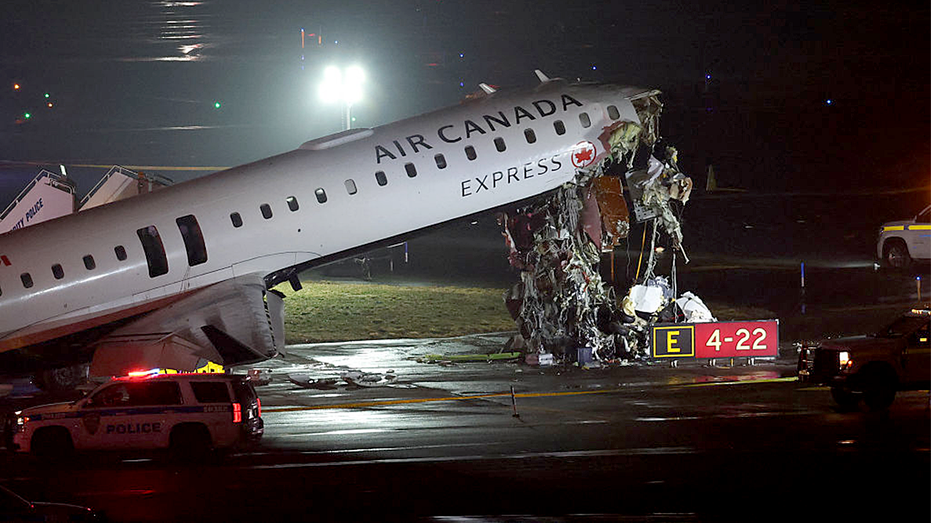
Shortly before midnight on March 22, Air Canada Express Flight 8646, operated by Jazz Aviation, had just arrived from Montreal when it collided with a Port Authority Aircraft Rescue and Firefighting vehicle on Runway 4. According to flight tracking data, the CRJ-900 regional jet was traveling at approximately 24 miles per hour when the impact occurred.
Port Authority Executive Director Kathryn Garcia confirmed at a press briefing that both pilots tragically lost their lives in the crash. The flight was carrying 72 passengers and four crew members, including the captain, first officer, and two flight attendants.
More than 40 individuals — including passengers, crew, and rescue personnel — were transported to local hospitals. Officials stated that 32 people have since been released, though several individuals remain seriously injured.
“Sadly, the two pilots are confirmed deceased,” Garcia said, noting that Air Canada’s care team is notifying their families.
Immediate Ground Stop and Airport Closure
In response to the emergency, the Federal Aviation Administration issued a ground stop for all flights at LaGuardia. The airport is expected to remain closed until at least 2 p.m. Monday as authorities secure the scene and launch a full investigation.
Arriving flights were diverted to alternate airports or returned to their points of departure, stranding travelers and creating ripple effects throughout the region’s air travel system. The Port Authority confirmed that the fire truck was responding to a separate incident at the time of the collision.
Emergency protocols were activated immediately. The Port Authority Police Department, along with agency leadership, responded to the scene. The National Transportation Safety Board has deployed a “go team” to investigate the crash and determine what went wrong on that runway.
Federal Officials Confirm Details
The U.S. Department of Transportation confirmed that the aircraft struck a Port Authority fire truck after landing. The New York Fire Department and the New York City Police Department also acknowledged the collision but have released limited additional information.
Videos from the scene show the aircraft’s nose severely damaged, underscoring the intensity of the impact.
Air Canada has established a hotline for families seeking information about loved ones on board the flight as officials work to confirm final details.
Aviation System Under Strain
This heartbreaking incident comes at a time when America’s airports are already facing significant operational stress. A weeks-long funding lapse affecting the Department of Homeland Security has created widespread disruption at airports nationwide. Transportation Security Administration officers have been working without pay for more than a month, and some have reportedly quit amid the uncertainty.
Long security lines and staffing shortages have become increasingly common, leaving hardworking American travelers frustrated and vulnerable to further delays. In response, U.S. Immigration and Customs Enforcement agents are scheduled to deploy to airports to assist TSA operations.
While investigators work to uncover the precise cause of Sunday night’s fatal collision, the broader context cannot be ignored. America’s aviation system depends on strong leadership, proper funding, and unwavering commitment to safety. When cracks appear in that foundation, the consequences can be devastating.
For now, a grieving aviation community mourns the loss of two pilots who paid the ultimate price in the line of duty. Our thoughts are with their families, the injured passengers, and the first responders who rushed into action.
As the investigation unfolds, Americans will be looking for answers — and for accountability — to ensure that tragedies like this never happen again on our nation’s runways.