Supreme Court Defends Election Integrity in Major Win for New York Republican
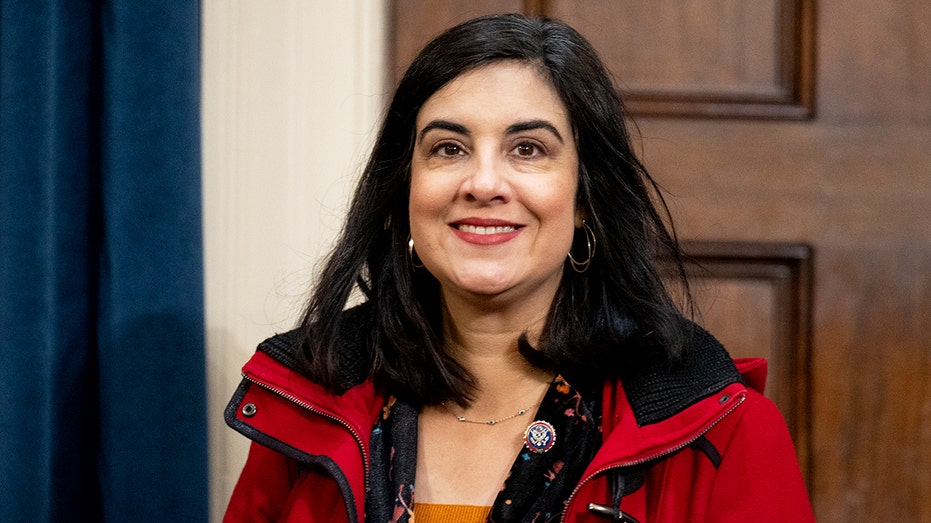
In a decisive victory for fair elections and constitutional government, the U.S. Supreme Court has sided with Rep. Nicole Malliotakis of New York, blocking a lower court’s attempt to force a redraw of her congressional district. The ruling marks a major stand against what many conservatives see as politically motivated efforts to manipulate district lines for partisan gain.
Over the objections of the Court’s three liberal justices, the conservative majority halted a state judge’s order that would have required New York’s redistricting commission to overhaul the 11th Congressional District. That district includes Staten Island and parts of southern Brooklyn—communities that have consistently supported strong public safety, economic growth, and America-first leadership.
The lower court had claimed the district’s current boundaries diminished the voting strength of Black and Hispanic residents and directed the state’s Independent Redistricting Commission to create a new map. But critics argued the real motive was clear: reshape the district to benefit Democrats in one of the few remaining Republican-held seats in New York City.
Rep. Malliotakis welcomed the Supreme Court’s decision, calling it a restoration of trust in the rule of law.
“Today’s decision proves that the legal attack on our district lines was baseless from the start,” Malliotakis said. “Efforts to weaponize race and rig our elections have no place in a constitutional republic.”
She made it clear that the voters—not party insiders or activist judges—should determine who represents Staten Island and southern Brooklyn in Congress.
“Whether I’m reelected is up to the people I serve, not to Democrat operatives and their high-priced attorneys trying to redraw the map to suit their political agenda,” she stated.
The legal battle began in October 2025, when a group of New York voters filed suit in state court challenging the district’s configuration. Malliotakis stepped in to defend the map, recognizing the broader implications for election integrity across the Empire State.
Behind the lawsuit was a law firm aligned with Democratic interests, which pushed for dramatic changes to the district’s boundaries. Their proposal would have carved out the Brooklyn portion of the district and replaced it with parts of Lower Manhattan—areas that voted overwhelmingly against President Donald Trump in the 2024 election. The swap would have removed neighborhoods that lean Republican and replaced them with deep-blue strongholds.
Although the state judge stopped short of adopting the plaintiffs’ preferred map, he still ordered that changes be made to increase what he described as minority voting power. The decision handed responsibility to the state’s bipartisan redistricting commission, which had not yet produced a revised proposal.
The U.S. Supreme Court intervened before that process could move forward, effectively freezing the district lines as they stand. While the Court did not issue a detailed explanation for its ruling, Justice Samuel Alito reportedly wrote that the lower court’s interpretation of New York’s constitution amounted to straightforward racial discrimination—something expressly forbidden under the U.S. Constitution.
The case underscores a growing national battle over redistricting, as Democrats in blue states and Republicans in red states alike face off over how congressional lines are drawn. But for conservatives in New York, the ruling represents a clear message: election maps cannot be rewritten simply to achieve a desired political outcome.
At a time when Americans are increasingly concerned about transparency and fairness in elections, the Supreme Court’s decision sends a powerful signal. The Constitution—not partisan ambition—remains the ultimate authority. And for the voters of Staten Island and southern Brooklyn, their voice will not be diluted by backroom political maneuvering.
For supporters of strong borders, safer streets, and economic freedom, this ruling is more than just a legal technicality. It is a defense of representative government and a reminder that in America, power belongs to the people—not to party bosses drawing lines behind closed doors.