Oklahoma Death Row Inmate Granted Bond After U.S. Supreme Court Overturns Conviction
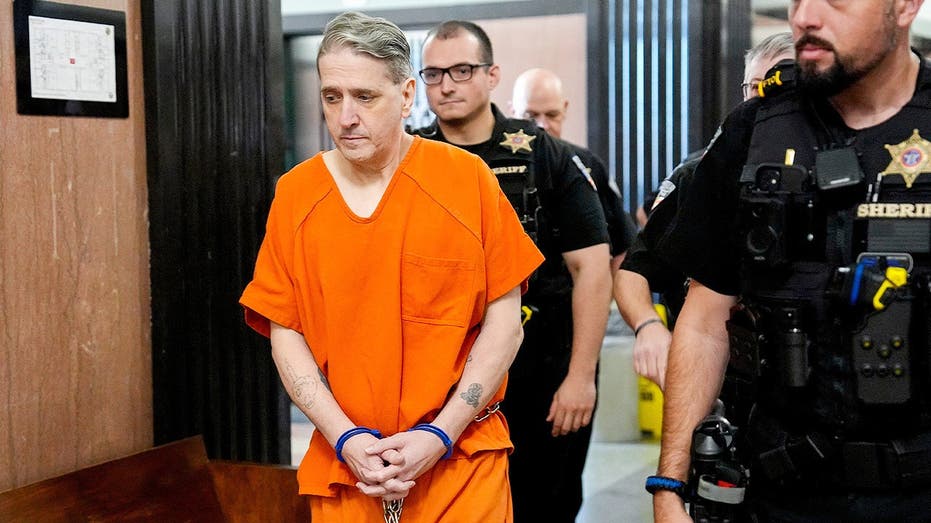
After nearly three decades behind bars and nine scheduled executions, former Oklahoma death row inmate Richard Glossip is poised to walk free on bond while awaiting a new trial in a 1997 murder case that has drawn national attention.
A state judge has now ruled that Glossip must be allowed out on $500,000 bond after the U.S. Supreme Court threw out his conviction and death sentence earlier this year. The decision marks a dramatic turn in one of the most closely scrutinized capital cases in Oklahoma history—one that raises serious questions about prosecutorial conduct, witness credibility, and the integrity of the justice system.
Judge Rules State Failed to Justify Denial of Bail
Oklahoma County District Judge Natalie Mai determined that Glossip is entitled to bond as he awaits retrial. In her written order, she cited the unusually extensive legal record built over nearly 30 years and concluded that the state had not met the high constitutional bar required to deny bail in a capital case.
Bond was set at $500,000. Glossip must remain in Oklahoma and wear an electronic monitoring device as a condition of release.
Under Oklahoma law and the U.S. Constitution, defendants facing capital charges may be denied bail only when proof of guilt is “evident” or the presumption is “great.” Judge Mai found that, in light of the Supreme Court’s findings about false testimony and prosecutorial misconduct, that standard could no longer be satisfied.
The ruling means that for the first time since January 1997, Glossip will not be living in a prison cell operated by the Oklahoma Department of Corrections.
A Supreme Court Rebuke of Prosecutorial Misconduct
The turning point in the case came in February, when the U.S. Supreme Court vacated Glossip’s conviction and death sentence and ordered a new trial. The Court’s ruling centered on the conduct of state prosecutors during the original proceedings.
Specifically, the high court concluded that prosecutors failed to correct false or misleading testimony from Justin Sneed—the admitted killer who carried out the brutal beating death of motel owner Barry Van Treese in 1997.
Sneed, a maintenance worker at the motel, confessed to killing Van Treese. However, he avoided the death penalty by testifying that Glossip—his manager—masterminded the crime as a murder-for-hire scheme. That testimony became the backbone of the state’s case.
The Supreme Court determined that critical information regarding Sneed’s credibility, including aspects of his mental health history and inconsistencies in his statements, was not properly disclosed or corrected during trial. Under longstanding precedent, prosecutors have a constitutional duty to correct false testimony when it arises.
The Court’s rebuke did not declare Glossip innocent. Instead, it found that the legal process had been compromised to such an extent that a new trial is required to ensure fairness under the Constitution.
The 1997 Murder of Barry Van Treese
At the heart of this decades-long legal saga is the killing of Oklahoma City motel owner Barry Van Treese in January 1997.
According to trial evidence, Van Treese was beaten to death with a baseball bat at the Best Budget Inn, a motel he owned. Justin Sneed confessed to carrying out the attack. Prosecutors argued that Glossip, who managed the property, paid Sneed to commit the murder in order to conceal alleged embezzlement.
Glossip has consistently denied orchestrating or participating in the murder. There was no physical or forensic evidence tying him directly to the killing. The case against him relied largely—if not entirely—on Sneed’s testimony.
This reliance on a single cooperating witness, particularly one who struck a deal to avoid execution himself, has long fueled debate among legal scholars, victims’ advocates, and death penalty opponents alike.
Nine Execution Dates and Three “Last Meals”
Perhaps the most chilling aspect of Glossip’s case is how close he came to being executed—multiple times.
Over the years, Oklahoma scheduled nine separate execution dates for Glossip. On three occasions, he went so far as to select his final meal, believing his death was imminent.
- One execution was halted due to questions about Oklahoma’s lethal injection protocol.
- Another was postponed amid broader scrutiny of the state’s execution procedures.
- Others were stayed due to ongoing legal appeals and last-minute judicial interventions.
Oklahoma’s capital punishment procedures, administered under state law and overseen by the Oklahoma Office of the Attorney General, have faced national legal challenges in recent decades, particularly concerning lethal injection drugs and protocols.
That Glossip survived three near-executions only to later have his conviction overturned underscores the gravity of ensuring fairness in capital cases. Once carried out, a death sentence cannot be undone.
The Broader Constitutional Stakes
This case is not merely about one defendant. It raises deeper questions about due process, the reliability of cooperating witnesses, and the responsibility of prosecutors under the law.
The U.S. Constitution guarantees defendants the right to a fair trial. Foundational Supreme Court precedents require prosecutors to disclose exculpatory evidence and correct materially false testimony. When those safeguards fail, the legitimacy of a conviction comes into question.
In its ruling, the Supreme Court emphasized that the justice system depends on integrity from both sides of the courtroom. A conviction secured through uncorrected false testimony—especially in a capital case—violates basic principles of American law.
Supporters of Glossip argue that his case exemplifies the risk of wrongful conviction in death penalty cases. Opponents caution that overturning convictions can retraumatize victims’ families and undermine confidence in law enforcement.
Victims’ Families and Community Impact
Amid the legal maneuvering and high court rulings, it is important not to lose sight of Barry Van Treese and his family.
For nearly 30 years, Van Treese’s loved ones believed the case had been resolved. The Supreme Court’s decision to order a new trial reopens painful wounds and extends uncertainty.
Victims’ advocates have expressed concern that prolonged litigation delays finality and justice. At the same time, the American justice system is built on the principle that convictions must be secure and constitutional—not just expedient.
The State of Oklahoma now faces the task of deciding how to proceed. Prosecutors can retry Glossip, negotiate a resolution, or potentially reassess the strength of their case given the Supreme Court’s findings.
Life on Bond After 29 Years
As Glossip prepares for release under electronic monitoring, he steps into a world vastly different from the one he left in 1997.
Since his incarceration:
- The United States has seen four presidential administrations come and go.
- Technology has transformed daily life, from smartphones to social media.
- Capital punishment laws have evolved, with some states abolishing the death penalty altogether.
Reintegration after nearly three decades in custody presents enormous challenges. Glossip will remain under court supervision as his defense team prepares for a new trial.
His attorney, Don Knight, has characterized the ruling as a step toward justice, arguing that his client was convicted based on unreliable testimony and prosecutorial errors. He has emphasized that Glossip now has a chance, for the first time, to experience life outside prison walls while continuing to fight the charges.
The Death Penalty Debate in America
Glossip’s case also arrives at a time when capital punishment remains a contentious issue nationwide.
According to data compiled by institutions such as the Death Penalty Information Center, use of the death penalty has declined in recent decades, though it remains legal in several states, including Oklahoma.
Supporters of capital punishment argue that it serves as justice for the most heinous crimes and deters future violence. Critics point to the risk of wrongful convictions, racial disparities, and procedural errors.
The Supreme Court’s intervention in Glossip’s case adds fresh fuel to that debate. When the nation’s highest court determines that a death sentence was obtained in violation of constitutional safeguards, it reinforces the gravity of getting it right the first time.
What Happens Next?
Glossip’s legal saga is far from over.
The case will return to Oklahoma state court for retrial proceedings under the supervision of the Oklahoma State Courts Network. Prosecutors must decide how they intend to present their case without relying on uncorrected or misleading testimony.
Key questions moving forward include:
- Will Justin Sneed testify again?
- How will his credibility be evaluated in light of the Supreme Court’s findings?
- Will new evidence emerge after decades of litigation?
For conservatives who believe in law and order, this case illustrates two bedrock principles that can and must coexist: accountability for violent crime and unwavering adherence to constitutional protections.
America’s justice system is strongest when it upholds both.
A Test of the System’s Integrity
Glossip’s upcoming release on bond is not an exoneration. It is a reflection of the principle that even those convicted of serious crimes are entitled to due process under the Constitution.
The Supreme Court’s ruling signals that when prosecutors fail to meet their ethical and constitutional responsibilities, even decades-old convictions can—and will—be scrutinized.
For nearly 30 years, Richard Glossip lived under the shadow of execution. Now, as he prepares to step outside prison walls pending a new trial, the eyes of the nation will once again turn to Oklahoma.
The ultimate outcome remains uncertain. But one truth stands firm: in the United States of America, the rule of law must prevail over expedience, and justice must be built on truth—not shortcuts.
As this story continues to unfold, Wake Up America News will follow every development, ensuring our readers understand not only what happens next—but why it matters for the future of justice in this great nation.
Wake Up America News — Your Source for Patriotic News.