Providence Mural Honoring Slain Ukrainian Refugee Removed After Political Backlash
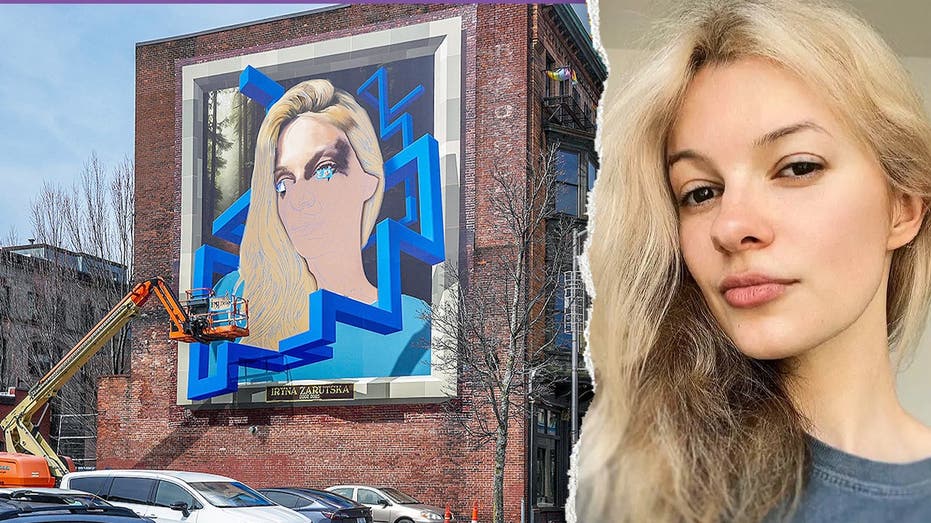
A mural created to honor Iryna Zarutska, the 23-year-old Ukrainian refugee brutally murdered aboard a North Carolina train, has been removed from a downtown Providence, Rhode Island building following mounting political and community backlash. The artwork, which was mounted on canvas along the exterior wall of The Dark Lady nightclub, became the center of a heated local debate over crime, public memory, and the direction of civic leadership in one of New England’s most liberal cities.
The removal marks the latest development in a national memorial effort for Zarutska, whose tragic death touched Americans across the political spectrum and sparked renewed debate about criminal justice policies and public safety in major U.S. cities.
A Tribute Cut Short in Providence
The mural had been installed on the outside of The Dark Lady, a well-known LGBTQ+ nightclub in downtown Providence. Painted on large canvas panels rather than directly onto brick, the artwork was partially completed before construction crews were dispatched to remove it.
Video footage captured workers lowering the mural from the building’s exterior, folding the material, and transporting it away. The move followed days of public criticism and formal objections from city officials.
Providence is governed by the City of Providence, and Mayor Brett Smiley made it clear through his office that he believed the mural was inappropriate for the city.
“The murder of the individual depicted in this mural was a devastating tragedy, but the misguided, isolating intent of those funding murals like the one across the country is divisive and does not represent Providence,” the mayor said in a public statement.
Smiley also encouraged support for local artwork that, in his words, “brings us closer together rather than divide us.”
Artist Ian Gaudreau confirmed that the mural’s removal was in response to vocal opposition. While supporters described the artwork as a moving tribute to a young woman whose life was stolen by violence, critics argued it had become too politically charged.
Who Was Iryna Zarutska?
Iryna Zarutska fled her homeland of Ukraine following Russia’s invasion and came to the United States in search of safety and opportunity. According to friends and neighbors, she embraced the American Dream wholeheartedly—working, studying English, and building a life in her adopted country.
On Sept. 9, 2025, that dream was shattered.
Zarutska was riding the Lynx Blue Line in Charlotte, North Carolina when she was allegedly attacked without provocation. Authorities say Decarlos Brown Jr., 34, approached her and fatally stabbed her in what investigators described as a random, violent act.
Brown was later charged federally with violence against a railroad carrier and mass transportation system resulting in death — a capital-level offense under U.S. law. The charge falls under federal jurisdiction because it involves interstate transit infrastructure.
Information from the North Carolina Department of Adult Correction shows that Brown had a prior criminal history, including convictions for larceny, breaking and entering, and armed robbery.
The case has become a flashpoint in ongoing debates over crime policy, bail reform, and repeat offenders in America’s justice system.
The Bail Reform Debate
Reports indicate that Brown had been previously arrested multiple times and was released under no-cash bail policies prior to the fatal incident. That fact has fueled strong reactions from critics of progressive criminal justice reforms.
North Carolina lawmakers responded in the months after the killing by advancing legislation informally dubbed “Iryna’s Law,” targeting changes to no-cash bail procedures. Supporters argue that reforms weakening pretrial detention standards can sometimes allow repeat violent offenders to reenter communities before trial.
While bail reform advocates maintain that such policies are intended to address disparities in the justice system, high-profile cases like Zarutska’s often reignite concerns about public safety and prosecutorial discretion.
For many Americans, particularly those in immigrant communities, the tragedy underscored a growing perception that law-abiding citizens are being asked to bear the risk of policy experiments gone wrong.
A Nationwide Memorial Campaign
Zarutska’s death sparked a remarkable national response.
Eoghan McCabe, CEO of customer messaging company Intercom, announced he would commit $500,000 to fund 50 memorial murals across the country honoring Zarutska. The campaign expanded rapidly, ultimately attracting support from private donors and artists nationwide.
Technology entrepreneur Elon Musk pledged an additional $1 million toward the project. Within days, organizers reported enough funding to support hundreds of installations and claimed to be in contact with hundreds of artists.
The goal was simple: ensure that Zarutska’s story would not be forgotten and draw attention to issues of violent crime and justice reform that resonated with Americans concerned about public safety.
Murals were planned in cities across multiple states, often installed in high-traffic areas to maximize visibility.
Local Political Fallout in Rhode Island
In Providence, however, the initiative collided with local political realities.
Anthony D’Ellena, chairman of the Rhode Island Republican Party, launched a petition urging that the mural remain in place. He framed the controversy as emblematic of broader partisan divides.
D’Ellena criticized Democratic leadership in the city, arguing that removing the mural amounted to erasing evidence of policy failures and silencing uncomfortable discussions about criminal justice.
He also encouraged local businesses elsewhere in Rhode Island to consider hosting the artwork if Providence declined. As of this writing, no confirmed new permanent site has been publicly announced.
The debate has highlighted how local governance decisions increasingly reflect national political tensions, especially when issues of immigration, crime, and justice intersect.
When Public Art Becomes Political
Public art has long served as a mirror of community values. Murals have been used throughout American history to honor veterans, civil rights leaders, and victims of tragedy.
Yet in deeply polarized times, even memorial tributes can take on sharper political meaning. In the case of Zarutska, supporters saw the artwork as honoring a young refugee who sought freedom in America and fell victim to criminal violence. Critics expressed concern that the murals were part of a coordinated campaign intended to push a particular narrative about crime or political leadership.
The mayor’s characterization of the project as “divisive” reflected that concern, though supporters argue that honoring a victim of violence should transcend party lines.
At its core, the disagreement raises bigger questions:
- Should public memorials that highlight violent crime be discouraged if they draw attention to controversial policies?
- Does removing a memorial promote unity — or suppress debate?
- How should cities balance artistic expression with political sensitivity?
Those questions extend far beyond Providence.
A Refugee’s American Story
Zarutska’s life story resonates deeply in a country built by immigrants.
After Russia’s 2022 invasion of Ukraine, hundreds of thousands sought refuge abroad. The United States admitted tens of thousands through humanitarian parole programs and refugee pathways. Zarutska arrived with hopes shared by generations before her: safety, stability, and opportunity.
Neighbors described her as ambitious, hardworking, and optimistic about her future in America.
That context is central to why many supporters believe the mural effort struck such a nerve. The artwork did not just represent a tragic death — it symbolized both the promise of American freedom and the fragility of that promise when public safety falters.
The Federal Case Against the Suspect
The federal charge against Decarlos Brown Jr. is significant. Violence against railroad carriers and mass transportation systems can trigger federal prosecution, particularly under statutes designed to protect interstate commerce and public transportation networks.
If convicted under the federal capital statute, the penalties are severe.
The use of federal charges highlights the seriousness with which authorities view attacks on public transit, which millions of Americans rely upon daily.
For many observers, however, the legal proceedings cannot undo what they see as prior systemic failures that allowed a repeat offender to remain free.
What Happens Next?
With the Providence mural removed, attention now turns to whether another Rhode Island location will host the artwork. Organizers have indicated that they remain committed to ensuring that Zarutska’s name and story endure.
Meanwhile, the broader mural initiative continues around the country. Supporters argue that visibility is key to driving bipartisan acknowledgment that violent crime has real faces and real victims.
Opponents warn that memorial campaigns tied to hot-button policy debates risk deepening divisions rather than healing wounds.
In many ways, the Providence episode reflects a larger national crossroads.
- Public safety remains one of the most pressing concerns in American cities.
- Criminal justice policy reforms are actively evolving state by state.
- Communities continue to wrestle with how — and whether — to publicly memorialize victims whose deaths carry political implications.
A Larger American Debate
At Wake Up America News, we believe honoring innocent victims should never be controversial. The rule of law, secure streets, and accountability in governance are not partisan ideas — they are foundational American principles.
The death of Iryna Zarutska is not just a local Charlotte tragedy. It is part of a broader national conversation about public safety, responsibility, and the duties of elected leaders to protect the innocent.
Providence officials may have concluded that the mural was too divisive for their city. But for many Americans, the removal has only amplified the underlying concerns the artwork sought to highlight.
Whether one views the mural as a heartfelt tribute or a politically charged symbol, one fact remains beyond dispute: a young woman who came to the United States seeking freedom lost her life in a senseless act of violence.
As debates over crime policy and public memorials continue, her story — and the questions it raises — are unlikely to fade anytime soon.
Your Source for Patriotic News.