Online Explosives Tutorials Lead to Federal Charges After Deadly New Orleans Terror Attack
A Missouri man is now in federal custody after prosecutors say his detailed online bomb-making tutorials were used by the terrorist responsible for the horrific New Year’s Day attack on Bourbon Street in New Orleans. Federal investigators allege that what began as social media videos explaining how to synthesize powerful explosive compounds ultimately became a digital playbook for violence.
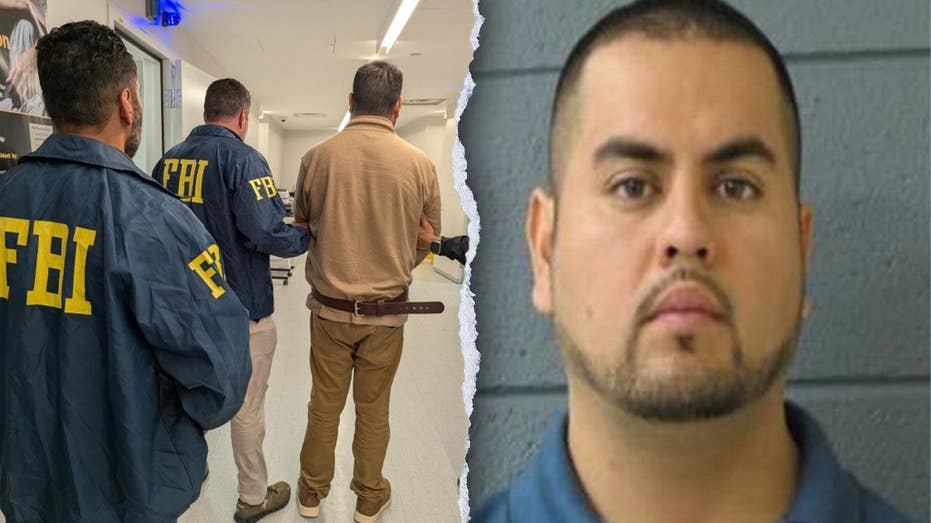
Jordan Derrick, 40, of Sweet Springs, Missouri, was arrested by agents with the Federal Bureau of Investigation (FBI) and now faces multiple federal charges, including distributing information related to the manufacture of explosives. According to a newly unsealed criminal complaint, Derrick’s content allegedly reached Shamsud-Din Jabbar, the ISIS-inspired terrorist who killed 14 people and injured dozens more in the early hours of January 1, 2025, in New Orleans, Louisiana.
The case highlights the growing national security threat posed by radicalization and operational guidance spreading freely online—an issue federal officials warn has become one of the defining challenges of modern counterterrorism.
From Social Media Posts to Federal Charges
Prosecutors allege that Derrick spent months producing and uploading highly detailed instructional videos demonstrating how to manufacture and mix volatile explosive materials. The content reportedly included step-by-step explanations, chemical ratios, and demonstrations of detonator construction.
Among the compounds investigators say he discussed:
- TNT (trinitrotoluene)
- PETN (pentaerythritol tetranitrate)
- RDX (cyclotrimethylenetrinitramine)
- HMTD (hexamethylene triperoxide diamine)
- Ethylene glycol dinitrate
- Ammonium nitrate-based explosive mixtures
Many of these substances are commonly associated with military-grade explosives or have been used in prior terrorist attacks. According to federal authorities, Derrick began posting this content as early as September 2023, effectively creating a readily accessible “online classroom” for individuals seeking to build improvised explosive devices (IEDs).
The legal charges filed against him include:
- Manufacturing explosive materials without a license
- Possession of an unregistered destructive device
- Distributing information relating to the manufacture of explosives
If convicted, Derrick faces up to 20 years in federal prison for the distribution charge alone, plus potential additional sentences of up to 10 years each on the remaining counts. Federal inmates are not eligible for parole, making the potential consequences significant.
The case is being prosecuted with support from the U.S. Department of Justice’s National Security Division, underscoring its seriousness.
The Bourbon Street New Year’s Day Massacre
The charges against Derrick gained national attention because of their alleged connection to the deadly Bourbon Street rampage. On January 1, 2025, in the heart of New Orleans’ famed French Quarter, Shamsud-Din Jabbar drove a rented Ford F-150 into packed New Year’s crowds celebrating along Bourbon Street.
According to investigators, Jabbar then exited the vehicle and opened fire on police officers before being shot and killed. Fourteen innocent people lost their lives, and dozens more were injured in what authorities described as a premeditated ISIS-inspired attack.
In the aftermath, bomb squads from the Bureau of Alcohol, Tobacco, Firearms and Explosives (ATF) recovered improvised explosive devices placed near Bourbon Street that failed to detonate. Officials have since stated that those devices could have dramatically increased the death toll if they had functioned as intended.
Federal authorities now allege that Jabbar downloaded Derrick’s publicly available bomb-making tutorials and used the methods described in the videos to construct explosive devices consistent with those recovered in New Orleans.
Investigators believe the explosive materials discovered after the attack matched techniques and compounds demonstrated in online videos connected to Derrick’s social media accounts.
Online Radicalization and Operational Planning
According to the FBI, Jabbar became increasingly radicalized throughout 2024 after consuming ISIS propaganda and extremist messaging online. The terrorist organization, formally known as the Islamic State of Iraq and Syria (ISIS), has a long history of using digital platforms to inspire and direct attacks around the world. For background on the organization, readers can consult the Encyclopaedia Britannica entry on ISIS.
Federal investigators say Jabbar researched:
- Previous vehicle-ramming attacks
- Crowded public events in New Orleans
- Balcony access points in the French Quarter
- The Christmas market attack in Germany
Authorities also revealed that Jabbar traveled from Houston to New Orleans weeks before the massacre to scout the area. He reportedly used Meta smart glasses to discreetly record video footage while biking along Bourbon Street, examining potential choke points and crowd congestion areas.
In the hours leading up to the attack, investigators say he conducted last-minute online searches about previous mass-casualty incidents abroad, reinforcing the theory that he aimed to maximize visibility and destruction.
The Missouri Explosion: Another Alarming Link
The alleged consequences of Derrick’s online tutorials may not have been limited to New Orleans.
Federal investigators also tied his bomb-making content to a separate explosion at a residence in Odessa, Missouri, on May 4. Responding officers reportedly discovered suspected explosive components inside the home.
According to the criminal complaint, the homeowner told authorities he learned how to build explosive devices by watching videos connected to Derrick’s accounts. That explosion remains under investigation.
This second incident reinforces federal concerns about the widespread availability of dangerous “how-to” material online. Even when not tied directly to international terrorism, such instructional content can enable domestic copycats, thrill-seekers, or unstable individuals to experiment with deadly chemicals and explosives.
The Legal Framework: When Does Speech Become Criminal?
The charges against Derrick highlight a critical legal distinction: while the First Amendment protects free speech, federal law prohibits distributing information related to bomb-making when it is intended to further violent wrongdoing.
Under federal statute, it is illegal to teach or demonstrate the making of explosive devices when the instructor knows—or intends—that the information will be used to commit a federal crime of violence.
In this case, prosecutors allege that Derrick’s detailed demonstrations, combined with the scale and specificity of his content, crossed the line from hobbyist chemistry discussions into actionable guidance that foreseeably enabled criminal acts.
Such cases are not unprecedented but remain relatively rare. Most bomb-making prosecutions focus on possession of materials rather than online instruction. However, as extremist groups increasingly use the internet as their primary recruiting and training ground, federal authorities appear willing to pursue those who provide virtual training resources for violent actors.
The Bigger Security Challenge
This case underscores a broader national security issue: the decentralization of terror training. In previous decades, aspiring terrorists often had to attend physical training camps overseas. Today, ideological indoctrination, tactical instruction, and chemical tutorials can all be accessed from a smartphone.
Federal law enforcement agencies have repeatedly warned that:
- Online radicalization can occur in a matter of weeks.
- Instructional videos make complex weapons more accessible to amateurs.
- Encrypted platforms complicate early detection of plots.
- Lone actors may operate without direct contact with overseas handlers.
The FBI has emphasized that homegrown violent extremists and self-radicalized individuals pose one of the most persistent threats to American communities.
In response, federal authorities continue to urge the public to report suspicious online activity and emphasize the importance of parental awareness, community vigilance, and responsible content moderation by tech companies.
The Cost Paid on Bourbon Street
While the legal battle against Derrick moves forward, the human cost of the New Year’s Day massacre remains at the forefront. Fourteen Americans lost their lives in a senseless act of violence during what should have been a celebration of renewal and hope.
Bourbon Street, one of America’s most iconic cultural landmarks, became a crime scene. Families were shattered, and first responders were forced to confront carnage that officials say could have been even worse had the explosive devices functioned properly.
The swift action of local law enforcement and bomb disposal units likely prevented further tragedy. Their response serves as a sobering reminder of the importance of preparedness and coordination among federal, state, and local partners.
What Happens Next?
As of this writing, Derrick has not yet entered a plea. His prosecution will likely test how aggressively the federal government can pursue individuals who publish highly technical and potentially dangerous information online.
Key questions moving forward include:
- Did Derrick knowingly intend his content to aid violent actors?
- Will prosecutors establish a clear causal link between the tutorials and the New Orleans devices?
- How will courts balance public safety against First Amendment protections?
The Justice Department’s handling of this case may set important precedent for future prosecutions involving digital instruction in weapons manufacturing.
A Wake-Up Call for the Digital Age
The alleged connection between an online explosives tutorial and a deadly terror attack should alarm every American. Technology has delivered extraordinary benefits—but it has also enabled bad actors to bypass traditional barriers to entry for mass violence.
As law enforcement agencies adapt to this evolving threat environment, they face the difficult task of protecting civil liberties while preventing catastrophic harm. The Derrick case may ultimately become a landmark in defining where that line is drawn.
For now, one thing is clear: the danger posed by homegrown extremism and freely available weapons instruction is no longer theoretical. It has already cost American lives.
Wake Up America News will continue monitoring federal court proceedings and providing updates as this case develops. The safety of our communities—and the integrity of our constitutional freedoms—depends on confronting these hard truths head-on.