Federal Crackdown Delivers Major Blow to Violent Tren de Aragua Network
Federal authorities have charged more than 25 alleged members and associates of the violent Venezuelan gang Tren de Aragua (TdA) in a sweeping nationwide operation that resulted in the seizure of more than 80 firearms, nearly 18 kilograms of illegal narcotics, and over $100,000 in cash.
The multi-state takedown marks the latest escalation in the federal government’s campaign to dismantle violent transnational gangs operating inside the United States. Officials say it sends a clear message: organized criminal enterprises exploiting America’s borders and communities will face the full force of federal law enforcement.
A Coordinated Nationwide Enforcement Effort
The indictments were filed across six U.S. Attorney’s offices, reflecting the widespread footprint of the alleged criminal activity. Charges were brought in the U.S. District Courts for the District of Colorado, the Southern District of Florida, the Northern District of Indiana, the Middle and Western Districts of Tennessee, and the Eastern District of Washington State.
By spanning multiple jurisdictions, the operation highlighted how allegedly interconnected gang cells were coordinating across state lines. Federal law enforcement agencies worked alongside state and local partners to identify, surveil, and ultimately apprehend suspects tied to a range of criminal enterprises.
According to authorities, the investigation specifically targeted:
- Firearms trafficking networks
- Large-scale narcotics distribution rings
- Money laundering operations
- Violent crimes linked to organized gang enforcement tactics
Among the narcotics seized were fentanyl, cocaine, methamphetamine, ecstasy, ketamine, MDMA, and a substance known as “tusi” — a pink powder commonly associated with synthetic drug mixtures. The presence of fentanyl in particular poses a significant threat, as the Centers for Disease Control and Prevention has identified synthetic opioids as a leading driver of overdose deaths in the United States.
The Threat Posed by Tren de Aragua
Tren de Aragua originated in Venezuela and has grown from a prison-based criminal gang into a powerful transnational organization. According to law enforcement briefings and intelligence assessments, the group has expanded operations throughout South America and increasingly into the United States.
The gang has been linked to a wide spectrum of criminal conduct, including:
- Drug trafficking
- Human trafficking and migrant smuggling
- Extortion and kidnapping
- Armed robbery and contract violence
Federal officials say that as migration flows increased across the Western Hemisphere in recent years, criminal organizations like TdA exploited instability and weak border enforcement to spread operations into American cities. That expansion placed enormous strain on local law enforcement agencies, many of which found themselves confronting organized criminal networks with international reach.
Foreign Terrorist Designation Expands Federal Powers
President Donald J. Trump designated Tren de Aragua as a foreign terrorist organization last year, a move that significantly strengthened the ability of U.S. agencies to pursue the group and its affiliates.
Under federal law, including statutes outlined by the U.S. Department of State, terrorist designations allow the government to:
- Freeze assets tied to the organization
- Block financial transactions
- Impose enhanced criminal penalties
- Expand investigative authority across jurisdictions
This classification placed TdA in a more severe legal category, aligning it with other international criminal groups deemed national security threats. Law enforcement officials argue that this move created the legal framework necessary to aggressively pursue individuals supporting or participating in TdA’s operations.
Since that designation, more than 260 alleged members and associates of the gang have reportedly been charged in federal cases across the country.
Law Enforcement Leadership Speaks Out
Federal Bureau of Investigation Director Kash Patel emphasized that the arrests represent part of a sustained strategy rather than a one-time sweep.
“This FBI and our interagency partners continue to break violent gang networks all over America, and today’s massive takedown of 25 Tren de Aragua members is just the latest example,” Patel said in a public statement.
He credited what he described as a revitalized Homeland Security Task Force model for enabling seamless coordination among federal, state, and local authorities. Officials argue that a unified operational structure helps prevent jurisdictional gaps that criminal groups have historically exploited.
Acting Attorney General Todd Blanche also underscored the seriousness of the allegations, describing those charged as part of a “vicious” transnational network engaged in violent conduct while operating illegally inside the United States.
The Justice Department’s involvement included coordination through specialized task forces focused on organized crime and weapons trafficking. Information about federal prosecution strategy can be found through the U.S. Department of Justice.
The Homeland Security Task Force Model
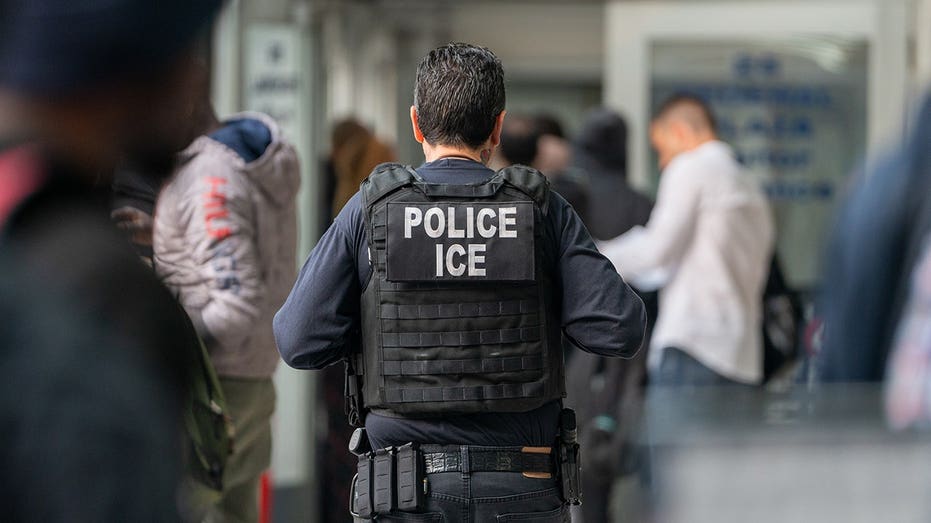
At the operational core of the crackdown is the Homeland Security Task Force structure, designed to integrate agencies such as the FBI, U.S. Immigration and Customs Enforcement Homeland Security Investigations (HSI), the Drug Enforcement Administration, and state and local police departments.
John Condon, Acting Executive Associate Director for HSI, described the result as a testament to intelligence-driven policing and multi-agency collaboration.
“This TdA takedown demonstrates the power of unified action in disrupting dangerous criminal networks and protecting our communities,” Condon stated.
HSI specializes in complex cross-border investigations, particularly those involving human trafficking, narcotics smuggling, and financial crimes. By leveraging financial tracking tools, surveillance, and confidential informants, investigators were able to piece together an interwoven network of suspects.
The Guns and Drugs: A Dangerous Combination
The seizure of more than 80 firearms highlights the violent potential of the accused network. Firearms trafficking remains a major concern for federal agencies, as documented by the Bureau of Alcohol, Tobacco, Firearms and Explosives (ATF), which tracks the illegal movement of weapons tied to organized crime.
Illegal weapons paired with fentanyl distribution create a lethal combination for American communities. Even small quantities of fentanyl can be deadly. According to federal public health authorities, synthetic opioids require only milligram-level exposure to trigger fatal overdoses.
Law enforcement officials say disrupting distribution chains before drugs reach the street level is critical to saving lives. They argue that targeting the leadership and logistical infrastructure of gangs like TdA has a ripple effect that weakens downstream criminal activity.
The Broader Border and Immigration Context
The crackdown comes amid heightened national debate over border enforcement and the presence of foreign criminal organizations operating within U.S. territory.
Agencies such as U.S. Customs and Border Protection and ICE have repeatedly warned that transnational criminal networks exploit migration routes to move people, drugs, and weapons. While the overwhelming majority of migrants seek lawful work and safety, law enforcement officials stress that organized gangs deliberately use chaos and high-volume crossings to hide illicit activity.
The administration’s strategy has emphasized:
- Expedited identification of gang affiliates
- Information sharing between border and interior enforcement units
- Enhanced prosecution of organized criminal conspiracies
- Designations that elevate certain gangs to terrorist status
Supporters argue that a strong enforcement posture is necessary to deter organized crime infiltration. Critics, meanwhile, have expressed concerns about civil liberties and due process — highlighting the importance of ensuring that accusations are properly substantiated in court.
Due Process and the Legal Path Forward
As with all criminal cases in the United States, those charged are presumed innocent until proven guilty in a court of law. The federal judicial system, overseen by the Administrative Office of the U.S. Courts, provides defendants with constitutional protections, including the right to counsel and trial.
Prosecutors will now need to present evidence demonstrating criminal participation in firearms trafficking, narcotics distribution, or related conspiracy charges. Given the multi-state nature of the cases, some proceedings may involve complex evidentiary and jurisdictional questions.
Legal experts note that transnational gang cases often rely heavily on digital communications, financial transaction records, and surveillance data — tools that have become increasingly critical in modern organized crime prosecutions.
A Clear Message on Law and Order
The latest arrests add to what federal officials characterize as an aggressive, nationwide effort to dismantle foreign criminal networks that threaten American neighborhoods.
By coordinating charges across six federal districts, authorities sought to disrupt what they describe as a decentralized but interconnected organization capable of moving drugs, money, and weapons across state lines. The seizure of firearms, narcotics, and cash underscores the scale of the alleged operation.
For many communities impacted by gang violence and drug trafficking, the operation represents a reaffirmation of law enforcement’s core mandate: protect citizens, enforce the law, and dismantle organizations that prey on American families.
Whether additional arrests and indictments follow remains to be seen. But one point is clear — federal agencies intend to continue pressing forward until transnational gang networks operating on American soil are dismantled.
For Americans concerned about public safety, border integrity, and the rule of law, the message from federal authorities is unmistakable: the crackdown is ongoing, coordinated, and far from over.