Chinese National Arrested at JFK After Allegedly Photographing Sensitive U.S. Military Aircraft
A 21-year-old Chinese national was arrested at John F. Kennedy International Airport in New York after federal authorities say he photographed restricted U.S. military aircraft at Offutt Air Force Base in Nebraska and was preparing to leave the country.
The suspect, identified in federal court filings as Tianrui Liang, faces allegations that he violated a longstanding federal law prohibiting unauthorized photography of defense installations. According to documents filed in the U.S. District Court for the Eastern District of New York, Liang was detained on April 7 while attempting to board an outbound international flight—just days after a warrant was issued in Nebraska.
While investigators have not accused Liang of acting under orders from the Chinese government, the case underscores growing concern in Washington about foreign nationals targeting sensitive U.S. defense assets for collection or surveillance purposes.
Activity Near One of America’s Most Sensitive Bases
At the center of the case is Offutt Air Force Base near Omaha, Nebraska. Offutt is no ordinary military installation. It serves as the headquarters of U.S. Strategic Command (USSTRATCOM), the unified command responsible for America’s nuclear deterrent, global strike capabilities, and strategic missile defense planning.
Because of its mission, Offutt houses some of the most high-value aircraft in the U.S. arsenal. Federal authorities say Liang was seen near the base flight line holding a camera equipped with a telescopic lens—raising alarm among witnesses and prompting a report that triggered an investigation.
According to an affidavit submitted by the Federal Bureau of Investigation, Liang later admitted to photographing various military aircraft stationed at the base, including:
- The RC‑135 reconnaissance aircraft
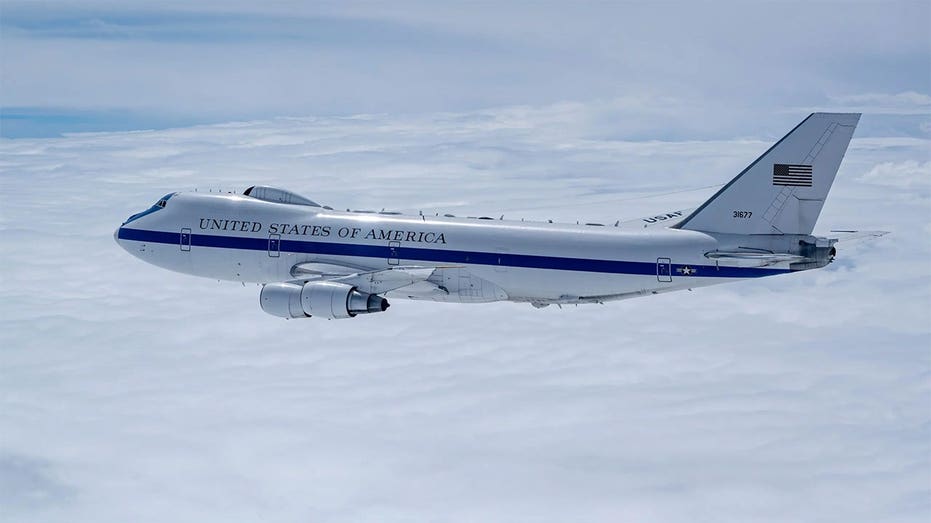
- The E‑4B “Nightwatch,” often referred to as the “doomsday plane”
Both platforms are considered critical strategic assets in the event of military conflict or national emergency.
Why the Aircraft Matter
The RC‑135 is a family of reconnaissance aircraft used for intelligence collection and electronic surveillance. Variants of the RC‑135 are instrumental in monitoring global military activities, tracking adversary communications, and supporting combat operations.
The E‑4B “Nightwatch” is even more significant. Operated by the U.S. Air Force, the E‑4B serves as the National Airborne Operations Center. In the event of a nuclear conflict or catastrophic attack on the United States, the aircraft functions as an airborne command post for the president, secretary of defense, and senior military leadership. Information about the aircraft’s layout, systems, and modifications is carefully guarded.
For obvious national security reasons, the locations, configurations, and modifications of such aircraft are not matters of casual public interest. Even images captured from outside base perimeters can reveal valuable technical or operational details.
Federal Law Strictly Prohibits Unauthorized Photography
The charges stem from alleged violations of 18 U.S. Code § 795, a federal statute that prohibits photographing or sketching vital defense installations without permission from the installation commander. The law dates back decades and exists specifically to prevent adversaries from gathering visual intelligence about American military sites.
Investigators say Liang “knew it was illegal” to photograph aircraft positioned on the ground at Offutt. Prosecutors argue there is probable cause to believe he knowingly and deliberately captured images of restricted military assets without authorization.
Authorities also say that a review of Liang’s camera revealed numerous images of aircraft located on the Offutt flight line. These photographs allegedly included detailed images of sensitive military planes.
Travel Pattern Raised Additional Questions
According to court documents, Liang was a student at the University of Glasgow in Scotland. Investigators say he had recently traveled through Canada before entering the United States.
Authorities allege that after arriving in the U.S. via Canada, Liang made his way to Nebraska, where he was later found near Offutt Air Force Base. Investigators also claim he had plans to travel to Oklahoma to photograph additional military aircraft, including the E‑4B, at Tinker Air Force Base.
Tinker AFB plays a critical role in maintaining and supporting America’s airborne command and control fleet. It is also a hub for aircraft maintenance and logistics. Any pattern of visiting multiple strategic bases for photography purposes naturally raises red flags for federal authorities.
Investigators Say Aircraft Were Identified via “Planespotter” Website
According to the FBI affidavit, Liang told investigators that he used an online planespotter website to identify locations where military aircraft could be observed and photographed. Aviation enthusiasts frequently gather near commercial airports to photograph planes. However, photographing military craft at active bases is another matter entirely.
Investigators allege that Liang specifically sought vantage points outside installation boundaries that would allow him to capture images of aircraft parked on base grounds. Even from off-base locations, such activities may violate federal law if they involve protected defense installations.
Liang reportedly claimed the photographs were for his “personal collection.” Federal authorities, however, are tasked with assessing not only stated intent but also national security risk.
No Allegation of Direct Government Sponsorship—But Context Matters
Importantly, court documents do not allege that Liang was acting on behalf of the Chinese government. There is no formal charge at this stage of espionage under statutes typically used against intelligence operatives.
But the broader geopolitical context cannot be ignored.
The United States and the People’s Republic of China are currently engaged in heightened strategic competition across multiple fronts:
- Technology and intellectual property
- Military modernization and global power projection
- Cybersecurity and information warfare
- Strategic positioning in the Indo-Pacific
In recent years, federal prosecutors and the U.S. Department of Justice have brought multiple cases involving allegations of espionage, technology theft, and surveillance carried out by individuals with ties to China. Some cases have involved sophisticated intelligence operations; others have centered on students or researchers accused of improperly collecting sensitive information.
While not every case involves state direction, national security officials have consistently warned that even seemingly small incidents of unauthorized information gathering can form part of a larger intelligence mosaic.
Heightened Awareness Around Military Installations
The arrest comes amid increasing public awareness about security around American bases. Over the past several years, law enforcement agencies have reported instances involving:
- Drones flying over military installations
- Foreign nationals attempting to access restricted areas
- Surveillance or photography near sensitive defense sites
Military bases are not tourist attractions. They are operational environments tasked with defending the United States. Officials say strict enforcement of laws protecting defense installations is necessary to safeguard service members, protect operational readiness, and deter hostile intelligence gathering.
U.S. Strategic Command, headquartered at Offutt, oversees the nation’s strategic nuclear forces and space operations—a mission so vital that vulnerabilities, even visual ones, are treated with utmost seriousness.
Why Photography Can Be More Than Harmless Hobbyism
To the casual observer, photographing an aircraft might appear harmless. But in the world of intelligence collection, imagery is powerful.
High-resolution photographs can reveal:
- Equipment modifications and upgrades
- The presence or absence of certain mission systems
- Maintenance cycles and operational tempo
- Patterns of deployment and availability
Even background details—ground equipment, new antenna arrays, protective modifications—can provide clues to analysts abroad.
Modern intelligence agencies—whether allied or adversarial—often piece together publicly available data with on-the-ground imagery to generate assessments. Law enforcement officials therefore do not wait for a confirmed link to foreign intelligence services before acting when they observe suspicious collection of sensitive defense imagery.
Legal Process and Presumption of Innocence
Liang will face proceedings in federal court. As with any criminal case in the United States, he remains presumed innocent unless and until proven guilty beyond a reasonable doubt.
The government must establish that he knowingly violated federal restrictions by photographing protected installations without authorization.
If convicted under 18 U.S.C. § 795, defendants can face fines and potential imprisonment, though penalties depend on the specifics of intent, evidence, and prosecutorial discretion.
A Broader National Security Moment
This incident should be viewed within the larger conversation about national vigilance. The United States remains a beacon of freedom, innovation, and military strength. That strength, however, depends on protecting strategic assets from exploitation.
America maintains open borders to ideas, education, and lawful tourism—but it cannot afford complacency when it comes to defending installations tied directly to nuclear deterrence and global military command.
Offutt Air Force Base is not simply a flight line in Nebraska. It is a nerve center in the architecture of American strategic defense. Every aircraft parked there, every system installed on those planes, and every operational detail supports the mission of deterring adversaries and protecting the homeland.
The Takeaway for Americans
The arrest at JFK serves as a reminder of several enduring truths:
- America’s military infrastructure is a prime intelligence target in an era of global competition.
- Federal law enforcement remains vigilant in identifying potential threats.
- Seemingly routine activities—when conducted near sensitive facilities—may carry significant legal consequences.
Citizens who live near military bases often serve as the eyes and ears of their communities. In this case, it was reportedly a witness who first alerted authorities after observing suspicious photography activity near Offutt’s perimeter.
That kind of awareness strengthens homeland security.
As the legal process unfolds, more details may emerge. For now, federal authorities have made clear that photographing restricted military aircraft without authorization—especially at installations tied to the nation’s nuclear command structure—is not a trivial matter.
In a dangerous world, vigilance is not paranoia. It is prudence.
And as always, protecting America’s strategic edge begins with enforcing the law—firmly, fairly, and without apology.
Wake Up America News — Your Source for Patriotic News.